
|
Key Takeaways
|
|
The gratitude effect: Customers who feel genuinely appreciated are more likely to make repeat purchases, refer friends, leave reviews, and extend patience when something goes wrong. AI personalization at scale: Tools like predictive personalization, dynamic content blocks, and send-time optimization make it possible for marketers to deliver individualized appreciation to millions of customers without sacrificing sincerity. Omnichannel appreciation: Different channels, such as email, SMS, and RCS, each offer a distinct way to express customer gratitude. Marketers should use an omnichannel strategy to meet customers where they’re already engaging. Always-on strategy: The most loyalty-driven brands treat customer appreciation as a year-round capability. Campaigns should be triggered by milestones, behavioral signals, and seasonal peaks alike. |
When the end-of-year holiday season rolls around, many brands rush to show appreciation to their customers. But let’s be honest: A basic thank-you or general holiday message is simply common courtesy.
Is generic gratitude even gratitude at all?
For brands to succeed at building loyalty through customer appreciation, they have to go beyond mere courtesy to show gratitude in a way that feels personal, timely, and genuine. Accomplishing this at scale requires both connected data and AI to put customer insight into action and create more meaningful messages.
The tactics in this article are great not just for the holidays but all year long, so you can make your customers feel truly seen and appreciated.
How does gratitude impact customer loyalty?
According to Psychologist Robert Cialdini, reciprocity is one of the most powerful drivers of human behavior: When someone does something favorable for us, we feel an impulse to return the favor.
In marketing and brand experience, the effects of gratitude and reciprocity play out in ways that directly impact the bottom line. Customers who feel appreciated are more likely to show deeper loyalty. That loyalty commonly expresses itself as…
- Making a repeat purchase
- Leaving a positive review
- Referring a friend
- Being more patient when something goes wrong
Before you send that “thank you” message or “happy holidays” email, think about how you can make it feel personal. Customers are more likely to feel the urge to reciprocate when they think, even for a second, that “this brand actually knows me.”
However, according to the Global Customer Engagement Index 2026, nearly half (44%) of consumers say brand interactions feel less personal and more generic than before. Many brands are missing the opportunity to deepen customer loyalty, so let’s look at how marketers can close that gap and use AI to effectively trigger the gratitude effect around the holidays.
We laid out high-impact, AI-powered holiday campaign calendars
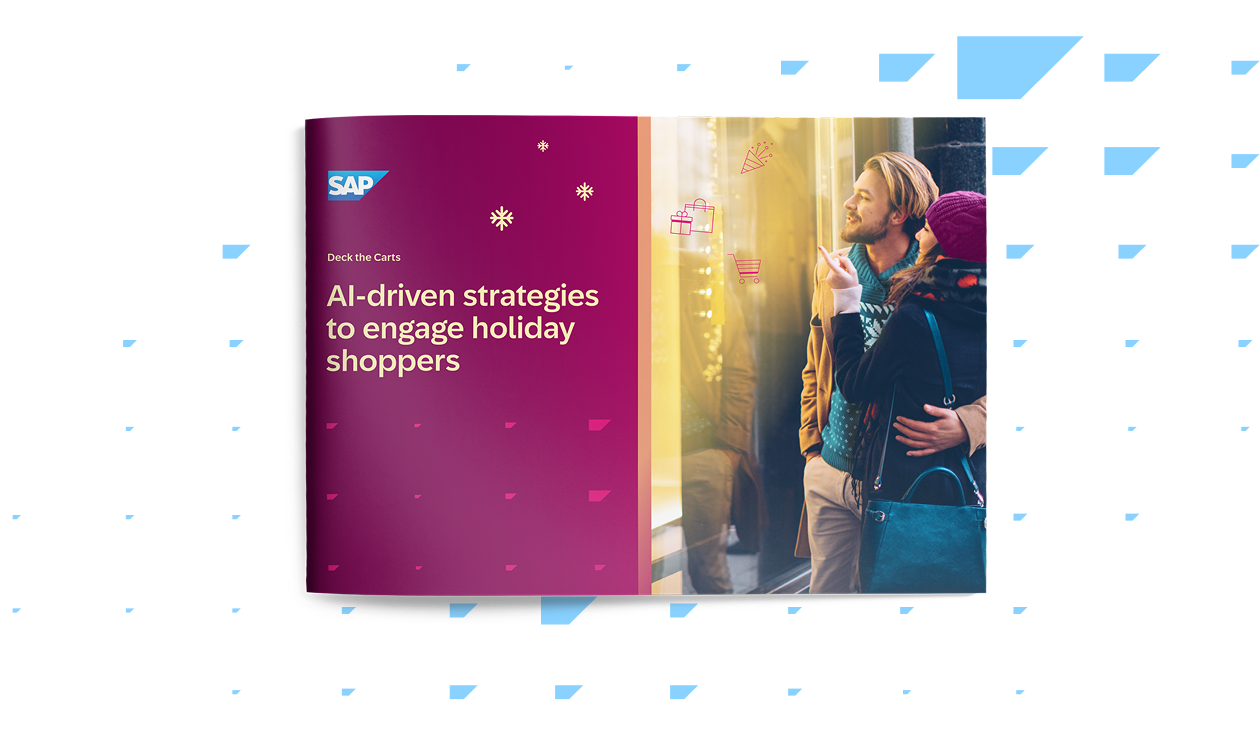
Channel spotlight: Appreciation messages for the holiday season
Here are a few examples of what customer appreciation looks like when brands use their full channel mix and apply customer data to make the messages meaningful.
Email: Wrapping up the year
Spotify Wrapped messages reset customer expectations for what’s possible with true brand transparency and data.
In your own business, this could mean an end-of-year recap email that summarizes purchase history, the length of the customer relationship, referral activity, cost savings, or even loyalty achievements transforms a routine message into a moment of genuine recognition. When a customer opens an email and sees their own story reflected back at them — you’ve been with us for 3 years, you ordered 14 times, and your reviews were seen by 500 fellow customers — the message stops feeling like marketing and starts feeling like a conversation.
The CTA doesn’t have to be transactional. Early access to a sale, a loyalty reward, or a straightforward offer reinforces that the email was about them and not your Q4 numbers.
SMS: A warm and rewarding acknowledgement
A short, well-timed SMS during the holidays can carry more weight and a lot less pressure than a fully designed email.
A gratitude SMS should lead with the relationship and close with the CTA:
“[First Name], you’ve been with us for 2 years, and that means a lot. Here’s a little something from us.”
Using AI-driven send-time optimization ensures that the message arrives when the customer is most likely to be receptive. Segment-aware personalization also matters here: the message a VIP customer receives should feel different from the one a first-year customer gets, even if the underlying sentiment is the same.
RCS: The immersive thank-you experience
RCS (rich communication services) is an emerging channel that supports rich cards, imagery, interactive buttons, and branded experiences all delivered natively within a customer’s messaging app. Picture a branded holiday card that includes a personalized year-in-review visual, a one-tap button to claim a loyalty reward, or an opt-in to an exclusive customer community.
For brands already running omnichannel campaigns in SAP Engagement Cloud, RCS fits easily into an automated appreciation campaign, so you can trigger a rich, personalized message based on loyalty status, purchase history, product affinity, or other key customer data points.
How AI enables genuine appreciation at scale
A handwritten note works perfectly for a local shop with 200 regulars. It doesn’t scale to 2 million subscribers. Fortunately, AI solves the problem of scale by making genuine personalization operationally possible at any volume.
- Predictive personalization means the content of your appreciation is informed by each customer’s actual behavior, such as purchase history, browsing history, how recently they’ve engaged, etc. That behavioral data shapes what gets said to whom, so messages reflect their specific relationship with the brand, not a generic template.
- Dynamic content blocks take that a step further. A single campaign can generate unique emails, swapping in personalized copy, product callouts, loyalty stats, or milestone references for each customer without requiring a marketer to build thousands of variants manually.
- Intelligent send-time optimization addresses the timing half of the equation. Sending a heartfelt thank-you SMS at 2 am or during a customer’s known low-engagement window undercuts its impact. AI-driven scheduling ensures each message deploys when that individual is most likely to open, read, and respond.
- Lifecycle-aware triggering may be the most powerful capability of all for appreciation campaigns. AI identifies the moments that matter most to each customer (a loyalty tier upgrade, a purchase anniversary, an order, etc.) and trigger a relevant, timely message automatically. The holiday season becomes one step in a year-round appreciation strategy.
In these examples, AI is used as a strategic tool to help ensure that the care a brand puts into crafting that message reaches the right person, in the right context, at the right moment.
The always-on gratitude strategy for year-round customer appreciation
Triggering the gratitude effect is a powerful strategy all year long. While the holiday season acts like a natural intensifier for emotions, you’ll find that it’s most effective when holiday gratitude is amplified by a pre-existing relationship.
Here are three key moments to build into your customer appreciation calendar:
- Celebrate ordinary milestones. Create personalized touchpoints around simple moments like a first purchase anniversary, loyalty tier upgrade, or round-number orders (i.e. “you’ve reached order #10!”). The customer wasn’t expecting anything, and that’s exactly why it lands.
- Connect during seasonal peaks. Reach out during moments that are specific to your brand and your customers, such as the anniversary of a product launch, a customer’s birthday, or the seasonal window when a segment tends to re-engage. These moments are predictable, which means they’re plannable.
- Reach out “just because.” Create an unprompted message with a small reward, an exclusive offer, or a simple appreciation statement. This sort of messages hits differently because the customer couldn’t anticipate it. To make it systematic, trigger this message by a behavioral signal or a loyalty threshold.
Customers don’t remember every touchpoint. They remember how a brand made them feel. An always-on gratitude strategy is how brands make sure that feeling accumulates — one well-timed, genuinely personal message at a time.
Get step-by-step plays for every stage of the customer journey.

Final takeaway: Make gratitude a core strategy
Gratitude may sound like a “soft” metric, but that’s far from the truth. The brands that invest in making customers feel genuinely valued see the true power of the gratitude effect reflected in their retention numbers.
The holiday season is a reminder that appreciation matters, but the real competitive advantage belongs to the brands that continuously build the channels, content, and AI-powered infrastructure to say thank you in a way is genuinely personal.
This holiday season, be sure to show your customers appreciation in a way that they’ll remember all year long.
Frequently Asked Questions
The gratitude effect refers to the loyalty response triggered when customers feel genuinely appreciated by a brand. Based on the principle of reciprocity, customers who receive personalized, meaningful appreciation are more likely to repeat purchase, refer others, and remain loyal over time.
AI enables brands to deliver genuinely personal appreciation at scale through predictive personalization, dynamic content blocks, intelligent send-time optimization, and lifecycle-aware triggering, so every customer receives a message that reflects their specific relationship with the brand, not a generic template.
Email, SMS, and RCS are highly effective channels for customer appreciation campaigns. Email is ideal for rich, personalized year-in-review messages. SMS delivers timely, low-pressure acknowledgment. RCS supports immersive, interactive thank-you experiences with rich media and one-tap CTAs all within a customer's native messaging app.
Are you holiday-ready? Plan an AI-driven strategy.
About the author