|
Key Takeaways
|
|
Strategy still comes first. Before investing in channels, campaigns, or AI tools, marketers need clear objectives, positioning, and customer understanding. AI won’t fix bad marketing—but it can make good marketing dramatically better. Marketers who combine strategy with AI will outperform those chasing technology alone. Peak-season success depends on the whole customer experience. Winning brands use AI to improve service, personalization, and operational readiness when demand is highest. The fundamentals haven’t changed. AI is transforming execution, not rewriting marketing’s core rules (and anyone who tells you differently is probably selling something). |
“We're not there. We're mostly just churning out the same old stuff to the same people in the same old ways.”
As I watched Mark Ritson’s AI Marketing Clinic with The Drum, one theme stood out and dominated the story: Marketers are spending far too much time obsessing over new technology and not enough time mastering the fundamentals.
Is AI changing marketing? Yes, and it will continue to reshape how you plan, personalize, optimize, and serve your customers. But according to Ritson, many marketers are using AI as an excuse to avoid confronting a harder truth:
Most marketing problems today aren’t technology problems at all. They’re strategy problems.
The Marketing Doctor is IN. Watch the complete session.

I pulled out eight of Mark’s hottest takes to share with you. Let’s start with the most important one, and then we’ll start getting into his fiery ones. (Spoiler: Mark got feisty, which, if you’re familiar with Mark, isn’t much of a spoiler.)
1. “Strategy first.” Before channels, before touchpoints, before AI, start with strategy.
When asked what channel to invest in next, Mark’s answer was blunt: “Strategy first. I have no idea what’s the next channel. It depends on your strategy, obviously.”
Brands need channel strategies built on a solid foundation. Marketers need to answer the fundamental questions:
- Who are we targeting?
- What position do we want to own?
- What are our objectives?
- What budget do we have?
- What have we learned from previous campaigns?
When you have a thorough understanding of your market and audience, you’re ready to start slotting the right channels into place to create personalized, omnichannel journeys that truly resonate with customers.
The same principle applies to data. Organizations have access to more customer information than ever before, but many still struggle to turn that data into meaningful customer experiences. Mark explained his frustration with this, saying, “How many things do we get sent to us in our mailbox, digital or physical, which we go, ‘Oh, I’ll see what that is.’ And the answer is almost none.”
His point wasn’t an attack on the usefulness of data or AI. It’s that they create value only when they’re deployed in service of a coherent strategy. And when it comes to channels, Mark emphatically stated that, “Every single piece of research we’ve ever seen tells you diversity works.”
Strategy first. Tactics second.
2. “Nobody gives a s%#@ about your ad.”
For me, one of the most memorable quotes of the session came from a discussion about Christmas advertising and emotional marketing:
“The secret of emotion in advertising is very simple. Nobody gives a s%#@ about your ad.”
Harsh? Yes.
True? Absolutely.
Mark’s argument is that marketers often assume consumers are deeply interested in their category, products, and messaging. In the real world, people are busy living their lives.
Emotion creates attention. Attention creates engagement. Engagement creates memory.
This doesn’t necessarily mean you have to make consumers cry. Humor, surprise, excitement, curiosity, tension, delight—all of these can be effective emotional triggers.
I often talk about how companies are really bad at first dates. We talk almost exclusively about ourselves and don’t take time to listen, ask questions, and be charming. Ads are asking for a date, but most of us would say no thanks to 99.9% of the invitations we see in social ads. However, when you get that really good one, one that shows that there’s depth and wit, it’s instantly attractive.
The same principle of audience interest applies to personalization vs the audience’s perception of intrusive advertising. Mark passionately insisted that when people receive something useful, they “see it as brilliant” rather than intrusive.
Customers don’t want more messages. They want more relevance.
3. “Loyalty remains a really wonderful lever to pull.”
According to the 2025 Customer Loyalty Index, customer loyalty dropped globally for the first time since the annual research began.
Is this a sign that loyalty is dead? Not by a long shot. Loyalty isn’t dead—it’s changing.
In short, while Mark believes that “penetration is the engine of growth,” he also stated that “loyalty remains a really wonderful lever to pull.”
It isn’t an either/or decision. Customer acquisition and customer retention serve different strategic goals, and both are valuable parts of the growth flywheel (AAARRR, or Awareness, Acquisition, Activation, Revenue, Retention, Referral). Both drive revenue growth. The right balance depends on where opportunities exist within your funnel. If a brand has retention challenges, repeat purchase issues, or available opportunities to increase customer lifetime value, then loyalty programs can absolutely earn their place in your marketing mix.
The key is using customer data intelligently rather than relying on blanket discounts or points-based incentives.
Do you know the 6 types of customer loyalty?

4. “AI is the most amazingly powerful horse ever created. But you’re still the jockey.”
Mark argued that marketers don’t need to be trained in AI the way many job descriptions suggest.
Nothing, and I mean nothing, replaces good taste. You have to know what “good” looks like to be successful in creating it. That’s why I’m fully aligned with Mark that marketers need to “learn to be a good marketer.”
The winners won’t necessarily be the people with the best prompts. They’ll be the marketers who know where to point the horse.
5. “The first lesson of touchpoints is don’t assume them.”
Many organizations believe they know what matters most to customers. According to Mark, they’re often wrong.
Too often, brands focus on the moments they think are important while overlooking the moments customers actually remember.
His advice was refreshingly simple:
- Don’t copy competitors.
- Don’t rely on internal assumptions.
- Don’t build customer journeys from conference-room opinions.
Instead, his advice is to focus on research, starting with qualitative research and then factoring that into quantitative data.
6. No one needs “400 flyers and a Gmail box full of sh—” shoddy marketing emails.
Mark spared no one’s tender feelings when he aimed this remark at the current state of personalization.
Despite decades of CRM investment and increasingly sophisticated martech stacks, many brands have failed to deliver the original promise of direct marketing.
An overstuffed inbox during the holiday season helps no one.
Consumers don’t want more messages. They want better messages. They want there to be something in it for them.
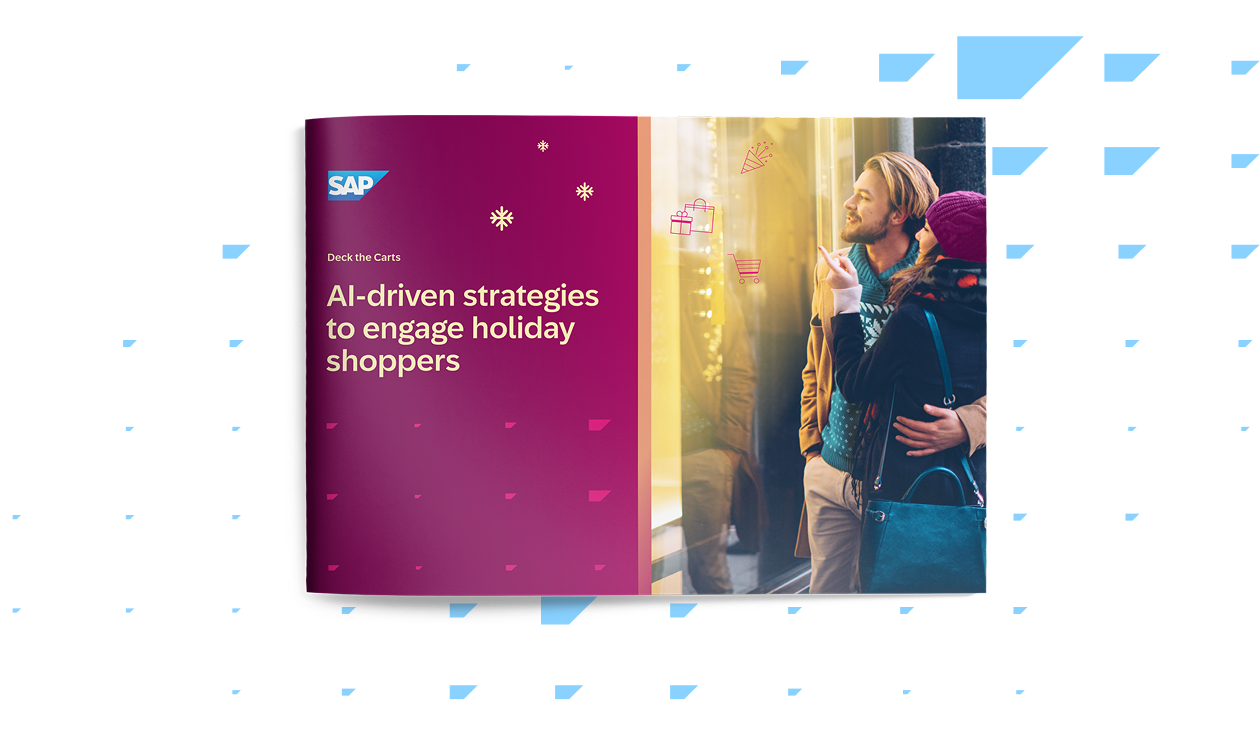
They want communications informed by real customer understanding, behavioral signals, and useful content. If a brand wants my money, and they know what time I tend to do my shopping, why am I not getting an SMS 15 minutes before that time with a relevant message to inspire me? As AI enables more personalization at scale, marketers have an opportunity to move beyond volume and finally deliver relevance, which is the main focus of our holiday guide, Deck the Carts: AI-driven strategies to engage holiday shoppers.
Engage holiday shoppers with messages they WANT to see.
7. “We’re too soft” on discounting.
Few topics triggered stronger opinions from Ritson than discounting. While many marketers view promotions as an easy path to short-term growth, Ritson sees significant risks.
He argued that excessive discounting:
- Trains customers to wait for deals
- Compresses margins
- Undermines brand value
- Creates dependence on future discounts
Instead, he advocates using customer understanding to deliver experiences, exclusivity, recognition, and relevance. As he explained, “You don’t have to give people special offers. You have to use the data properly.”
In other words, good customer relationships should be built on deep understanding—not just price cuts. Brands need to become more human, anticipating the customer’s next move.
8. “The old rules still apply.”
If there was one phrase that came up throughout the session, it was that “the old rules still apply.
Whether discussing search advertising, creator marketing, AI agents, personalization, or synthetic data, Ritson repeatedly returned to the same idea.
The fundamentals are still firmly in place:
- Plan your strategy
- Build your brand
- Instill emotion
- Differentiate from competitors
The marketers who win in the AI era won’t be the ones who abandon marketing fundamentals. They’ll be the ones who apply those fundamentals better and faster than everyone else.
Bottom line: AI isn’t the strategy
These are just a few of the many, many insights from the complete AI Marketing Clinic with Dr. Mark Ritson.
AI is a tool, and it’s great for marketing, just like other technologies that came along—the printing press, the telephone, CDPs, CRMs, ERPs, social media, and so on.
If you think “AI is our strategy,” you’re falling into a trap.
Even as we adapt and excel with this new tool in our hands, the brands that succeed will still be the ones that understand their customers, build meaningful experiences, create differentiated products, and execute against a crystal-clear strategy.
AI can make good marketing better.
But it will never save bad marketing.
Frequently Asked Questions
AI is helping marketers automate repetitive tasks, analyze customer data faster, improve personalization, optimize campaigns, and scale customer engagement. Many organizations are also using AI to improve forecasting, customer service, segmentation, and marketing planning.
No. AI can accelerate analysis, content creation, and campaign execution, but it still requires marketers to define objectives, target audiences, positioning, budgets, and measurement frameworks. Strong marketing outcomes depend on clear strategy supported by technology, not technology alone.
Successful peak-season marketing depends on customer experience, operational readiness, personalization, inventory visibility, responsive customer service, and cross-channel engagement. Brands that align marketing, commerce, and customer service efforts are better positioned to handle increased demand and customer expectations.
Brands can create more value from customer data by using it to deliver relevant recommendations, personalized experiences, timely communications, and improved customer service. AI is increasingly helping marketers unify data from multiple channels and turn insights into actionable engagement strategies.
Power up your next big shopping event!
About the author
Kate DeGroot is the kind of Global Growth Marketer who started in startups where “figure it out” is a job description and never quite shook the habit. Now she runs growth programs across the globe, armed with a healthy obsession with data and an unhealthy suspicion of vanity metrics.