

Should we launch in? Yeah, I can do my prepared remarks now Are you ready for some prepared remarks? Dazzle them right. Well, I will dazzle you with a whole load of slightly overwrought Punning around the concept of of medicine. Oh, please ready. Here comes the the prepared remarks It's time to meet the GP for your GPT like that one like it the medic for your metrics a prescription for your positioning Yeah, okay. Stretching it now, stretching it now. Welcome to Dr. Mark Ritson's AI Marketing Clinic. Hello. Have some applause in the room. Hello. I want to point out here as well, I am actually a doctor. I stopped being a professor quite a long time ago now, but I continue to be, according to my checkbook, a doctor, and I just want to make that clear. This is all super legit. Not that kind of doctor, though. I mean, I'll have a go, but no, not officially. Any medical advice should be taken with a pinch of salt, right? Yeah, but you know, I mean, me rather than anyone else, unless they're a doctor, right? Today, though, with focusing on a particular topic, the holiday season, these high peaks for shopping have always been make or break for the world's biggest brands, whether that's Black Friday, Boxing Day, or indeed, as we've discussed, the day before a large football occasion. These serve as regular brand health checks for marketers, separating those with a sound strategy from those who have ignored the symptoms all year. Remember, AI is now in the immune system and it's getting everywhere. Marketing issues are getting harder to diagnose, but are they essentially the same old issues or is AI making things work? Some brands, the metaphor is stretched to its limit, are responding well to treatment. Others are languishing with a technology dependency that is spiraling out of control. So for our second clinic with Mark, we're gonna be looking into that. All the AI, all the holiday season stuff that our good viewers are going to be throwing at us. You can watch the first of these on demand after you join us for the live session today. And this time, we're supported by our partners at SAP Engagement Cloud. Some of them are in the room with us. Thank you for the money. And over the next hour or so, Mark will power through a load of your questions and probe how AI is changing the game. We're also joined, I should introduce a third party in this, which is our glamorous opinion editor at the drum, John McCarthy, who is. Manning the board to see your questions and we'll be sending them to me live into this We should say, Sam. So the questions, let's have some proper questions. And what I mean by proper is, it is, I mean, we're taking the Mickey, obviously, but we can have a practical kind of workshop style thing. God knows we've got enough things with podcasts between two blokes talking **** about marketing, right? We have 9,000 of those almost on a daily basis. We have nine times those between you and me. Alone, so let's avoid that. Let's talk, I mean imagine we, I always like to use analogy of plumbers. Imagine we weren't marketers, but we were plumbers. We'd be talking about pipes and toilet fittings and practical things, not just esoteric ********. So I'd like the questions, please. If you've got a proper marketing challenge that involves practical **** going on, I'd be delighted to help there rather than waffling on about horse ****, which I can also do, but you know. Think of it as an office hour. An office hour, indeed. You're a real doctor, a real former professor. Indeed. We want specific, we want in-depth, and we want as much as possible on the topics of holiday season and AI. Well, look, I mean, you go and see your GP. You go in and say, look my hemorrhoids are giving me grief, right? You don't go in and say what's your point of view on, you know, stethoscopes? Let's keep it practical and problem related, I think, is what we're trying to say. And I have very briefly mentioned that we have a sponsor. I believe it was SAP, wasn't it? SAP. Thank you. And perhaps a report that you want to mention? Yeah, so I've started working with SAP now for about six months. And one of the delightful things is I find myself, much to my horror and delight, aligned with SAP on almost everything. And one the things I think that's been delightful about my interaction with them thus far is a really no-bull **** approach to the whole AI topic, which has been delightful. And looking at how AI is genuinely starting to change things, rather than... Ooh, is the new ad going to be, you know, is it going to upset consumers because they're using AI, the superficial stuff. So yeah, I'm very engaged. And aligned and I believe I don't know if it will be on screen now but it will be at some point there's going to be a QR code on your screen so if you're watching this on your laptop you can scan that on your phone and you can have a look at the report Yes, there's a very good report which looks at, I think a lot of the nuts and bolts of the, what we look at as the gap between how everyone talks a good show and what really happens is kind of like soccer. Everyone talks a show about tactics and then they start playing in its pants. It's the same thing basically with service demand, especially in these peak periods. Everyone's got a wonderful service and delighted consumers and then promptly the wheels fall off the lorry as soon as more than three customers need something. Okay, so I think we've given viewers enough of an introduction to know what kinds of questions we're looking for, so get those in now. John is going through them as we prepare for real live audience questions to come in. We have a question from our friends at SAP. Also, if you get a question that I genuinely can't answer and I'll be happy to say, we will give you a subscription to the drum. A free subscription to the... Description of the drum. If a question is so good that it stumps Mark, he's going to break the fourth wall, look straight at a camera and offer you a subscription, which is worth thousands, potentially millions, because you could get ideas that transform your business. Very true. Right, that question from SAP. What are the trends you're seeing with High's peak holiday this year, and where does AI fit in? So, I think... Again, using that football analogy for a second, it's all very good at the start. The coach goes out, talks about what they're going to do, and then they start playing the game. And of course, as in England's case, we lose a man, get sent off, things get pretty gnarly, we get into the last 10 minutes, everyone's exhausted, and suddenly the tactics disappear, the strategy's gone, and things get a bit appallingly poor. That's a good analogy for what happens during these peak periods, whatever that peak seasonal period might be. I think we're genuinely beginning to see a small number of companies not using AI to generate astonishing fake advertising, but using AI to actually manage data flows and customer service in a way that is beginning to generate an ability to handle high capacity. And I think that is one of the first genuine movements that we're seeing beneath the surface in terms of implications for market. Okay, and in that analogy, the football analogy, AI is what, it's a new set of rules, it is AI would, well... AI would, well that's a good question, AI would be a hydration break that if you're smart you use for a strategic and tactical refresh, which I think Thomas Tuchel is pretty good at. Right, we have our first question and it's from Kelly Pooke, who's digital transformation director at Iconic, who asks for some predictions that you might have around how customers are feeling when it comes to loyalty in particular and the impact that AI has on those relationships. Yeah, so it obviously changes a little bit because we've kind of got you suddenly jumping into bed with your partner But also there's a robot there as well in terms of loyalty. Do you know I mean like you're gonna have to get past The gatekeeper of AI first, but the principles of Lloyd's loyalty, I think remain in place Otherwise, we kind of have this weird world, you know, Ehrenberg-Bass has more and more influence on all aspects of marketing That's generally a good thing But they have this total hatred of loyalty and customer loyalty programs that doesn't quite stack up If you get them on customer loyalty and CRM, it's close to the end of the world in terms of the impact it has, and you can't quite piece together what the problem is. I think loyalty remains a really wonderful lever to pull. I think being able to manage the data better is probably at the heart of getting it done well. The acid test here is there are very few companies that are actually managing your or my data well. To give us what we were originally meant to do with direct marketing, which is welcomed useful stuff, right? How many things do we get sent to us in our mailbox, digital or physical, which we go, oh, I'll see what that is. And the answer is almost none, because we missed that challenge of CRM, which is give them things that are useful. And targeting can be useful. If you're gonna give me stuff that you know that I will need, I'm interested. But we seem to have missed that point somewhere along the way. So I do think there's an opportunity still to manage data better, give people things that are genuinely useful and interesting. And I can count on one hand the number of companies that have managed that with me. Do you want to give us an example of one of them? Yeah, I mean, I'll give you, my favorite one is Qantas. I'm a very, very high status Qantas customer because I travel everywhere and they know everything about me. And you've got to remember from an Australian point of view, you don't just fly with Qantas, you have your home insurance, so you have your wine. You have your health, you have everything, I have everything through Qantas, right? I have a credit card with Qantas. And yet, every year to thank me for spending almost a million dollars a year with Qantas, the CEO sends me a letter and attaches, last Christmas, a bottle of gin. And any 18-year-old marketing assistant could have worked out from my CRM that I don't drink gin, and I'm not interested in gin, and I've never bought gin. You've got literally everything I've ever bought. Look at that and find something that you know, I have a passion for Shiraz. I like to travel to exotic hotels. You know what I mean? You know, stuff like that. Could you not have done a bit better and a bit more personalized than something that I've never bought in 50 years? You know I mean. Right, air carriers take note, Shiraz for Mark. Well, in this case, yeah. Or just, you know plow through the data a bit and use your, you don't have to give people special offers. You don't to knock off the price. What you have to do. I used to work for LVMH for a long time, you know, I worked in their CRM systems. And the whole point was we have this savoir faire, this great French phrase, right, of know-how. So if you ever look at how Fendi make a handbag, you know fato e mano, you'll see basically savoir faire. These men and women are artists. They have knowledge that's incredible, right? And the point that my senior bosses always made was take that skill and knowledge and flair and put it into data, not just into leather goods, right. But we haven't done that. We've been a bunch of morons with the data, and we've got more and more data. It's exponentially bigger, but our skills and capabilities, if anything, are going backwards. So the great hope here is companies like SAP, without, again, giving them too much credit, and the application of AI take us to a place where we actually use data properly with savoir-faire and delight consumers with something that's beyond the basics. We're not seeing that much of it. You think how much data there is, how many touch points there are. I did this thing in New York with SAP a couple of months ago, and I said, give me an example anyone of where a company has actually used the data to delight any of you, and no one could come up with one. Do you know what I mean? B to B or B to C. When Lester Wunderman started direct marketing, his whole point was, advertising sucks because it's general and mass. We are going to create a scientific, targeted discipline that will give you exactly what you want. But that hasn't happened. All we've got is 400 flyers and a Gmail box full of ****. Do you know what I mean? Well, that leads us on, I think, to the next question that we've got that's come in, which is, I suppose, about what happens when we get too good at that stuff, right? So this comes from Joshua Romero. Oh, we are. But carry on. Carry on, Sam. Yeah. Joshua Romeros, data and AI experts. I'll read the whole question because it's quite a nice one. When a brand automates the marketing system end to end with agents producing, personalizing, and optimizing, who's left in the organization with the authority to say no and who can actually be heard? Everyone's building guardrails for the output. I've seen far less thinking about where the judgment sits when the system runs itself. In principle. I think it's horse****, but I think it's a really good in principle question. Sorry, Joshua. No, he's making a good point still. My point is, go back to what I said a minute ago, if we were living in an era, let's say 2030, where everyone has got extraordinary data analytics driven with incredible AI automation producing personalized one-on-one experiences, then this is a great question. But my point is we're not there. We're mostly just churning out the same old **** to the same people in the same ways. But to answer Joshua's question, I do think at some point there is a moment there with AI where at least at this point, we still need to have that Rick Rubin tastefulness that we've all talked about. I think I'm one of the people that believes eventually that will not be necessary and very quickly in a couple of years perhaps. We will be superseded on the taste as well. I think that's possible. I think it's all artificially programmable eventually. I think we're in the early stages of this, but let's see. So it's a good principle point, but honestly, I think practically, let's be clear. Most companies are so useless at data management, so useless that handling these peak season challenges, we should welcome the lack of, look what humans have achieved over the last 15 years. It's ****house. We need something better. Let's give AI a go and not worry too much about the gatekeeping of this. Okay, a question from, I apologize Oana, Oana Follagia, that's my best guess at your name, who's marketing manager at Selway Joyce, and it's a very straightforward question, what channel should I invest in next? Now obviously that's a question in the abstract, but perhaps, what channel are you looking at with excitement, with a bit of interest? Absolutely, again, it's a stupid, I like the question, but it's stupid question, but I think it's trick question. That it is an impossible question to answer. And what we've got in marketing is a major problem because everyone and their mom turns up and goes podcasts, right? Step back out of tactics. There is no way on earth I can answer that bloody question because strategy before tactics. What's my target? What's position? What's objective? What's my budget? What other tools have I got in the mix already? And what have I learned from the previous year? Strategy, then we'll make the tactical choice. So the first answer is get your strategy straight because that's an impossible question. The second response to it is why are you talking in the singular? Every single piece of research we've ever seen in the history of communications tells you diversity works here. A times B is always greater than two A or two B. And I don't care what A and B is. A can be podcasts and B can be, and I don't know, digital display advertising. You're always better off having a bit of both in almost every single instance. You know, I'll go back to the early days of Facebook. Facebook could clearly show you that if you took some of your Facebook money and put it on TV, Facebook worked better. And ITV had all that data showing that if he took some your TV budget and put some of it into Facebook, the TV advertising worked better, I don't know why everyone doesn't get this message. Diversity works. It works in all forms of channels. So the two answer, I'm sure it was a trick question. Number one, strategy first. I have no idea what's the next channel. It depends on your strategy, obviously. And second, why talk in the singular? Clearly, it's about a mix. It's about campaign. It's a about diversity and it's a bout integrated marketing communications. And you know, in my 30th year of doing this, why we don't get this is beyond. I'm looking at the next question on the list, and I have a feeling it will irritate you. Great, bring it. But I'm gonna ask it to you, and let's see. So Sarah Rose, who's head of merchandising at Neverfully Dressed, should I invest in a loyalty program? Is the answer similar to the last one? Uh, look. Yes and no, right? It's a bit of a broader question. So yeah, so first of all, strategy first, but more importantly, you're funnel first here. Sarah, was it? Sarah? Sarah. You've got to get into the funnel first, Sarah, because again, I have, God, I'm mentioning Ehrenberg-Bass too much again, but the issue with Ehrenburg-Basses, they're always like, it's all about penetration, yeah? It's all getting as many customers as possible. Don't touch repeat purchase, evil, sinful. I think that's plain wrong. In the sense that if you look at your funnel and you've got a leaky funnel and it speaks to objectives that are about retention, repeat purchase, line extension, then strategically the door is open for you to invest in a loyalty program, so yes. I think that generally we have to acknowledge penetration is the engine of growth. I think it has been proven now. And I think if you went back 15 years ago, Sarah, everyone became so obsessed with loyalty and loyalty programs. We kind of lost the plot a little bit. That McKinsey stuff about it's four times cheaper not to lose a customer than to get a new one, all that wobbly stuff, that's all gone and that's good. It doesn't mean though that loyalty is not a very, very successful strategy if your funnel tells you that that's where you should spend some of your money. It doesn' mean again, we can't also have a penetration strategy too. So maybe, have a look at your funnel. Follow-up on loyalty which comes from Matt's Georgeson a fellow PhD. I know Matt's yeah, and it is well you It's not a real PhD either though, don't worry. It's no real PhD. He hasn't got a real phd either. Carry on though. Is yours also fake? Well, it's not, I mean, we, you know, Matt's is, yours is psychology, if I remember right, Matt's. Mine's in marketing, I mean, you know. Yeah. Well, as someone, someone who's struggled through, of a philosophy PhD. Well that's real but just pointless. Mine's got lots of value it's just you know. Anyway Matz asks follow up on loyalty programs aren't they all just about hidden discounts even if they're data-driven isn't it always about buying loyalty with discounts or points and cannibalizing what you should what you would have seen. No, I think he makes a good point. They usually are, because at the end of the day, the dumb marketer in charge of what could be quite a good system presses the red idiot button. What are we going to do? I know, we'll give them a discount. Let's just evaporate some margin. Let's piss off our loyal customers that paid full prices. Let's pull forward demand. We're going to spend all this money finding the people that like us the most. And then what we're going do is we're going to marginalize our own products. Right? And piss off the relationships we've got and commoditize our brand. So Mads is right. But if we just got to the point where we had these actionable, even personalized segments of customer, and we said to ourselves, not just, right, give them 20%, but we said, right. Let's look at the portrait of these customers. Let's just look at their buying patterns. What can I give them? That will motivate them and drive them to do what we want to do. So again, you're looking at the portrait of the customer, you're lookin' at your brand position, and you're lookin' at you're objective for that customer. So for example, one of my favorite segments of all time is Sleeping or Dead, right? So many of the fashion brands have Sleeping or dead. These are people that bought a lot, suddenly disappeared off the radar three years ago, are they just either literally or metaphorically dead to us? Or are they asleep and can we bring them back into the brand and they'll start spending big again? There's a really strong case for investing there, but not with a, yo, get 15% off if you buy a Fendi handbag on Tuesday, experiences that money can't buy, look at that person, right? Look at what turns them on, look at what they're interested in, and then look at the things we can offer them that have again value to the consumer. I mean, again, Qantas, We have these direct flights, I'm making about Qantas, but Qantas have these new direct flights from London to Sydney coming. If you looked at my data for more than three seconds, you'd know I go on QF1, Sydney to London, about 10 times a year, right? They've done all the planes, they've had everyone go and have a look at them now. I should have been in that group, man, have them look at that, because I'm a million dollars a year for them if they show me the plane and give me a decent look at it. I don't need a discount. What I need to do is feel like I'm involved in the thing. Basically in charge of it. I hope Qantas are watching, because I'd be... Peter, the CMO's a good friend of mine. She'll be delighted with this coverage, I can tell you. But it sounds like they're at risk of losing a customer. They need to... No, no, they're... They're not. I mean, you know, I'm... Never going to get on Emirates, trust me. Good to know. Right, we've got another question from SAP here to zoom us out slightly. What are the fundamentals that marketers should be thinking about to maximize their high peak season efforts? Yeah, I love this. What we're finding increasingly is, I mean, there's this gigantic gap between talking a good game on service and actually when push comes to shove and 10 times the normal number and flow of customers comes through that we have to worry about. So you're worrying about two things. The capability you have internally to manage this and then the external experience and touch points that are coming through to the consumer. And I think of all the things to highlight. And it sounds a weird message, because we spend our lives, Sam, talking about how marketers need to have more influence in the organization, right? It's sort of a common cliche. We have to reverse the point when we get to this discussion and say, actually, marketers have to sort of give up power and control and recognize that the whole organization has to be beholding to the consumer and that data is almost like irrigation. You've got to pump the customer data and the customer effort across the whole organizations. Because that old joke, you know, marketing is too important to be left to the marketing department does apply here. So I think it's a whole of organization effort to realize there are busy times where we all need to work together with the old joke almost like we work for the same company. That leads us very nicely onto a concern of an actual marketing director here, Dara O'Donnell, who says, if AI genuinely democratizes marketing, does that actually benefit brands, or does it just compress the competitive advantage that good marketing used to create? In other words, does or will AI level the playing field and regress to the mean if adopted by all? Yeah, it's a very common question at the moment. And obviously, I don't know, ding ding. But I think we can have a pretty good guess at the answer at this point, right? I think in these early stages of AI, I think it's allowing companies that were really far behind on marketing to potentially catch up. If you look at, what's a good example, marketing planning or synthetic data. If you introduce AI into these companies, they can jump to a diazio level of quality almost immediately. So that, to some degree, levels the playing field. Having said that, at the end of the day, it'll still come down to a couple of things that aren't imminently AIable. Budgets, the size of the brand involved, and something we still don't talk about enough, the product and the experience. At the end the day these are still the big levers of success, and AI can help us in those things. But it isn't just a strategic advertising game. So yeah, I think it will lift the lower levels and that can only be a good thing. The quality of marketing is pretty poor. I think that's a good to look forward to. I don't think it nullify the difference between a good company and a bad company. And if I can finish on the key point and the key reason why, at the end of the day, it's a relative game. If everyone starts making really good beer. The one that's slightly better still wins. So you know what I mean? It isn't like you start to close the gap too much. It's still a relative win. So no, I think we're, you know, we're seeing a little bit more of a happy medium, which is good, but it won't remove the power of differentiation or advantage. Okay, we've done some nice sort of abstract thinking. We're starting to see some really nice specific questions coming in here. The clinic is truly open. The clinic's open, let's go. Okay, so we've got Joanna Peach, who's group vice president at Adeko Group. Historically, we have organized marketing around specialist functions, for example, brand, product, demand generation, blah, blah. AI is beginning to collapse many of those boundaries. If you were designing a global enterprise marketing organization from scratch today, what would it look like and what capability would it provide? Ooh, I like this one. I like it. It's big and it's an unpopular question in the sense that we don't ask it enough. And I've looked at this before. There aren't any real stock answers to structure. If you look at the, what is the ideal marketing structure? Nevermind before AI, with AI arriving, just before that, what was the right, marketing structure is not something we've covered a lot. I'm a big fan of P&G's model that came out of McElroy in the 30s. It obviously is a little bit of an update. Because we're talking about the 1930s, obviously. I think the one role that I see having just as much power now as it did 50 years ago is the role of the brand manager. We still need a brand manager to represent the brand, to get the budget approved, to tweak the plan, to manage the relationships, to program the AI. So I think for me, maybe the best structure that emerges. A single or brand management team around each of the operating brands and then this common functional base that provides all the inputs, which to Joanna's point is the bit that is very rapidly merging into one data-driven mass. So if we imagine an overall marketing services hub, not dissimilar to what publicists are pulling off in Paris. But with these separate teams managing brands in distinctive ways on the ground, I like that model very much. And if you add in the matrix of global local, which is a notorious **** fight, you know what I mean? One of the things I spend my life talking to companies about the fact that they're not super ****** up, it's another one, because they can't get the global local thing to work. Why don't the Germans do what we tell them to do? Why doesn't headquarters get it? Every company I've ever worked for has this problem. The matrix is very, very conflicting. But if we can transpose that sort of brand functional group in headquarters and then link it to marketing teams for each brand in each country of operation, I think we've got close to a good model there. And on that global local thing, if you ever look at the long and the short of it, properly, It really is much bigger than long and short. And one of the dimensions of the long and short is global local. If you look at what long really means, mass, distinctive, top of funnel, global, it's the stuff headquarters should be doing. And if you look the short of it, it's activation, it's performance, it's targeted, it is imminently local in each market. There's a really good rubric there for managing global local as well. So I'd say maybe three dimensions. An overall functional team. Which to Joanna's point is merging dramatically now with the influence of data and AI, servicing different brand managers at HQ, linked to activation teams per brand. In each country. Another nice specific question for you here from Katie McElvenny, hi Katie, freelance media consultant who says, how early is too early for Christmas campaigns? Is there any actual evidence that shows going earlier is better? Also, she says, Mark, I read your piece on Gen Z in cinema marketing. Perhaps you could tell us what this says so that viewers understand. Could the same apply for Christmas ads? For example, stop investing in the giant annual Christmas TVC budget and put it elsewhere. Yeah, very good. I don't know about when. It's a very interesting question. I think it depends on the media and it depends the cycle of purchase. So that's a variant question. In terms of my thing about cinema, I think what we've seen with Supergirl, which has been a disastrous movie, partly because it's a **** movie. Let's start there. Have you seen it? I have seen it. I've got a nine-year-old. She thought it was great, but she's nine. It's Pants. She's the audience though, right? Yeah, there weren't many people in the cinema though, to be fair, right. She's only audience. She's an only audience to that point. The argument is, if you look at spaces and there's another, a couple of other, I haven't seen them, but there's a couple other weird OTA driven movies that have come out recently by 20 something YouTube. Backrooms Obsession. Backrooms it is. Yeah, Backrooms obsession, exactly right. They are, Phenomenally successful even the ping-pong movie with Chalamet, right Marty supreme. They've all done like I'm doing mastermind You do you're filling in the gaps very nicely. I'm glad you came Sam They're all doing huge numbers of very small bases and they're defying this thing that the kids don't go to cinema anymore the kids down go to the cinema anymore if old ***** like me are basically recycling old concepts like Supergirl or you know, etc or another Marvel franchise, people are tired of that. And there's a new generation that has genuinely new tastes. Another ******** Star Wars film isn't gonna do it. And so the minute you give kids a different esthetic and a different kind of narrative structure from a genuinely new generation, what do you know? $10 million films are making $200 million at the box office. So I think what's happened is, Anita Elabrezi is a very smart, very brilliant Harvard professor had this theory of Big Bet. And what it basically says is just keep making, you know, Empire Strikes Back over and over again and sequels always win. It turns out, yeah, for about 15 years, but at some point that regurgitation takes you so far away from the trajectory of the audience, you begin to see there's a problem. Does that apply to Christmas ads is the last part of Katie's question. And the answer is probably yes. I think we're at the end of the John Lewis cycle. I think there is now a... A zig moment. We've all zagged. Even the Americans have zagged into heavy emotion. There's always gonna be a role for that. I think there's probably something new that we could do at Christmas other than the standard John Lewis tearjerker. I mean, my point about emotion has always been, yeah, I like it when the, you know, when the dragon, you now, finds a baby or whatever. You know what I mean? Like, it's all good. But there's a wheel of emotion we have to access. You know, scare, befuddle. Threaten you know, there's a lot of emotional buttons that we can press they all work that the secret of emotion in advertising is very simple Nobody gives a **** about your ad especially in b2b Yeah, so you're gonna have to press an emotional button because the minute you do that people go Oh, I'm involved because otherwise I wasn't involved and so much of advertising and communications what happens is really well-meaning men and women who are very serious about selling, you know, printers and corporate insurance, go, this is a serious business, and their ads are very series. And they miss that point that, well, no one gives a **** out there until you start making someone feel something, right? Feel something, anything. I'm always struck by the system one data. You know, when they show those 30 second audience responses to an ad, it starts out white. And then if you have a negative emotion, It can be red or orange. If it's positive, it's green or blue. And the point is within that 30-second window, the more white you see, basically the less effective the ad's gonna be. You want them to feel anything because feeling something involves you. So yeah, I do think, yes, John Lewis has done an amazing job. Let's all feel sentimental at Christmas. That's literally 1% of the potential of what we could be doing with our advertising. And again, to use Orlando's excellent point from System One, why do we only do it at Christmas? Why is it only Christmas we decide to make customers have the feels? It works the whole year. It doesn't give you a license to make **** didactic ads for the rest of the year either. I have two dispatches for you, Mark, from our off-screen Richard Osmond figure, John McCarthy. The first of those is that if anyone's paying attention, it's John, because we have now found our free subscription. Dara O'Donnell, apparently, in your answer to that question, it was about the one about... Yeah, we gave one away. He said, I don't know. No, no, I was I was fully cognizant at that time that okay I'll leave a description. Is there only one to give away? I thought we could give away multiple ones. Is there any one? Is there only one? Maybe we can. John, can we? Okay. John says please don't. Please don't! And the other thing, we're about 35 minutes in now, Mark, so if we're going to release you, there's a shackle around his ankle, fast answers. First answer is sorry, I'm waffling on, go. So maybe one more question, I think, from SAP, which is, what are the most important touch points during peak season? Oh, I love this one too. So there's this wonderful opportunity to recognize market orientation here. In my life, working with a very large number of companies, a couple of things happen over and over again. One might even say, same ****, different flies. And it's in my top five of recurring consulting experiences. The list of touch points that the company thinks are important. And the list of touch points that actually are important in terms of delivering customer experience are completely different, yeah? Completely different. So the first lesson of customer touch points is if you work for the company and you haven't got the data, you don't know what they are. It's always the **** you were ignoring. It's the limo ride after the flight from the airport that you never thought about, yeah. So for me, The first lesson of touch points is don't assume them, don't write them down, don't copy your competitors, go out and do a very simple bit of research which is qualitative normally, and then which is coded post-collection into quantitative sets, and then, which is correlated back to experience scores and everything else. It's not that hard to do, but it's got to be qualitative because qual is inductive, and inductivity is the way to go here. So for me, the touch points that matter are the ones that you have assumed, but you don't know about. And I'm gonna go no more specific than that. Right, we've got about 20, 25 minutes left here. Can I just throw in one? If you work in retail, it's windows. So I throw that in. And if you work at B2B, it is the entrance, it's your reception. Physical things. Well, I tell you, I used to work for Ericsson a long time ago in Stockholm, in Schista. And one of my favorite experiences at the time we were positioned in B2P as open systems. And they had this ridiculous revolving door which occasionally broke down. It was very Scandinavian. And I remember one morning, a Japanese visitor from Tokyo became trapped in the revolving do and he had claustrophobia and he was trapped in this glass cubicle revolving door for about 40 minutes while Swedish engineers tried to get him out and he screaming like a small child. I remember looking at this big poster that said open systems and then we had this sort of Japanese guy in a glass cage screaming like, ah, and I was thinking at the time, that's probably not good. It's not a good touch point. There were thousands of customers trying to get in, but couldn't get in because the Japanese guy was obviously obscuring. Avoid screaming. Entrances are probably the place where, in B2B, everything comes in and everything goes out, and for me, are incredibly generic and poorly done. Right, fast answers for that one, Mark. OK, OK. Okay, nice one here from Joachim Bentz, apologies if I've said your name wrong, strategic marketing leader and consultant who says, how will marketing management education, likely in the MBA, change in the coming years as AI takes 90% of our cognitive functions? Yeah, it's a good question. How do we continue to educate newcomers? No one's going to Fontainebleau or Edinburgh for a three day course where you sit down in a room from nine till five and then go out and get hammered every day. Those days that many of us grew up on are over. You can't sit in a a room anymore. It's a 19th century model of training and it's over. Just no one's told the universities yet. So where do we get to? I think we still need training. For me, I don't believe you can be trained in AI. I think that's a nonsensical idea. AI is AI, why would you as a human be trained in it? It's a tool to be used. I often compare it to a horse. It's the most amazing, fastest, most agile horse we've ever seen. But you don't need to be trained in that, you're the jockey. So you still need to an amazing jockey, you've just got access now to the most ridiculously powerful horse ever created. So learn your trade, learn to be a good marketer, and learn it from applied ongoing programs of training that do not involve sitting in a classroom because the classroom era is unfortunately over. And please don't outsource 90% of your cognizance. To anything. That makes me very sad, don't you think? Yeah, I mean it's a it's it's a partner in crime. It's not a replacement. It's clearly what's going to happen. But we're still in that early phase where everyone's ******** their pants. Rosie Hook, speaking of which, senior brand manager says, has AI reached the point of having credibility in marketing, or is its impact and or its credibility still open to Chris? Pete Weinberg, who runs Evidenza, is my favorite AI person, right, and he's one of my mates. And he will do these astonishing speeches, and I've probably told this story before, but it's my favorite experience. He'll go into a room full of B2B execs and he'll show them all this synthetic data. And literally, the whole room is like, at the end. And he turns around just as he walks out like Columbo and he goes, that's the worst AI is ever going to be. We are in the very early stages of this ****. It's not, you know, we're. We're programming in DOS, talking about it as if it's already a thing. We have so far to go in this area. God knows what it will eventually be capable of. OK, this is a long question, but a good one from Celine Dallas, who's a brand growth expert. If AI shopping agents start doing an increasing share of holiday purchasing on consumers' behalf, brands may lose their usual peak season signals. Browsing spikes, car abandonment, on-site personalization. It's not true. It's a good thought, it's not true. What we're finding more and more with most of the AI driven purchase agencies, they behave spectacularly like humans. Partly because they're driven by their human masters and partly because the way in which AI is choosing to operate is very much brand-centric and very much driven by existing consumer plans. So I don't think that's going to Do any of them, this is the second part of her question, do any of them stop working? Any of those signals disappear? At the moment, I don't think so, no. I think we are, I think it's fair to say there's a two-stage model emerging where in the past maybe there wasn't, there was a unified human. Now we've got an adjunct. But it's not this world where the human is suddenly recessed and the AI platform is taking control. I just don't see that's a... Accurate for what we're seeing. I have a missive from John here that says, Matt's Georgetown PhD has commented to defend his academic credentials. OK, OK. Would you like to apologize for being rude? Not really. What is his PhD in, then? We'll come back to John on that when Matt's replies to us. Psychology. Psychology, apparently. I rest my case. Come on. Apparently, he's a PhD in psychology, though. I called it. I did call it. What have we got here? We've got Graham Harrison, director of communications and content at American Magic. Who says, what can brands and advertisers learn from 20 years of search advertising and apply to advertising on LLMs? Can future LLM advertisers be trusted? That's a nice question. I think what we can learn after this 20-year foray into search, the digital paradigm, the total revolution that was digital marketing, is the old rules still apply. We've been on a very big circular journey. We invented all this stuff, everything was going to change, and where are we now, 20 odd years later? The same fundamental rules of communication still apply. The role of emotion, the role of distinctive assets, the diversity of different communication media we talked about earlier. None of that is gonna change. And you have to be careful because me sitting here in my white coat telling you that things don't change doesn't make any money for me or the drum, yeah? That's why it's a dumb message, but it doesn't stop it being true. You get some buffoon in that chair next time around. He or she is selling you a book on how everything's gonna change. Take your clothes off, throw yourself out the window. Without this, the whole world will be different, yeah? Let me guide you through this new paradigm. There's money in the ********** of change. The ********** of change is ridiculous. Obviously marketing is changing. Obviously advertising is changing, it's always been changing. But in marketing with such a bunch of buffoons, we throw away all the existing theories of marketing because now we've got AI, like we had search. The old rules. Still apply? The degree gate is continuing. Apparently, Matt Georgetown has a marketing degree. We can put that one to bed now. Sorry, a marketing degree with a PhD in psychology is not a recipe for academic rigor. I'm not having a go at you, Matt. I've got exactly the same. I've a double marketing, undergraduate marketing, PhD in marketing. I'm a total academic. Right, we've also got the return of Johannes Braun, who says, Mark, what advice do you have for small brands that helps them gain market share using AI? It's a classic question, right? So the first thing is synthetic data really is leveling the playing field for you guys. You are able now, particularly in the B2B SME space, there was this whole sector that just could not do research because if you're sub $10 million revenue, how on earth are you gonna do any form of quantitative research on a B2P decision-making group? Suddenly, with synthetic data in that B2D space, you have a phenomenal opportunity. And for me, that's the area I'd be focused on now. I think next year we'll move for the first time into the arena of synthetic marketing plans. That's another place where the smaller SME businesses are suddenly going to have access to a P&G level of marketing strategy. That's coming. So I think it's a good time to be B2B and SME. I've got a nice question here from Zarko Dimitrioski, apologies again if that's wrong. It's a made-up name, clearly a made up name, carry on. He says, let's imagine AI doesn't bring the loud and big transformation and the thoughts it promises. What would that scenario look like for marketers? Can we just carry on? I'll throw you a stat to prove that it is, and it's been quietly hidden away. There are half as many marketing jobs in the UK this year as five years ago. Most senior marketers are not moving like they were in the past, and marketing salaries this year will be flat, probably down a little bit on the last couple of years. It is clearly already having and has had. Massive impact on marketing. So I think it's a lovely question, but that bus has already left. The change is already happening. John has told me this is a very good question coming up. So strap in, Jeremy Jones, strategic B2B marketing and communications leader says, one of my fears for marketers regarding AI is how excited R&D is getting about shortening time to market for new product entries due to things like synthetic customer taste preference data. I've watched them a fuse about creating and launching products in 10 to 20% of the old development time, but that is available to everyone. Does this not simply mean more products failing rapidly, shortened lifetimes for even good products? And greater pressure on making product returns. You've kind of been in this area earlier, but... I think it does, but I don't necessarily have the negative take on that, right? What do we want? We want to have fast turns. We want be able to test and learn in the product arena and the pricing arena quicker than we do right now, right. If there are two areas that I want marketers to be more involved in, it's product development and it's pricing. And if synthetic data allows us with 70 to 80 percent accuracy to get more involved with those things faster. I take the point that the cycles will increase. I don't necessarily think that's a bad thing. At the moment, we're just not involved in product or pricing because we take too long or we just aren't able to get a seat at the table. If you wanna see me get excited, and I'm sure most people don't, it's this area of being able to do massive online synthetic conjoint and the impact it has on pricing is. Truly spectacular. So yes, I think the premise of the question is good. I think that's kind of exciting. We've spoken a lot about AI. Let's fold in the other thing that everyone's talking about, influences creator economy, which is this is from Soneca Rathod, who's a CMO and marketing director. In some countries like Southeast Asia, CPG demand generation is being increasingly driven by high volume, creator content and collapsed and a collapsed social funnel. How can marketers use AI to stay true to brand building while executing content at scale and the agility that social commerce needs? Yeah, it's a tricky one. And we're still learning a lot of this stuff. I mean, I did a session with TikTok who are obviously highly dependent on creators. And it comes back to my original point. What we found is, under Tindal's research, very good on this, fellow drum columnist, if you don't get three or four distinctive brand assets in the first two seconds of a creator ads on TikTok, the ad is largely pointless. I mean people will watch it, it will have influence, but they won't remember the brand. Responsible for the ad. It's a lovely example of the same rules still apply, albeit to this new world order where we're spending more money on creators. And for me, it illustrates this key challenge of, okay, here's a new medium, here is a new opportunity, don't just treat it like it completely changes everything. So the answer to it is, yes, it's got new opportunities but the old rules will still apply to it. One here from Tim Kist, who's a food marketing guy. You mentioned AI taking the ground even of a Rick Rubin, taking the grand of taste earlier. Tim's taking this literally. He's saying, I wonder how AI can taste test actual food and beverage. If I say that the taste is sour, this can have a wide range of customer actual definitions of sour. Yeah. You will still need people to actually taste the product. Yes. What do you think? I totally agree. There are certain areas where AI will have no impact at all. One of them is taste. Another one we don't talk about enough is audio, right? You can get stuff transcribed, but it ain't the same thing as being able to assess audio. Another example in the research world is shopalongs. I mean, of all the great qualitative methods, shopalong has got to be right there. And it's the contextualization of the shopalONG, or ethnographic studies of household consumption, where AI... Can never play a role. So I like the question and I think it points to this, you know, the bothism concept and the idea that we will have this incredible opportunity with synthetic data. It will always still be balanced and matched to some degree by what I would call organic or human consumer research. And in the world of taste, some of the senses will just not be accessible to AI and we'll always need to squeeze our bananas as the famous saying goes. We've got another repeat offender here. Celine Dallas, you had a lovely question earlier and it's another good one here. Thanks, Celine, about job specs, which Celine says, increasingly ask for AI native as if it's a generational trait rather than a skill. Yes. Celine says I'm two plus decades into marketing, experimenting with AI tools personally and professionally, but I'll never be native in the way that a young person is. Is AI native lazy shorthand for something else such as judgment about when to and when not to use AI? No, no, she's overthinking it. Listen, here, let me take you through this one. You ready? Are you an AI native, Celine? Celine's answer. Yes, I am. The answer is always yes when you're responding to a job. Do you want the job or not, right? It's not like, you know, I mean, I've done it with, you know do you speak fluent French? Can you ride a horse? Yeah, can you ride, of course I ride a horses. Stupid question, right. Find out later if it's relevant. But no, seriously, I means who's an AI native? You know what I mean? Like, I just say yes. If you're going for a job interview, particularly in the current insane world of marketing, there's a bunch of gatekeepers who frankly are completely off the pace that you have to get around. First round, second round interview to get into a place where you can actually assess the job and they can assess you properly. So the answer to the question, am I an AI native is of course I am. What a stupid question, move on. It wouldn't be, well we're not calling this a seminar are we, but it wouldn't be a seminar if we didn't have, this isn't really a question more of a comment. Yes. We've got one of those from Kate Evans who's director of brand strategy and social media and global events, since I think marketing plans would be amazingly helpful in B2B orgs where traditional marketing backgrounds are scarce, she says. Yeah, no, I totally agree. We will launch at Mini MBA a synthetic marketing planning tool next year built on synthetic data. We're beta testing it at the moment. It already appears to be able to do things beyond the D-Azure or P&G level of skill, and I don't say that lightly. I think the potential for that in understaffed marketing teams is great. My only caveat is, at some point, you still need people to execute the plans. Back to my point about brand managers. So you can automate some of this stuff. But not much, you still need someone to physically manage the thing. It's an old thing, if you don't have enough people to assign at least one person to be the dedicated brand manager for a brand, it's always a clue you should delete the brand. The number of companies I've worked for, so well, Sharon manages these four different brands, and it's like, right, you've got too many brands or you need more Sharans, do you know what I mean? In the same way, AI won't change that. We will still need a dedicated human resource to manage the brand, albeit partly using synthetic brand planning. Two minutes left, lightning round. One sentence answers. OK, I'll try. One noise answers. One noise answer. How should a brand optimize its product information pricing and availability data for AI shopping agents that may compare it with competitors without ever visiting its website? ****, how am I going to answer that in one line? That's your one sentence. Econometrics. Good. What level of data quality is required before a company should allow agents to make autonomous campaign decisions. Ah, the old rules apply. Qualitative, it means data exhaustion. Quantitative, it means 95% confidence intervals. Good. How should brands distinguish useful personalisation from targeting that consumers find intrusive? I wouldn't worry about intrusion. If it's useful, the data tells us it beats intrusion, so intrusion is partly a function of it being also pointless. The minute you do something valuable, people don't turn around and go, oh, I'm slightly worried now that you've worked out that I really love expensive champagne and you've sent me this bottle for Christmas. Trust me, that doesn't happen. So one is a function of another. If you can find useful, welcome things for a consumer, they don't see is intrusive, they see it as brilliant. Maybe three more here, Mark. We're nearly there. How do you recommend marketers validate predictive segments such as high intent, at risk or price sensitive before building automated journeys around them? A couple of things, God, this is gonna sound old-fashioned. I love nothing more than a post-quant focus group. And I wanna take a moment on this, because it's really important. You can do focus groups up front as an exploratory instrument. I would always use ethnography and use context work there. Once you've done your quant work, and once you've your clustering, and once your done your segments and your targets, and even once you're done your positioning, pulling in for two days, four or five groups, recruited from those segments, where you can test. Your positioning idea, and also some of your tactical ideas in a draft form in a room of people drawn from that segment is possibly the most addictive one hour of marketing intelligence you'll ever get. I think most marketers use focus groups too early. I think at the target, the target segment position is the place where you get an hour's worth of value every time. This one's from Yasin Amunala, who says, out of the four P's, if there are indeed four, are there not 400 of these now, which ones do you think are most likely to be impacted by AI, or most impacted? Look, I don't give a **** about comms, is the first thing to say. It's the least important of them. And distribution will be less impacted in the others unless you're online. For me, the most important piece, obviously, the product P ignore what Seth Godin says, it's complete nonsense. The companies that win aren't the ones that tell the best stories. The companies that win are the ones with the best products. And if we can use AI to to to better augment and evolve our products through consumer testing, it is a phenomenal opportunity. Let's talk about the most valuable P, which is price. If we can use AI through the marketing function to do proper synthetic conjoint on massive numbers of consumers, even Van Vestendorp, which can be done more contextually if you're using it with synthetic data, in my experience this year, you're looking at so much more precision for pricing than anything we've done in the past. So those two P's, the two that we really should be more involved in, there's a real opportunity coming there. I've got one that is... Says from John does that mean from John could be the John that means that means it's from from our John discounting mark you don't like it hey around holidays with a with a line of loyalty AI and personalization does that hardline change No, no, no. Look, we're too soft. There are a couple of rando 2% reasons why discounting makes sense. But I'm not going to dirty this stage with them, because what it enables is 90% of marketers to go out and **** up everything with the overuse of discounts. Let's be clear what discounts do. They piss off everyone that pays the loyal price. You start a price war with your competitors. You encourage your retailers to seek more discounts in future. You pull forward sales, thereby asking for more discounts later on. You commodify your brand and you destroy your profitability. Look at those seven ******** things. You are destroying your company. And I meet you at the other end of this when you're like, well, discounting, you're a bit extreme on discounting. Aren't you? I see you in five years time when you right in the bottom of the toilet going, how do I get out of this discounting problem? You **** your bed and now you must sleep in it. I'm sort of tempted to end there, but I've got one more question and we'll throw it to you. Mihaila Cifo says, segmentation in B2B, using AI, any advice? This is your last one. Oh, I love this, yeah, yeah. I spent my life doing this. I worked a lot of medical products in B2B. There's a couple of key lessons. First of all, segmentation is a very important stage, more important in B to B than B to C. First of, do a Salesforce reallocation after you've done your segmentation, because if you can get the segments done first and then allocate the Salesforce, you're in an incredibly strong position. Second, never segment by decision maker. It leads to spaghetti and chaotic B2b segmentation. Segment at the firm level. What that means is you've got to segment all the companies, you've gotta do it at the corporate level. Once you target a segment, at that point, you can build out the buying profile, the buying committee, and look at the decision makers and how you'd approach them. But don't put that in the segmentation, the individual decision makers, it becomes too complex. Final one is spillover is super important in B2B segmentation. It's like a fashion market. If you look at how one segment influences other segments, it's one of the most important parts. So if you've got a really good B2B segmentation, you segment the whole market, you know where all the companies are on the map, and you look at how this company segment will influence that company segment either positively or negatively. Last thing about B2b segmentation. You only need three things in the box. The name of the segment based on behavior. Don't link it to targeting or anything else based on the behavior in the segment, the heavy hitters, the often unhappies, whatever it might be. Second, you need the total amount of money. That that segment is worth next year, what will they spend in category? And third, you need the market share, how much of that you're getting right now. Name, revenue and share. You put that on a total segmentation of B2B, it starts speaking to the sales team and everyone else. There's no point having segmentation if it doesn't have those three things there. Okay, clinic closed. Time to hang up the lab coat. Mark, any remaining symptoms for those of you at home can be reported in the LinkedIn comments, although of course we can't guarantee confidentiality. And the tests were back Sam, everything's fine mate. I'm thrilled. Anything you want to plug before I do some plug-in at the end here Mark? Mini MBA is open in September. Training and marketing makes you better at marketing. Come and find out at minimba.com. MiniNBA.com. Mark is published of course every week on a Monday, well apart from the next couple of weeks. I'm on holiday. On a Monday on the drum. So do check out the drum, not just on Mondays, because our stuff goes on the other days. You can look at the SAP report, that QR code. And it is look I know there's a lot of crap reports I have to admit when I signed up for the first time to look at the report. I was expecting it to be poor It's not poor, it's good. It's really good, the data's great. Sign up for the Drums Daily Briefing, that's where we'll let people know when the next one of these things is happening. You can do that on thedrum.com and have a look at our podcast too. We'll have some of this stuff on the podcast, we'll have you on again soon, I'm sure, Mark. You've got a podcast as well, haven't you? No, no, I think the world's got enough podcasts with dudes. I thought you were launching a podcast. I am, but it's not like any other. That's a secret, is it? Well, no. Let's have breaking news. January the 4th, 2027, the 101 greatest case studies in marketing. It's going to be a spanker. We've got enormous amounts of coverage ready to go. It's gonna be huge. Our synthetic data says 212,000 listeners a week. There we are, 212,000 listeners, and there's been 212 thousand people watching today I'm sure. Obviously. Thanks very much for joining us everyone, and thanks Mark.
Peak Season Meets AI: What Marketers Need To Know
Available on demand | 1 hour
About This Webinar:
Your brand’s high peak season is a make-or-break moment with senior leadership eyes glued to your performance. Whether it’s Black Friday, Boxing Day or the kick-off to your season tickets, these huge moments have been marketing’s annual health check, exposing the brands with healthy strategy, clean data and functioning systems, and those that have been ignoring the symptoms all year.
But with AI now in the system, the diagnosis is becoming more brutal. Some brands are responding well to the treatment. Others are languishing with a technology dependency that is spiraling out of control.
In this webinar, you’ll hear about:
- Trends happening with high peak holiday season this year and where AI fits in
- How to view customer loyalty when AI is at every shopper's fingertips
- Why surfacing hidden signals in your customer lifecycle can drive impact
Watch it now

Professor Mark Ritson
Columnist, Marketing Expert, Doctor


Sam Anderson
Intelligence Editor, the Drum

Engage with the latest from the industry
Featured content

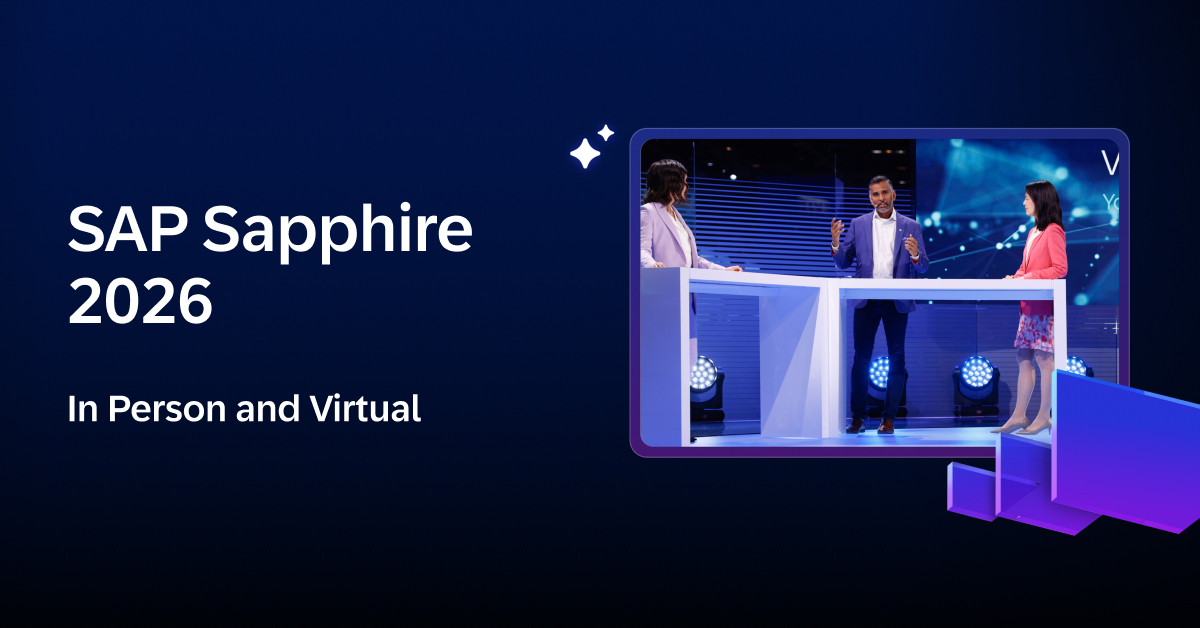

Real brands offering real customer engagement insights, including:


Context-aware engagement, powered by AI
Should we launch in? Yeah, I can do my prepared remarks now Are you ready for some prepared remarks? Dazzle them right. Well, I will dazzle you with a whole load of slightly overwrought Punning around the concept of of medicine. Oh, please ready. Here comes the the prepared remarks It's time to meet the GP for your GPT like that one like it the medic for your metrics a prescription for your positioning Yeah, okay. Stretching it now, stretching it now. Welcome to Dr. Mark Ritson's AI Marketing Clinic. Hello. Have some applause in the room. Hello. I want to point out here as well, I am actually a doctor. I stopped being a professor quite a long time ago now, but I continue to be, according to my checkbook, a doctor, and I just want to make that clear. This is all super legit. Not that kind of doctor, though. I mean, I'll have a go, but no, not officially. Any medical advice should be taken with a pinch of salt, right? Yeah, but you know, I mean, me rather than anyone else, unless they're a doctor, right? Today, though, with focusing on a particular topic, the holiday season, these high peaks for shopping have always been make or break for the world's biggest brands, whether that's Black Friday, Boxing Day, or indeed, as we've discussed, the day before a large football occasion. These serve as regular brand health checks for marketers, separating those with a sound strategy from those who have ignored the symptoms all year. Remember, AI is now in the immune system and it's getting everywhere. Marketing issues are getting harder to diagnose, but are they essentially the same old issues or is AI making things work? Some brands, the metaphor is stretched to its limit, are responding well to treatment. Others are languishing with a technology dependency that is spiraling out of control. So for our second clinic with Mark, we're gonna be looking into that. All the AI, all the holiday season stuff that our good viewers are going to be throwing at us. You can watch the first of these on demand after you join us for the live session today. And this time, we're supported by our partners at SAP Engagement Cloud. Some of them are in the room with us. Thank you for the money. And over the next hour or so, Mark will power through a load of your questions and probe how AI is changing the game. We're also joined, I should introduce a third party in this, which is our glamorous opinion editor at the drum, John McCarthy, who is. Manning the board to see your questions and we'll be sending them to me live into this We should say, Sam. So the questions, let's have some proper questions. And what I mean by proper is, it is, I mean, we're taking the Mickey, obviously, but we can have a practical kind of workshop style thing. God knows we've got enough things with podcasts between two blokes talking **** about marketing, right? We have 9,000 of those almost on a daily basis. We have nine times those between you and me. Alone, so let's avoid that. Let's talk, I mean imagine we, I always like to use analogy of plumbers. Imagine we weren't marketers, but we were plumbers. We'd be talking about pipes and toilet fittings and practical things, not just esoteric ********. So I'd like the questions, please. If you've got a proper marketing challenge that involves practical **** going on, I'd be delighted to help there rather than waffling on about horse ****, which I can also do, but you know. Think of it as an office hour. An office hour, indeed. You're a real doctor, a real former professor. Indeed. We want specific, we want in-depth, and we want as much as possible on the topics of holiday season and AI. Well, look, I mean, you go and see your GP. You go in and say, look my hemorrhoids are giving me grief, right? You don't go in and say what's your point of view on, you know, stethoscopes? Let's keep it practical and problem related, I think, is what we're trying to say. And I have very briefly mentioned that we have a sponsor. I believe it was SAP, wasn't it? SAP. Thank you. And perhaps a report that you want to mention? Yeah, so I've started working with SAP now for about six months. And one of the delightful things is I find myself, much to my horror and delight, aligned with SAP on almost everything. And one the things I think that's been delightful about my interaction with them thus far is a really no-bull **** approach to the whole AI topic, which has been delightful. And looking at how AI is genuinely starting to change things, rather than... Ooh, is the new ad going to be, you know, is it going to upset consumers because they're using AI, the superficial stuff. So yeah, I'm very engaged. And aligned and I believe I don't know if it will be on screen now but it will be at some point there's going to be a QR code on your screen so if you're watching this on your laptop you can scan that on your phone and you can have a look at the report Yes, there's a very good report which looks at, I think a lot of the nuts and bolts of the, what we look at as the gap between how everyone talks a good show and what really happens is kind of like soccer. Everyone talks a show about tactics and then they start playing in its pants. It's the same thing basically with service demand, especially in these peak periods. Everyone's got a wonderful service and delighted consumers and then promptly the wheels fall off the lorry as soon as more than three customers need something. Okay, so I think we've given viewers enough of an introduction to know what kinds of questions we're looking for, so get those in now. John is going through them as we prepare for real live audience questions to come in. We have a question from our friends at SAP. Also, if you get a question that I genuinely can't answer and I'll be happy to say, we will give you a subscription to the drum. A free subscription to the... Description of the drum. If a question is so good that it stumps Mark, he's going to break the fourth wall, look straight at a camera and offer you a subscription, which is worth thousands, potentially millions, because you could get ideas that transform your business. Very true. Right, that question from SAP. What are the trends you're seeing with High's peak holiday this year, and where does AI fit in? So, I think... Again, using that football analogy for a second, it's all very good at the start. The coach goes out, talks about what they're going to do, and then they start playing the game. And of course, as in England's case, we lose a man, get sent off, things get pretty gnarly, we get into the last 10 minutes, everyone's exhausted, and suddenly the tactics disappear, the strategy's gone, and things get a bit appallingly poor. That's a good analogy for what happens during these peak periods, whatever that peak seasonal period might be. I think we're genuinely beginning to see a small number of companies not using AI to generate astonishing fake advertising, but using AI to actually manage data flows and customer service in a way that is beginning to generate an ability to handle high capacity. And I think that is one of the first genuine movements that we're seeing beneath the surface in terms of implications for market. Okay, and in that analogy, the football analogy, AI is what, it's a new set of rules, it is AI would, well... AI would, well that's a good question, AI would be a hydration break that if you're smart you use for a strategic and tactical refresh, which I think Thomas Tuchel is pretty good at. Right, we have our first question and it's from Kelly Pooke, who's digital transformation director at Iconic, who asks for some predictions that you might have around how customers are feeling when it comes to loyalty in particular and the impact that AI has on those relationships. Yeah, so it obviously changes a little bit because we've kind of got you suddenly jumping into bed with your partner But also there's a robot there as well in terms of loyalty. Do you know I mean like you're gonna have to get past The gatekeeper of AI first, but the principles of Lloyd's loyalty, I think remain in place Otherwise, we kind of have this weird world, you know, Ehrenberg-Bass has more and more influence on all aspects of marketing That's generally a good thing But they have this total hatred of loyalty and customer loyalty programs that doesn't quite stack up If you get them on customer loyalty and CRM, it's close to the end of the world in terms of the impact it has, and you can't quite piece together what the problem is. I think loyalty remains a really wonderful lever to pull. I think being able to manage the data better is probably at the heart of getting it done well. The acid test here is there are very few companies that are actually managing your or my data well. To give us what we were originally meant to do with direct marketing, which is welcomed useful stuff, right? How many things do we get sent to us in our mailbox, digital or physical, which we go, oh, I'll see what that is. And the answer is almost none, because we missed that challenge of CRM, which is give them things that are useful. And targeting can be useful. If you're gonna give me stuff that you know that I will need, I'm interested. But we seem to have missed that point somewhere along the way. So I do think there's an opportunity still to manage data better, give people things that are genuinely useful and interesting. And I can count on one hand the number of companies that have managed that with me. Do you want to give us an example of one of them? Yeah, I mean, I'll give you, my favorite one is Qantas. I'm a very, very high status Qantas customer because I travel everywhere and they know everything about me. And you've got to remember from an Australian point of view, you don't just fly with Qantas, you have your home insurance, so you have your wine. You have your health, you have everything, I have everything through Qantas, right? I have a credit card with Qantas. And yet, every year to thank me for spending almost a million dollars a year with Qantas, the CEO sends me a letter and attaches, last Christmas, a bottle of gin. And any 18-year-old marketing assistant could have worked out from my CRM that I don't drink gin, and I'm not interested in gin, and I've never bought gin. You've got literally everything I've ever bought. Look at that and find something that you know, I have a passion for Shiraz. I like to travel to exotic hotels. You know what I mean? You know, stuff like that. Could you not have done a bit better and a bit more personalized than something that I've never bought in 50 years? You know I mean. Right, air carriers take note, Shiraz for Mark. Well, in this case, yeah. Or just, you know plow through the data a bit and use your, you don't have to give people special offers. You don't to knock off the price. What you have to do. I used to work for LVMH for a long time, you know, I worked in their CRM systems. And the whole point was we have this savoir faire, this great French phrase, right, of know-how. So if you ever look at how Fendi make a handbag, you know fato e mano, you'll see basically savoir faire. These men and women are artists. They have knowledge that's incredible, right? And the point that my senior bosses always made was take that skill and knowledge and flair and put it into data, not just into leather goods, right. But we haven't done that. We've been a bunch of morons with the data, and we've got more and more data. It's exponentially bigger, but our skills and capabilities, if anything, are going backwards. So the great hope here is companies like SAP, without, again, giving them too much credit, and the application of AI take us to a place where we actually use data properly with savoir-faire and delight consumers with something that's beyond the basics. We're not seeing that much of it. You think how much data there is, how many touch points there are. I did this thing in New York with SAP a couple of months ago, and I said, give me an example anyone of where a company has actually used the data to delight any of you, and no one could come up with one. Do you know what I mean? B to B or B to C. When Lester Wunderman started direct marketing, his whole point was, advertising sucks because it's general and mass. We are going to create a scientific, targeted discipline that will give you exactly what you want. But that hasn't happened. All we've got is 400 flyers and a Gmail box full of ****. Do you know what I mean? Well, that leads us on, I think, to the next question that we've got that's come in, which is, I suppose, about what happens when we get too good at that stuff, right? So this comes from Joshua Romero. Oh, we are. But carry on. Carry on, Sam. Yeah. Joshua Romeros, data and AI experts. I'll read the whole question because it's quite a nice one. When a brand automates the marketing system end to end with agents producing, personalizing, and optimizing, who's left in the organization with the authority to say no and who can actually be heard? Everyone's building guardrails for the output. I've seen far less thinking about where the judgment sits when the system runs itself. In principle. I think it's horse****, but I think it's a really good in principle question. Sorry, Joshua. No, he's making a good point still. My point is, go back to what I said a minute ago, if we were living in an era, let's say 2030, where everyone has got extraordinary data analytics driven with incredible AI automation producing personalized one-on-one experiences, then this is a great question. But my point is we're not there. We're mostly just churning out the same old **** to the same people in the same ways. But to answer Joshua's question, I do think at some point there is a moment there with AI where at least at this point, we still need to have that Rick Rubin tastefulness that we've all talked about. I think I'm one of the people that believes eventually that will not be necessary and very quickly in a couple of years perhaps. We will be superseded on the taste as well. I think that's possible. I think it's all artificially programmable eventually. I think we're in the early stages of this, but let's see. So it's a good principle point, but honestly, I think practically, let's be clear. Most companies are so useless at data management, so useless that handling these peak season challenges, we should welcome the lack of, look what humans have achieved over the last 15 years. It's ****house. We need something better. Let's give AI a go and not worry too much about the gatekeeping of this. Okay, a question from, I apologize Oana, Oana Follagia, that's my best guess at your name, who's marketing manager at Selway Joyce, and it's a very straightforward question, what channel should I invest in next? Now obviously that's a question in the abstract, but perhaps, what channel are you looking at with excitement, with a bit of interest? Absolutely, again, it's a stupid, I like the question, but it's stupid question, but I think it's trick question. That it is an impossible question to answer. And what we've got in marketing is a major problem because everyone and their mom turns up and goes podcasts, right? Step back out of tactics. There is no way on earth I can answer that bloody question because strategy before tactics. What's my target? What's position? What's objective? What's my budget? What other tools have I got in the mix already? And what have I learned from the previous year? Strategy, then we'll make the tactical choice. So the first answer is get your strategy straight because that's an impossible question. The second response to it is why are you talking in the singular? Every single piece of research we've ever seen in the history of communications tells you diversity works here. A times B is always greater than two A or two B. And I don't care what A and B is. A can be podcasts and B can be, and I don't know, digital display advertising. You're always better off having a bit of both in almost every single instance. You know, I'll go back to the early days of Facebook. Facebook could clearly show you that if you took some of your Facebook money and put it on TV, Facebook worked better. And ITV had all that data showing that if he took some your TV budget and put some of it into Facebook, the TV advertising worked better, I don't know why everyone doesn't get this message. Diversity works. It works in all forms of channels. So the two answer, I'm sure it was a trick question. Number one, strategy first. I have no idea what's the next channel. It depends on your strategy, obviously. And second, why talk in the singular? Clearly, it's about a mix. It's about campaign. It's a about diversity and it's a bout integrated marketing communications. And you know, in my 30th year of doing this, why we don't get this is beyond. I'm looking at the next question on the list, and I have a feeling it will irritate you. Great, bring it. But I'm gonna ask it to you, and let's see. So Sarah Rose, who's head of merchandising at Neverfully Dressed, should I invest in a loyalty program? Is the answer similar to the last one? Uh, look. Yes and no, right? It's a bit of a broader question. So yeah, so first of all, strategy first, but more importantly, you're funnel first here. Sarah, was it? Sarah? Sarah. You've got to get into the funnel first, Sarah, because again, I have, God, I'm mentioning Ehrenberg-Bass too much again, but the issue with Ehrenburg-Basses, they're always like, it's all about penetration, yeah? It's all getting as many customers as possible. Don't touch repeat purchase, evil, sinful. I think that's plain wrong. In the sense that if you look at your funnel and you've got a leaky funnel and it speaks to objectives that are about retention, repeat purchase, line extension, then strategically the door is open for you to invest in a loyalty program, so yes. I think that generally we have to acknowledge penetration is the engine of growth. I think it has been proven now. And I think if you went back 15 years ago, Sarah, everyone became so obsessed with loyalty and loyalty programs. We kind of lost the plot a little bit. That McKinsey stuff about it's four times cheaper not to lose a customer than to get a new one, all that wobbly stuff, that's all gone and that's good. It doesn't mean though that loyalty is not a very, very successful strategy if your funnel tells you that that's where you should spend some of your money. It doesn' mean again, we can't also have a penetration strategy too. So maybe, have a look at your funnel. Follow-up on loyalty which comes from Matt's Georgeson a fellow PhD. I know Matt's yeah, and it is well you It's not a real PhD either though, don't worry. It's no real PhD. He hasn't got a real phd either. Carry on though. Is yours also fake? Well, it's not, I mean, we, you know, Matt's is, yours is psychology, if I remember right, Matt's. Mine's in marketing, I mean, you know. Yeah. Well, as someone, someone who's struggled through, of a philosophy PhD. Well that's real but just pointless. Mine's got lots of value it's just you know. Anyway Matz asks follow up on loyalty programs aren't they all just about hidden discounts even if they're data-driven isn't it always about buying loyalty with discounts or points and cannibalizing what you should what you would have seen. No, I think he makes a good point. They usually are, because at the end of the day, the dumb marketer in charge of what could be quite a good system presses the red idiot button. What are we going to do? I know, we'll give them a discount. Let's just evaporate some margin. Let's piss off our loyal customers that paid full prices. Let's pull forward demand. We're going to spend all this money finding the people that like us the most. And then what we're going do is we're going to marginalize our own products. Right? And piss off the relationships we've got and commoditize our brand. So Mads is right. But if we just got to the point where we had these actionable, even personalized segments of customer, and we said to ourselves, not just, right, give them 20%, but we said, right. Let's look at the portrait of these customers. Let's just look at their buying patterns. What can I give them? That will motivate them and drive them to do what we want to do. So again, you're looking at the portrait of the customer, you're lookin' at your brand position, and you're lookin' at you're objective for that customer. So for example, one of my favorite segments of all time is Sleeping or Dead, right? So many of the fashion brands have Sleeping or dead. These are people that bought a lot, suddenly disappeared off the radar three years ago, are they just either literally or metaphorically dead to us? Or are they asleep and can we bring them back into the brand and they'll start spending big again? There's a really strong case for investing there, but not with a, yo, get 15% off if you buy a Fendi handbag on Tuesday, experiences that money can't buy, look at that person, right? Look at what turns them on, look at what they're interested in, and then look at the things we can offer them that have again value to the consumer. I mean, again, Qantas, We have these direct flights, I'm making about Qantas, but Qantas have these new direct flights from London to Sydney coming. If you looked at my data for more than three seconds, you'd know I go on QF1, Sydney to London, about 10 times a year, right? They've done all the planes, they've had everyone go and have a look at them now. I should have been in that group, man, have them look at that, because I'm a million dollars a year for them if they show me the plane and give me a decent look at it. I don't need a discount. What I need to do is feel like I'm involved in the thing. Basically in charge of it. I hope Qantas are watching, because I'd be... Peter, the CMO's a good friend of mine. She'll be delighted with this coverage, I can tell you. But it sounds like they're at risk of losing a customer. They need to... No, no, they're... They're not. I mean, you know, I'm... Never going to get on Emirates, trust me. Good to know. Right, we've got another question from SAP here to zoom us out slightly. What are the fundamentals that marketers should be thinking about to maximize their high peak season efforts? Yeah, I love this. What we're finding increasingly is, I mean, there's this gigantic gap between talking a good game on service and actually when push comes to shove and 10 times the normal number and flow of customers comes through that we have to worry about. So you're worrying about two things. The capability you have internally to manage this and then the external experience and touch points that are coming through to the consumer. And I think of all the things to highlight. And it sounds a weird message, because we spend our lives, Sam, talking about how marketers need to have more influence in the organization, right? It's sort of a common cliche. We have to reverse the point when we get to this discussion and say, actually, marketers have to sort of give up power and control and recognize that the whole organization has to be beholding to the consumer and that data is almost like irrigation. You've got to pump the customer data and the customer effort across the whole organizations. Because that old joke, you know, marketing is too important to be left to the marketing department does apply here. So I think it's a whole of organization effort to realize there are busy times where we all need to work together with the old joke almost like we work for the same company. That leads us very nicely onto a concern of an actual marketing director here, Dara O'Donnell, who says, if AI genuinely democratizes marketing, does that actually benefit brands, or does it just compress the competitive advantage that good marketing used to create? In other words, does or will AI level the playing field and regress to the mean if adopted by all? Yeah, it's a very common question at the moment. And obviously, I don't know, ding ding. But I think we can have a pretty good guess at the answer at this point, right? I think in these early stages of AI, I think it's allowing companies that were really far behind on marketing to potentially catch up. If you look at, what's a good example, marketing planning or synthetic data. If you introduce AI into these companies, they can jump to a diazio level of quality almost immediately. So that, to some degree, levels the playing field. Having said that, at the end of the day, it'll still come down to a couple of things that aren't imminently AIable. Budgets, the size of the brand involved, and something we still don't talk about enough, the product and the experience. At the end the day these are still the big levers of success, and AI can help us in those things. But it isn't just a strategic advertising game. So yeah, I think it will lift the lower levels and that can only be a good thing. The quality of marketing is pretty poor. I think that's a good to look forward to. I don't think it nullify the difference between a good company and a bad company. And if I can finish on the key point and the key reason why, at the end of the day, it's a relative game. If everyone starts making really good beer. The one that's slightly better still wins. So you know what I mean? It isn't like you start to close the gap too much. It's still a relative win. So no, I think we're, you know, we're seeing a little bit more of a happy medium, which is good, but it won't remove the power of differentiation or advantage. Okay, we've done some nice sort of abstract thinking. We're starting to see some really nice specific questions coming in here. The clinic is truly open. The clinic's open, let's go. Okay, so we've got Joanna Peach, who's group vice president at Adeko Group. Historically, we have organized marketing around specialist functions, for example, brand, product, demand generation, blah, blah. AI is beginning to collapse many of those boundaries. If you were designing a global enterprise marketing organization from scratch today, what would it look like and what capability would it provide? Ooh, I like this one. I like it. It's big and it's an unpopular question in the sense that we don't ask it enough. And I've looked at this before. There aren't any real stock answers to structure. If you look at the, what is the ideal marketing structure? Nevermind before AI, with AI arriving, just before that, what was the right, marketing structure is not something we've covered a lot. I'm a big fan of P&G's model that came out of McElroy in the 30s. It obviously is a little bit of an update. Because we're talking about the 1930s, obviously. I think the one role that I see having just as much power now as it did 50 years ago is the role of the brand manager. We still need a brand manager to represent the brand, to get the budget approved, to tweak the plan, to manage the relationships, to program the AI. So I think for me, maybe the best structure that emerges. A single or brand management team around each of the operating brands and then this common functional base that provides all the inputs, which to Joanna's point is the bit that is very rapidly merging into one data-driven mass. So if we imagine an overall marketing services hub, not dissimilar to what publicists are pulling off in Paris. But with these separate teams managing brands in distinctive ways on the ground, I like that model very much. And if you add in the matrix of global local, which is a notorious **** fight, you know what I mean? One of the things I spend my life talking to companies about the fact that they're not super ****** up, it's another one, because they can't get the global local thing to work. Why don't the Germans do what we tell them to do? Why doesn't headquarters get it? Every company I've ever worked for has this problem. The matrix is very, very conflicting. But if we can transpose that sort of brand functional group in headquarters and then link it to marketing teams for each brand in each country of operation, I think we've got close to a good model there. And on that global local thing, if you ever look at the long and the short of it, properly, It really is much bigger than long and short. And one of the dimensions of the long and short is global local. If you look at what long really means, mass, distinctive, top of funnel, global, it's the stuff headquarters should be doing. And if you look the short of it, it's activation, it's performance, it's targeted, it is imminently local in each market. There's a really good rubric there for managing global local as well. So I'd say maybe three dimensions. An overall functional team. Which to Joanna's point is merging dramatically now with the influence of data and AI, servicing different brand managers at HQ, linked to activation teams per brand. In each country. Another nice specific question for you here from Katie McElvenny, hi Katie, freelance media consultant who says, how early is too early for Christmas campaigns? Is there any actual evidence that shows going earlier is better? Also, she says, Mark, I read your piece on Gen Z in cinema marketing. Perhaps you could tell us what this says so that viewers understand. Could the same apply for Christmas ads? For example, stop investing in the giant annual Christmas TVC budget and put it elsewhere. Yeah, very good. I don't know about when. It's a very interesting question. I think it depends on the media and it depends the cycle of purchase. So that's a variant question. In terms of my thing about cinema, I think what we've seen with Supergirl, which has been a disastrous movie, partly because it's a **** movie. Let's start there. Have you seen it? I have seen it. I've got a nine-year-old. She thought it was great, but she's nine. It's Pants. She's the audience though, right? Yeah, there weren't many people in the cinema though, to be fair, right. She's only audience. She's an only audience to that point. The argument is, if you look at spaces and there's another, a couple of other, I haven't seen them, but there's a couple other weird OTA driven movies that have come out recently by 20 something YouTube. Backrooms Obsession. Backrooms it is. Yeah, Backrooms obsession, exactly right. They are, Phenomenally successful even the ping-pong movie with Chalamet, right Marty supreme. They've all done like I'm doing mastermind You do you're filling in the gaps very nicely. I'm glad you came Sam They're all doing huge numbers of very small bases and they're defying this thing that the kids don't go to cinema anymore the kids down go to the cinema anymore if old ***** like me are basically recycling old concepts like Supergirl or you know, etc or another Marvel franchise, people are tired of that. And there's a new generation that has genuinely new tastes. Another ******** Star Wars film isn't gonna do it. And so the minute you give kids a different esthetic and a different kind of narrative structure from a genuinely new generation, what do you know? $10 million films are making $200 million at the box office. So I think what's happened is, Anita Elabrezi is a very smart, very brilliant Harvard professor had this theory of Big Bet. And what it basically says is just keep making, you know, Empire Strikes Back over and over again and sequels always win. It turns out, yeah, for about 15 years, but at some point that regurgitation takes you so far away from the trajectory of the audience, you begin to see there's a problem. Does that apply to Christmas ads is the last part of Katie's question. And the answer is probably yes. I think we're at the end of the John Lewis cycle. I think there is now a... A zig moment. We've all zagged. Even the Americans have zagged into heavy emotion. There's always gonna be a role for that. I think there's probably something new that we could do at Christmas other than the standard John Lewis tearjerker. I mean, my point about emotion has always been, yeah, I like it when the, you know, when the dragon, you now, finds a baby or whatever. You know what I mean? Like, it's all good. But there's a wheel of emotion we have to access. You know, scare, befuddle. Threaten you know, there's a lot of emotional buttons that we can press they all work that the secret of emotion in advertising is very simple Nobody gives a **** about your ad especially in b2b Yeah, so you're gonna have to press an emotional button because the minute you do that people go Oh, I'm involved because otherwise I wasn't involved and so much of advertising and communications what happens is really well-meaning men and women who are very serious about selling, you know, printers and corporate insurance, go, this is a serious business, and their ads are very series. And they miss that point that, well, no one gives a **** out there until you start making someone feel something, right? Feel something, anything. I'm always struck by the system one data. You know, when they show those 30 second audience responses to an ad, it starts out white. And then if you have a negative emotion, It can be red or orange. If it's positive, it's green or blue. And the point is within that 30-second window, the more white you see, basically the less effective the ad's gonna be. You want them to feel anything because feeling something involves you. So yeah, I do think, yes, John Lewis has done an amazing job. Let's all feel sentimental at Christmas. That's literally 1% of the potential of what we could be doing with our advertising. And again, to use Orlando's excellent point from System One, why do we only do it at Christmas? Why is it only Christmas we decide to make customers have the feels? It works the whole year. It doesn't give you a license to make **** didactic ads for the rest of the year either. I have two dispatches for you, Mark, from our off-screen Richard Osmond figure, John McCarthy. The first of those is that if anyone's paying attention, it's John, because we have now found our free subscription. Dara O'Donnell, apparently, in your answer to that question, it was about the one about... Yeah, we gave one away. He said, I don't know. No, no, I was I was fully cognizant at that time that okay I'll leave a description. Is there only one to give away? I thought we could give away multiple ones. Is there any one? Is there only one? Maybe we can. John, can we? Okay. John says please don't. Please don't! And the other thing, we're about 35 minutes in now, Mark, so if we're going to release you, there's a shackle around his ankle, fast answers. First answer is sorry, I'm waffling on, go. So maybe one more question, I think, from SAP, which is, what are the most important touch points during peak season? Oh, I love this one too. So there's this wonderful opportunity to recognize market orientation here. In my life, working with a very large number of companies, a couple of things happen over and over again. One might even say, same ****, different flies. And it's in my top five of recurring consulting experiences. The list of touch points that the company thinks are important. And the list of touch points that actually are important in terms of delivering customer experience are completely different, yeah? Completely different. So the first lesson of customer touch points is if you work for the company and you haven't got the data, you don't know what they are. It's always the **** you were ignoring. It's the limo ride after the flight from the airport that you never thought about, yeah. So for me, The first lesson of touch points is don't assume them, don't write them down, don't copy your competitors, go out and do a very simple bit of research which is qualitative normally, and then which is coded post-collection into quantitative sets, and then, which is correlated back to experience scores and everything else. It's not that hard to do, but it's got to be qualitative because qual is inductive, and inductivity is the way to go here. So for me, the touch points that matter are the ones that you have assumed, but you don't know about. And I'm gonna go no more specific than that. Right, we've got about 20, 25 minutes left here. Can I just throw in one? If you work in retail, it's windows. So I throw that in. And if you work at B2B, it is the entrance, it's your reception. Physical things. Well, I tell you, I used to work for Ericsson a long time ago in Stockholm, in Schista. And one of my favorite experiences at the time we were positioned in B2P as open systems. And they had this ridiculous revolving door which occasionally broke down. It was very Scandinavian. And I remember one morning, a Japanese visitor from Tokyo became trapped in the revolving do and he had claustrophobia and he was trapped in this glass cubicle revolving door for about 40 minutes while Swedish engineers tried to get him out and he screaming like a small child. I remember looking at this big poster that said open systems and then we had this sort of Japanese guy in a glass cage screaming like, ah, and I was thinking at the time, that's probably not good. It's not a good touch point. There were thousands of customers trying to get in, but couldn't get in because the Japanese guy was obviously obscuring. Avoid screaming. Entrances are probably the place where, in B2B, everything comes in and everything goes out, and for me, are incredibly generic and poorly done. Right, fast answers for that one, Mark. OK, OK. Okay, nice one here from Joachim Bentz, apologies if I've said your name wrong, strategic marketing leader and consultant who says, how will marketing management education, likely in the MBA, change in the coming years as AI takes 90% of our cognitive functions? Yeah, it's a good question. How do we continue to educate newcomers? No one's going to Fontainebleau or Edinburgh for a three day course where you sit down in a room from nine till five and then go out and get hammered every day. Those days that many of us grew up on are over. You can't sit in a a room anymore. It's a 19th century model of training and it's over. Just no one's told the universities yet. So where do we get to? I think we still need training. For me, I don't believe you can be trained in AI. I think that's a nonsensical idea. AI is AI, why would you as a human be trained in it? It's a tool to be used. I often compare it to a horse. It's the most amazing, fastest, most agile horse we've ever seen. But you don't need to be trained in that, you're the jockey. So you still need to an amazing jockey, you've just got access now to the most ridiculously powerful horse ever created. So learn your trade, learn to be a good marketer, and learn it from applied ongoing programs of training that do not involve sitting in a classroom because the classroom era is unfortunately over. And please don't outsource 90% of your cognizance. To anything. That makes me very sad, don't you think? Yeah, I mean it's a it's it's a partner in crime. It's not a replacement. It's clearly what's going to happen. But we're still in that early phase where everyone's ******** their pants. Rosie Hook, speaking of which, senior brand manager says, has AI reached the point of having credibility in marketing, or is its impact and or its credibility still open to Chris? Pete Weinberg, who runs Evidenza, is my favorite AI person, right, and he's one of my mates. And he will do these astonishing speeches, and I've probably told this story before, but it's my favorite experience. He'll go into a room full of B2B execs and he'll show them all this synthetic data. And literally, the whole room is like, at the end. And he turns around just as he walks out like Columbo and he goes, that's the worst AI is ever going to be. We are in the very early stages of this ****. It's not, you know, we're. We're programming in DOS, talking about it as if it's already a thing. We have so far to go in this area. God knows what it will eventually be capable of. OK, this is a long question, but a good one from Celine Dallas, who's a brand growth expert. If AI shopping agents start doing an increasing share of holiday purchasing on consumers' behalf, brands may lose their usual peak season signals. Browsing spikes, car abandonment, on-site personalization. It's not true. It's a good thought, it's not true. What we're finding more and more with most of the AI driven purchase agencies, they behave spectacularly like humans. Partly because they're driven by their human masters and partly because the way in which AI is choosing to operate is very much brand-centric and very much driven by existing consumer plans. So I don't think that's going to Do any of them, this is the second part of her question, do any of them stop working? Any of those signals disappear? At the moment, I don't think so, no. I think we are, I think it's fair to say there's a two-stage model emerging where in the past maybe there wasn't, there was a unified human. Now we've got an adjunct. But it's not this world where the human is suddenly recessed and the AI platform is taking control. I just don't see that's a... Accurate for what we're seeing. I have a missive from John here that says, Matt's Georgetown PhD has commented to defend his academic credentials. OK, OK. Would you like to apologize for being rude? Not really. What is his PhD in, then? We'll come back to John on that when Matt's replies to us. Psychology. Psychology, apparently. I rest my case. Come on. Apparently, he's a PhD in psychology, though. I called it. I did call it. What have we got here? We've got Graham Harrison, director of communications and content at American Magic. Who says, what can brands and advertisers learn from 20 years of search advertising and apply to advertising on LLMs? Can future LLM advertisers be trusted? That's a nice question. I think what we can learn after this 20-year foray into search, the digital paradigm, the total revolution that was digital marketing, is the old rules still apply. We've been on a very big circular journey. We invented all this stuff, everything was going to change, and where are we now, 20 odd years later? The same fundamental rules of communication still apply. The role of emotion, the role of distinctive assets, the diversity of different communication media we talked about earlier. None of that is gonna change. And you have to be careful because me sitting here in my white coat telling you that things don't change doesn't make any money for me or the drum, yeah? That's why it's a dumb message, but it doesn't stop it being true. You get some buffoon in that chair next time around. He or she is selling you a book on how everything's gonna change. Take your clothes off, throw yourself out the window. Without this, the whole world will be different, yeah? Let me guide you through this new paradigm. There's money in the ********** of change. The ********** of change is ridiculous. Obviously marketing is changing. Obviously advertising is changing, it's always been changing. But in marketing with such a bunch of buffoons, we throw away all the existing theories of marketing because now we've got AI, like we had search. The old rules. Still apply? The degree gate is continuing. Apparently, Matt Georgetown has a marketing degree. We can put that one to bed now. Sorry, a marketing degree with a PhD in psychology is not a recipe for academic rigor. I'm not having a go at you, Matt. I've got exactly the same. I've a double marketing, undergraduate marketing, PhD in marketing. I'm a total academic. Right, we've also got the return of Johannes Braun, who says, Mark, what advice do you have for small brands that helps them gain market share using AI? It's a classic question, right? So the first thing is synthetic data really is leveling the playing field for you guys. You are able now, particularly in the B2B SME space, there was this whole sector that just could not do research because if you're sub $10 million revenue, how on earth are you gonna do any form of quantitative research on a B2P decision-making group? Suddenly, with synthetic data in that B2D space, you have a phenomenal opportunity. And for me, that's the area I'd be focused on now. I think next year we'll move for the first time into the arena of synthetic marketing plans. That's another place where the smaller SME businesses are suddenly going to have access to a P&G level of marketing strategy. That's coming. So I think it's a good time to be B2B and SME. I've got a nice question here from Zarko Dimitrioski, apologies again if that's wrong. It's a made-up name, clearly a made up name, carry on. He says, let's imagine AI doesn't bring the loud and big transformation and the thoughts it promises. What would that scenario look like for marketers? Can we just carry on? I'll throw you a stat to prove that it is, and it's been quietly hidden away. There are half as many marketing jobs in the UK this year as five years ago. Most senior marketers are not moving like they were in the past, and marketing salaries this year will be flat, probably down a little bit on the last couple of years. It is clearly already having and has had. Massive impact on marketing. So I think it's a lovely question, but that bus has already left. The change is already happening. John has told me this is a very good question coming up. So strap in, Jeremy Jones, strategic B2B marketing and communications leader says, one of my fears for marketers regarding AI is how excited R&D is getting about shortening time to market for new product entries due to things like synthetic customer taste preference data. I've watched them a fuse about creating and launching products in 10 to 20% of the old development time, but that is available to everyone. Does this not simply mean more products failing rapidly, shortened lifetimes for even good products? And greater pressure on making product returns. You've kind of been in this area earlier, but... I think it does, but I don't necessarily have the negative take on that, right? What do we want? We want to have fast turns. We want be able to test and learn in the product arena and the pricing arena quicker than we do right now, right. If there are two areas that I want marketers to be more involved in, it's product development and it's pricing. And if synthetic data allows us with 70 to 80 percent accuracy to get more involved with those things faster. I take the point that the cycles will increase. I don't necessarily think that's a bad thing. At the moment, we're just not involved in product or pricing because we take too long or we just aren't able to get a seat at the table. If you wanna see me get excited, and I'm sure most people don't, it's this area of being able to do massive online synthetic conjoint and the impact it has on pricing is. Truly spectacular. So yes, I think the premise of the question is good. I think that's kind of exciting. We've spoken a lot about AI. Let's fold in the other thing that everyone's talking about, influences creator economy, which is this is from Soneca Rathod, who's a CMO and marketing director. In some countries like Southeast Asia, CPG demand generation is being increasingly driven by high volume, creator content and collapsed and a collapsed social funnel. How can marketers use AI to stay true to brand building while executing content at scale and the agility that social commerce needs? Yeah, it's a tricky one. And we're still learning a lot of this stuff. I mean, I did a session with TikTok who are obviously highly dependent on creators. And it comes back to my original point. What we found is, under Tindal's research, very good on this, fellow drum columnist, if you don't get three or four distinctive brand assets in the first two seconds of a creator ads on TikTok, the ad is largely pointless. I mean people will watch it, it will have influence, but they won't remember the brand. Responsible for the ad. It's a lovely example of the same rules still apply, albeit to this new world order where we're spending more money on creators. And for me, it illustrates this key challenge of, okay, here's a new medium, here is a new opportunity, don't just treat it like it completely changes everything. So the answer to it is, yes, it's got new opportunities but the old rules will still apply to it. One here from Tim Kist, who's a food marketing guy. You mentioned AI taking the ground even of a Rick Rubin, taking the grand of taste earlier. Tim's taking this literally. He's saying, I wonder how AI can taste test actual food and beverage. If I say that the taste is sour, this can have a wide range of customer actual definitions of sour. Yeah. You will still need people to actually taste the product. Yes. What do you think? I totally agree. There are certain areas where AI will have no impact at all. One of them is taste. Another one we don't talk about enough is audio, right? You can get stuff transcribed, but it ain't the same thing as being able to assess audio. Another example in the research world is shopalongs. I mean, of all the great qualitative methods, shopalong has got to be right there. And it's the contextualization of the shopalONG, or ethnographic studies of household consumption, where AI... Can never play a role. So I like the question and I think it points to this, you know, the bothism concept and the idea that we will have this incredible opportunity with synthetic data. It will always still be balanced and matched to some degree by what I would call organic or human consumer research. And in the world of taste, some of the senses will just not be accessible to AI and we'll always need to squeeze our bananas as the famous saying goes. We've got another repeat offender here. Celine Dallas, you had a lovely question earlier and it's another good one here. Thanks, Celine, about job specs, which Celine says, increasingly ask for AI native as if it's a generational trait rather than a skill. Yes. Celine says I'm two plus decades into marketing, experimenting with AI tools personally and professionally, but I'll never be native in the way that a young person is. Is AI native lazy shorthand for something else such as judgment about when to and when not to use AI? No, no, she's overthinking it. Listen, here, let me take you through this one. You ready? Are you an AI native, Celine? Celine's answer. Yes, I am. The answer is always yes when you're responding to a job. Do you want the job or not, right? It's not like, you know, I mean, I've done it with, you know do you speak fluent French? Can you ride a horse? Yeah, can you ride, of course I ride a horses. Stupid question, right. Find out later if it's relevant. But no, seriously, I means who's an AI native? You know what I mean? Like, I just say yes. If you're going for a job interview, particularly in the current insane world of marketing, there's a bunch of gatekeepers who frankly are completely off the pace that you have to get around. First round, second round interview to get into a place where you can actually assess the job and they can assess you properly. So the answer to the question, am I an AI native is of course I am. What a stupid question, move on. It wouldn't be, well we're not calling this a seminar are we, but it wouldn't be a seminar if we didn't have, this isn't really a question more of a comment. Yes. We've got one of those from Kate Evans who's director of brand strategy and social media and global events, since I think marketing plans would be amazingly helpful in B2B orgs where traditional marketing backgrounds are scarce, she says. Yeah, no, I totally agree. We will launch at Mini MBA a synthetic marketing planning tool next year built on synthetic data. We're beta testing it at the moment. It already appears to be able to do things beyond the D-Azure or P&G level of skill, and I don't say that lightly. I think the potential for that in understaffed marketing teams is great. My only caveat is, at some point, you still need people to execute the plans. Back to my point about brand managers. So you can automate some of this stuff. But not much, you still need someone to physically manage the thing. It's an old thing, if you don't have enough people to assign at least one person to be the dedicated brand manager for a brand, it's always a clue you should delete the brand. The number of companies I've worked for, so well, Sharon manages these four different brands, and it's like, right, you've got too many brands or you need more Sharans, do you know what I mean? In the same way, AI won't change that. We will still need a dedicated human resource to manage the brand, albeit partly using synthetic brand planning. Two minutes left, lightning round. One sentence answers. OK, I'll try. One noise answers. One noise answer. How should a brand optimize its product information pricing and availability data for AI shopping agents that may compare it with competitors without ever visiting its website? ****, how am I going to answer that in one line? That's your one sentence. Econometrics. Good. What level of data quality is required before a company should allow agents to make autonomous campaign decisions. Ah, the old rules apply. Qualitative, it means data exhaustion. Quantitative, it means 95% confidence intervals. Good. How should brands distinguish useful personalisation from targeting that consumers find intrusive? I wouldn't worry about intrusion. If it's useful, the data tells us it beats intrusion, so intrusion is partly a function of it being also pointless. The minute you do something valuable, people don't turn around and go, oh, I'm slightly worried now that you've worked out that I really love expensive champagne and you've sent me this bottle for Christmas. Trust me, that doesn't happen. So one is a function of another. If you can find useful, welcome things for a consumer, they don't see is intrusive, they see it as brilliant. Maybe three more here, Mark. We're nearly there. How do you recommend marketers validate predictive segments such as high intent, at risk or price sensitive before building automated journeys around them? A couple of things, God, this is gonna sound old-fashioned. I love nothing more than a post-quant focus group. And I wanna take a moment on this, because it's really important. You can do focus groups up front as an exploratory instrument. I would always use ethnography and use context work there. Once you've done your quant work, and once you've your clustering, and once your done your segments and your targets, and even once you're done your positioning, pulling in for two days, four or five groups, recruited from those segments, where you can test. Your positioning idea, and also some of your tactical ideas in a draft form in a room of people drawn from that segment is possibly the most addictive one hour of marketing intelligence you'll ever get. I think most marketers use focus groups too early. I think at the target, the target segment position is the place where you get an hour's worth of value every time. This one's from Yasin Amunala, who says, out of the four P's, if there are indeed four, are there not 400 of these now, which ones do you think are most likely to be impacted by AI, or most impacted? Look, I don't give a **** about comms, is the first thing to say. It's the least important of them. And distribution will be less impacted in the others unless you're online. For me, the most important piece, obviously, the product P ignore what Seth Godin says, it's complete nonsense. The companies that win aren't the ones that tell the best stories. The companies that win are the ones with the best products. And if we can use AI to to to better augment and evolve our products through consumer testing, it is a phenomenal opportunity. Let's talk about the most valuable P, which is price. If we can use AI through the marketing function to do proper synthetic conjoint on massive numbers of consumers, even Van Vestendorp, which can be done more contextually if you're using it with synthetic data, in my experience this year, you're looking at so much more precision for pricing than anything we've done in the past. So those two P's, the two that we really should be more involved in, there's a real opportunity coming there. I've got one that is... Says from John does that mean from John could be the John that means that means it's from from our John discounting mark you don't like it hey around holidays with a with a line of loyalty AI and personalization does that hardline change No, no, no. Look, we're too soft. There are a couple of rando 2% reasons why discounting makes sense. But I'm not going to dirty this stage with them, because what it enables is 90% of marketers to go out and **** up everything with the overuse of discounts. Let's be clear what discounts do. They piss off everyone that pays the loyal price. You start a price war with your competitors. You encourage your retailers to seek more discounts in future. You pull forward sales, thereby asking for more discounts later on. You commodify your brand and you destroy your profitability. Look at those seven ******** things. You are destroying your company. And I meet you at the other end of this when you're like, well, discounting, you're a bit extreme on discounting. Aren't you? I see you in five years time when you right in the bottom of the toilet going, how do I get out of this discounting problem? You **** your bed and now you must sleep in it. I'm sort of tempted to end there, but I've got one more question and we'll throw it to you. Mihaila Cifo says, segmentation in B2B, using AI, any advice? This is your last one. Oh, I love this, yeah, yeah. I spent my life doing this. I worked a lot of medical products in B2B. There's a couple of key lessons. First of all, segmentation is a very important stage, more important in B to B than B to C. First of, do a Salesforce reallocation after you've done your segmentation, because if you can get the segments done first and then allocate the Salesforce, you're in an incredibly strong position. Second, never segment by decision maker. It leads to spaghetti and chaotic B2b segmentation. Segment at the firm level. What that means is you've got to segment all the companies, you've gotta do it at the corporate level. Once you target a segment, at that point, you can build out the buying profile, the buying committee, and look at the decision makers and how you'd approach them. But don't put that in the segmentation, the individual decision makers, it becomes too complex. Final one is spillover is super important in B2B segmentation. It's like a fashion market. If you look at how one segment influences other segments, it's one of the most important parts. So if you've got a really good B2B segmentation, you segment the whole market, you know where all the companies are on the map, and you look at how this company segment will influence that company segment either positively or negatively. Last thing about B2b segmentation. You only need three things in the box. The name of the segment based on behavior. Don't link it to targeting or anything else based on the behavior in the segment, the heavy hitters, the often unhappies, whatever it might be. Second, you need the total amount of money. That that segment is worth next year, what will they spend in category? And third, you need the market share, how much of that you're getting right now. Name, revenue and share. You put that on a total segmentation of B2B, it starts speaking to the sales team and everyone else. There's no point having segmentation if it doesn't have those three things there. Okay, clinic closed. Time to hang up the lab coat. Mark, any remaining symptoms for those of you at home can be reported in the LinkedIn comments, although of course we can't guarantee confidentiality. And the tests were back Sam, everything's fine mate. I'm thrilled. Anything you want to plug before I do some plug-in at the end here Mark? Mini MBA is open in September. Training and marketing makes you better at marketing. Come and find out at minimba.com. MiniNBA.com. Mark is published of course every week on a Monday, well apart from the next couple of weeks. I'm on holiday. On a Monday on the drum. So do check out the drum, not just on Mondays, because our stuff goes on the other days. You can look at the SAP report, that QR code. And it is look I know there's a lot of crap reports I have to admit when I signed up for the first time to look at the report. I was expecting it to be poor It's not poor, it's good. It's really good, the data's great. Sign up for the Drums Daily Briefing, that's where we'll let people know when the next one of these things is happening. You can do that on thedrum.com and have a look at our podcast too. We'll have some of this stuff on the podcast, we'll have you on again soon, I'm sure, Mark. You've got a podcast as well, haven't you? No, no, I think the world's got enough podcasts with dudes. I thought you were launching a podcast. I am, but it's not like any other. That's a secret, is it? Well, no. Let's have breaking news. January the 4th, 2027, the 101 greatest case studies in marketing. It's going to be a spanker. We've got enormous amounts of coverage ready to go. It's gonna be huge. Our synthetic data says 212,000 listeners a week. There we are, 212,000 listeners, and there's been 212 thousand people watching today I'm sure. Obviously. Thanks very much for joining us everyone, and thanks Mark.