
Hello, hello, hello and welcome to our webinar "Who Really Owns Customer Engagement". Thank you very much for joining, really glad to see all of you here. We got a great session lined up today and I think it's going to be genuinely useful for wherever you are in your engagement journey. So before we dive in today, let me quickly introduce the team who is with me here today to help. We have wonderful Fernando Pagani here, who heads our solutions team globally at SAP Engagement Cloud. And we have Sophia, who is one of our senior solution advisors. And myself, Bastian, I'm heading the services team here at SAP Engagement Cloud. Fernando and Sophia will run you through our demos later today, and you're in very, very good hands here. And I'm really looking forward to the webinar. A little bit of just housekeeping before we get started. Number one, I would like to highlight the resources that you have available today in the webinar console. So there is a lot of stuff that you can download. You'll have assets including the Engagement Index research report that we are going to talk about today. You have our Engagement Maturity Checklist that you can download so looking at the agenda this is how we are to spend our time today. We will start with a little bit of context around why this moment matters for marketers and round everything in our latest research. Then I will hand over to Fernando and Sophia who will walk you through three real scenario driven demos across a low, moderate and high engagement maturity. And then we'll take a closer look at where all of this is heading and we'll make sure that you leave with something tangible and concrete to take back to your teams. OK, so let's get started with the big picture, the reality of AI and the Engagement Era. So the way marketing gets done, we all know it is changing, and not in a small way. For years and years, the answer to growing complexity was, if you were honest, just more and more tools, more automation, more workflows, with marketers kind of still in the loop at every step. But marketers were still the ones interpreting data, building journeys, writing briefs, checking results. And if we're honest, that's still the situation across most of the marketing departments that we're seeing. But what we all, I think, all agree on, that this whole model is shifting. And the market is now moving from manual to AI assisting to finally AI that actually executes. Like from marketers that had to manage execution to marketer, really setting the direction, letting AI coordinate everything that follows. That's the direction that we're clearly seeing. And this is also where we at SAP are focused. And the maturity journey is what we are going to walk you through today. And it's not just a framework of where you stand right now. You can also see it as a roadmap of how to get there. So. Look, we all know what Agentic AI is actually able to do and how it is actually accelerating everything that we're doing in business. And the opportunity that this creates is actually significant, but not just significant. I think what's mainly important is that the impact it has is really immediate and measurable. Organizations are already seeing that AI is driving, scale, productivity, and efficiency across everything they're doing, and especially across engagement operation. You can see here the numbers and just a couple of sources that we're quoting here. All of this is especially important for marketing, because if you think about it, marketers really sit at this intersection between customer data, content, channels but also are supposed to really drive revenue outcomes and this is of course what Agentic AI where it comes in and actually changes the economics of engagement because it allows organizations to generate and orchestrate personalized experience at a scale that was simply not possible before and It also accelerates the execution speed because it moves you away from weeks of planning and optimization down to real-time adaptation of what you're doing. And also it reduces the operational overhead by continuously optimizing spend, audience selection, campaign performance, you name it, automatically. But what we also see, and this is where our research really also comes in, is that a lot of brands, a lot of companies are not positioned to capture any of this yet. And this is why we're actually here today and we're here to actually show you how we think about this. Because, if you think about it, this engagement goes actually beyond what the marketer does. And with the dependencies that AI brings, with the requirements that you have there, the landscapes that the market operates in is also changing, and it is more complex that it has ever, ever been. Because. AI is accelerating the expectations actually on both sides for the customer, but also the teams that are trying to reach them. And consumers are moving faster than the brands. I mean, we all know this from our private life. Also, loyalty when it comes to loyalty for brands is more and more fragile, and it's more fragile than it has ever been. If you think about it, one bad experience, one missed moment, one disconnected interaction, and that customer might be gone. And this is, I think, what has really fundamentally changed. Engagement really used to live in the marketing team. One team, one set of tools, one view of the customer, ideally just a marketing view of a customer. But all of these touch points have multiplied and the data is now spread across more and more systems and teams ever. And AI is just raising the bar on what is relevant, timely, and what a connected experience actually should look like. So in a way, engagement has gone beyond the marketer. And if we think about who is actually owning customer experience and customer engagement, we need to think about what that means. And the brands that we saw and we see are winning today, they have figured out how to connect the data, the teams and the technology around that single view of the customer. And the ones that have not are falling behind with every interaction. And this exact problem is what we're trying to measure with the research that we've been doing. So really our Global Engagement Index that we put together in 2026 where we surveyed around 10,000 consumers, 4,800 executive leaders across all of the markets you can see here. With this research, what that led us into is building this new engagement maturity score that will come back throughout this session. And the idea is that it really helps you as an organization to understand your readiness and embrace the Engagement Era. And what we also saw in this research is that we uncovered what we are calling the Engagement Divide. And what we mean by that is the huge gap between what customers are expecting from brands and what brands are actually able to deliver. And what do we saw is that this is actually a lot wider than people think. So as you can see, only 22% of the total brands actually recognize that they have a problem creating a seamless experience, but when we ask consumers, 82% of them say they feel regularly let down. And if you remember the 3X opportunity we just had on the slides, 78% of brands say they cannot practice real-time AI optimization to personalize at scale. So that means for brands that do not crack this divide, they are losing to the ones that do. And AI is just accelerating this divide on both sides. Because for the brands with the right foundation, this is a multiplier. But for the ones without it, it's making the gap just wider and wider every day. And what's also funny to see and very interesting is that it's not a lack of awareness or investment because the brands itself, while they still say they can execute, 78 percent already see as essential for 2026. So the intention is there. But it seems like, it also shows that fewer than 40% share the customer engagement data with their CX or CRM platform, which is crazy because without that data, even if you wanted to implement AI, which not everyone is there, it just doesn't have enough context to actually perform. And also if you think about it, consumers are already ahead of these brands because we could also see that 30% of consumers today say they are using AI agents to make purchasing decisions on their behalf. And honestly, I do this every day. Also from a brand perspective, the problem isn't really ambition, it is that the data, the systems, the teams are not really there and are not connected in a way that you need to actually get AI to perform for you. And this is exactly what the Engagement Maturity Index was built to address. So let me hand over to Fernando to walk us through the Engagement Maturity Index. Thank you so much, Basti. Let's go into it. So one of the asks I hear more often is, Fernando, how do I compare to other brands? What else could I be doing? Are we in the right path? Are we not in the wrong path? To help organizations understand where they stand, we decided to build a framework. It's basically a common baseline to measure where the brands are. OK, we build what we define as the SAP Engagement Maturity Index. And to do it, we bake 25 years of expertise in customer engagement, orchestration, and experiences from thousands of brands. The result, it's a framework that assesses maturity across six dimensions. AI and automation adoption, are we really using the tools that we are provided as brands? Connected data strategy, are connecting the dots between the silos of data that we have on our customers, which are fast, as you know. Are we doing some level of customer loyalty and then we need to define customer loyalty for the brand itself? Are we executing across multiple channels? Are we do an opening channel engagement? Are we hitting the customer where the customer wants to be reached? Are we personalizing experiences in real time? And last but not least, how much are we actually using that potential of email marketing? Those are the dimensions that we are using. The goal is very simple, to measure how well brands are connecting their data, their people inside the company, the processes and the technology to deliver intelligent experiences across the entire business, not just marketing. When we look at the results of the analysis, we see that most of the brands are stuck in the middle in that moderate maturity score. Let's break it down a bit. 16% score low, where engagement is essentially a marketing only responsibility. We see that quite often, okay? Data stays siloed within that function between sales, service, commerce, operations as a whole are all working from a completely different picture of the customer. You don't realize how many conversations I have where I go and say, have you tried to work with your customer service team to create a more cohesive marketing experience on its own? And the answer is probably not. Completely siloed team, okay? And this is exactly what Bastion was talking about, which is engagement is trapped in one team with no connecting foundation for AI to really work with. 63%, the big bucket, scores moderate. Where more teams are in the room. And some data is being shared, but coordination is uneven. How many times have we heard that IT needs to prioritize and ask potentially for marketing? Thousands of times. Maybe it's one month, maybe it's two months, whatever that is. Hopefully that rings a bell. Experiences feel still disconnected, and brands end up relying on short-term tactics rather than building deeper relationships with their customers. Okay, and just 21% score high. Every function is connected around shared data, and shared outcomes. AI runs across all of them, delivering personalized omnichannel engagement in real time at scale. And this is what it looks like when no single team owns the relationship, the engagement with the customer, but all of the do. And this where that 3x opportunity that Basti was talking about becomes real. So now let's look into a couple of scenarios that we play together so that you visualize it better. Off to you, Sofia. Great, thanks Fernando. And so we wanna kick off with the first scenario around low SEM score. And what we're finding is in today's digitally driven marketplace, many of the organizations are at this level where it's minimal adoption of enterprise wide customer engagement technologies and strategies. And we often find that a lot of this is fragmented, transactional. And managed within siloed departments rather than a coordinated organizational wide approach. And so taking a look at this scenario, our lower SEM performance is really closely tied to the state of our marketing databases. We're all engagement data lives exclusively with marketing. We're not seeing any loyalty signals. There's no purchase behavior and no cross-functional input. So we're seeing a large number of unsubscribes, unidentified contacts accumulating, and there's no clear path to win them back. And then we're finding is that this is the challenge where we can address this use case. And by using web pop-ups powered by predictive intelligence, we can start to identify those lapsed contacts and then prompt them to re-opt, re-subscribe in the moments that matter most. And this is really inclusive of peak traffic seasons. Where we can see that customers are already showing up. In the instance of pre-built forms, being able to capture category preferences at the point of re-engagement, so we're not starting from zero when we follow up. And how we address this is taking more of a strategic approach, where we're targeting high-intent moments to help rebuild that opt-in volume while capturing preference data that we didn't have before. And I think this allows us to really prioritize relevance over reach. Making sure that reactivated customers receive fewer, but making those moments more meaningful, those interactions more meaningful. I think that's really where we can help start to capitalize on those opportunities. But the most important thing about this is that we're not pulling back on growth. What the goal is, is that were protecting that long-term engagement, and most importantly, the revenue back towards the business. I think by focusing on those right moments, we can make that value exchange very clear. And if we're expecting any attrition, we can start to maintain that and help overall improve conversion and efficiency. And so by taking this approach, I want to really focus in on how we can address both the engagement and database quality health. And this is not just recovering lapse contacts, but as I mentioned before, reactivating the interaction count from the start. As you can see here, we're going to start by targeting customers in our database that have currently opted out, or we don't have any identification on them. And I think this is really a good start for us to help identify potential and high value customers that we're not reaching today. And so how we can bring them back, we're recommending that we create a web channel pop-up form that helps and asks customers to re-opt in. And why this is important is that we're showcasing the value that they will receive by being really transparent about their data use. This is a critical component in terms of compliance and governance, making sure that we are targeting individuals with the right content that's relevant for them. And so this ensures that when someone does reengage, they know exactly what they're signing up for. In the same time, we're going to capture preference data at the point of re-engagement. So then rather than following up with a generic message. We can start to use the form to collect category interests and that way we're ensuring everything is good to go, it's personalized immediately for the individual. And then after that's done, following up with email fires. So making sure that the content is matched with the subscriber just mentioned to us. And this makes sure that we show up and we're creating that relevant interaction and it's not just an impression on them. And in turn with that, we want to maximize the impact of the followup. And so this is why it's super critical to leverage send time optimization so that we're delivering this at the most preferred time of the individual where they're most likely to respond and be engaged. And this is gonna shift us from more of a batch and blast approach in more into a precision re-engagement model. And so the success factors that we can measure this across is the active customer base growth. The email opt-in rate, and then also the revenue generated from these contacts. And in turn, by combining it with smarter targeting, better personalization, optimized delivery with that send time optimization, we are working towards building a healthier, more contact data database. And then this is also gonna support the foundation that helps us move on to the next maturity level, which is the moderate SEM score. So with that, we want to talk about what this looks like from a moderate SEM score. And as Fernando mentioned, this is where the bulk of the 63% fall in within that Maturity Index. And this is moving beyond the foundational capabilities that I just discussed. We're talking about actively investing in the people process and technology that's also going to help support and enhance customer interactions. We're seeing at this level, companies are demonstrating adoption across different tools such as CRM systems, your marketing automation platforms, customer data platforms, as well as loyalty to better understand and serve customers. With this, we're able to see that this is data that's not just owned by marketing and that we're providing a solid foundation, but a meaningful portion of our audience is not actively interacting with us. We want to use loyalty data to help drive that engagement. What this means for us is that we're presenting a clear opportunity to reignite interest among the inactive and passive members and convert them into engaged loyal customers. When we focus on smarter targeting, more relevant messaging and these connective experiences, we're gonna start to move that needle to sustained high value relationships. And what that means for is that we can turn passive audiences into active participants. We're increasing the engagement without over-sending because it's targeted and personalized. Customer relationships are strengthened and providing lifetime value, and we're closing the engagement gap, improving our SEM score. Reconnecting those inactive customers in a personalized, meaningful way really transforms this entire process for more stronger, durable customer experiences that are gonna help solve this. Now, with this scenario, we wanted to provide a demo overview of what this looks like across the SAP solutions. And this is going to be inclusive of SAP Engagement Cloud, our customer data platform, and customer loyalty management platform. For the sake of the webinar, we prerecorded this session. But you'll be able to see that this is really what's going to support driving further loyalty and retention across these three product portfolios. So with that, I will go ahead and start the demo. We are gonna follow along with Thomas who is a loyalty member of Best Run. However, we've noticed that he hasn't made a purchase in quite some time. He receives an email as we've tailored this to his fitness and lifestyle journey and have also incentivized him to receive three times the rewards based on his activity levels as well as his interest in hiking since we know this about him. He goes to explore more and is taken directly to the website and is provided with a tailored overview of hiking material since we know that he's expressed interest in hiking before. He's able to see any additional products below, explore the collection, as well as add additional customizations to the look. So far, everything looks good. He adds the collection to the cart and then is able to go and complete his purchase. Within that, we're able to show off the additional bonus points that he is going receive that directly correlates to the email that he received. And also an additional point for spend for all loyalty customers. This is one example of how we can continue to reactivate loyalty customers and also identify them before they churn. Now, how we do this is by leveraging SAP customer data platform, as we're able to take a deep dive into Thomas's spend over time, his loyalty status, and we can see that he's dropped off within the last three months. All of this information is then supplied in our interactivity trail. And this is influenced by downstream events that's taken from the website, product overview, category overviews, as well as any additional activity indicators that are showcasing that Thomas is ready to buy. We can see he's abandoned a cart a couple of times and has also viewed certain products and all of this information is then provided to us in a unified profile, allowing us to capture and customize the journey for Thomas further. This information is influenced by S4HANA. It could be any data points from any other existing systems, and all of this is to allow our marketers to be able to see and identify individuals like Thomas before they churn. In addition to that, segmentation is also provided in order for us to send downstream to platforms such as SAP Engagement Cloud. Marketers will be able to have the ability to further segment into customer lifecycle stages, and this in turns allows us to identify individuals that are likely to churn, Or if they're a first time buyer, how do we further segment them and prioritize them to get them to convert? All the data attributes are readily available for us to help build out our segments further. And this allows us to send this information downstream to platforms such as SAP Engagement Cloud for further personalization. Now with that comes the creation process. All of this is done through SAP Engagement cloud by leveraging Juul. In an effort to help make marketing teams days easier, we are able then to use a Juul prompt to help us create this email. So let's say I want to reference any emails created before. Please show me a list of recently created emails to draw inspiration from my team. Juul is then able to provide us with everything that we need within the prompt and also make it easier for marketing teams to be able to access any content or programs, automations that are required. In order for us to effectively do our day-to-day job. So we can see here that this email campaign list is provided. If I wanna copy it, make any adjustments as needed, I'm then able to make that very easily. And so then I will put loyalty three times rewards. And once that's completed, we're able to then start the creation process for our email. And so now we can see that Jule has successfully done that and we can add that to our next part. And so with this, marketers are then able to further personalize the experience for Thomas as we can this is the email that he's received. But thinking about how we wanna adjust this and elevate it, personalization tokens that are pulled from CDP are reflected here. And then also opportunities for further content composition is supported. So what you're seeing here is the AI-assisted content composer that allows us to effectively change any of the content that's within the email body. So if I wanna make the selection here, can you reword? as an example. And once we do that, this will generate the prompt for us using contacts from your team brand guidelines, as well as if there's any specific government or regulatory rules that are required within your messaging, all of that is gonna be supported within the generated content. In the same fashion, we can see here that we have recreated the email in a matter of seconds. That way we're able to then scale this out further. After we have completed this and we know that this loyalty campaign is ready and good to go, we want to then shift gears into SAP Customer Loyalty Management, where all of the loyalty program inspiration and how we manage points is going to be supported. So having the points allocation is reflected here so we can see how well we're trending with our loyalty programs. Also, the ability to create specific tiers for our loyalty program to help incentivize folks such as Thomas to move over to the next tier. As well as elite club status, making this a very exclusive event for the individual to help further incentivize the loyalty program. SAP customer loyalty program also supports the ability to gamify the experience with journey building. So then we're able to really make the experience connected across the board for the individuals while there's no disruption to what they're seeing across marketing efforts. This way we make it easy for marketing teams to identify the interactions required, whether it's liking a social media post, interacting with a partner brand or the brand itself, making it easy for us to then reward those bonus points to help reactivate inactive customers, but then also keep our existing loyalty customers very happy. Thank you, Sofia, for that. I want to illustrate this scenario with a story from a slightly different industry. The industry is utilities. And utilities, hopefully, will help us visualize how we can pick up different signals which are relevant for customers. And my goal is to spike your curiosity, adapting this to your industry, not necessarily this scenario, but how you can use AI to translate this into relevancy in your own industry. Okay, so far we have talked about engagement cloud as the engine for marketing campaigns, journeys, personalization at scale, loyalty, but the same engine, the same data model can power something most utility companies haven't connected yet, and this is the proactive service. Let me give you two quick pictures of it. Bastian lives in the southern part of the service territory and a heat wave. Is forecasted five days, about 42 degrees Celsius. Meanwhile, Sofia is on the coast, and a tropical system is building with hurricane potential. They are two very different risks for two very customers, but in a traditional setup, they will likely receive a bulletin, OK, something generic, if anything at all. And any real action, a campaign, would be built by the team in a manual fashion, and probably it's going to be late on time. The most they would probably get is an SMS alert. After the grid is probably already under strain. OK, what we want to show you today is what happens when the loop closes itself, OK? Let's unpack this a bit further. The trigger point is real-time weather signals and grid signal data. Now we are not going to open up Business Data Cloud. I'm not going show that, or Gemini specifically, because this will leave behind the scenes. But it's worth knowing that it's not a mock-up. Google published in documentation how this is built, how to build an AI agent that connects directly to national weather service and feeds, monitors, conditions and reasons over them. OK? Business data cloud on the other side can spot in real time if there are big grid signals as well. That capability exists today and it's a kind of building block that when it is connected to the rest of the SAP ecosystem becomes a signal that kicks everything. We could even think of an agent-to-agent scenario where you have Google Gemini with the agent that we built and also Jewel talking to each other without any type of human intervention in the middle. Now, let's look into what we're measuring here, which is delivery rate, rate rates, peak demand reduction, how to just prevent it on the back of that, and at the end of the day, customer satisfaction. And hopefully, we'll save some lives on the back of it. But this is the step-by-step chain. Step one, there is the signal detection. The agent detects two distinct events, the stream hit and the hurricane on Sophia's region. Then we do the audience selection, which are signals that flow into customer and account data. We look into usage patterns, we look into the smart meter status, vulnerability flags in case, for example, you have the elderly residents or any customer that require medical equipment. Someone in Basti's house may need that type of device and gets flagged with priority outreach and Sofia gets flag based on her location on the storm path. And the step three is the actual content generation because there are different events, there are differences audiences, there is different content and it needs to be generated automatically in a very quick fashion. On the back of that, the step four is where engagement cloud really takes over and needs to prioritize, contextualize the audience for each scenario and resolve it in close to real time, okay? They need to choose. The optimal channel to send to the customer and deliver it in the right time window. And as I said here, there is no type of manual setup. The human is set the guardrails, but AI is the one doing the actual job. This is exactly the same infrastructure that you would use for your promotions in case you are in retail. Or selling products and journeys, but now it's triggered in operational and environmental contexts, running multiple and simultaneous region specific scenarios. Hopefully, this helps reduce the peak demand, how to just get avoided, and customers like Sophia and Bastian get the right guidance before an event like this hits. What I'm going to show you now, it's a quick video on how you can do all the Engagement Cloud bits where it's picking automatically the content on the back of it. Let's start with the template itself this one is an email template and as I scroll through you will see that it has built-in flexible blocks so this one's a banner you will say some copy here you will see the header alert over there and every one of these it's a placeholder that it's ready to be filled based on who is receiving it. And what's happening in their world. Remember that we did all the intelligence with either Business Data Cloud or some other tool that you have to select the audiences such as what Sophia showed you in the previous scenario. Right, let's go into the contact preview and we're gonna preview it for real customers. Bastian is on the heatwave region and Sophia will be in the coast close to a storm okay as you can see the template shrinked itself to adapt to where Bastion is located and he's located in an extreme heat alert zone and he has some tips in it and then if we go out Sophia we'll see that she's located into a storm zone and obviously the template adapts itself. But what you're seeing now are placeholders. No visuals, no tips. There's a structure there, but the content is yet not filled. So let's leverage technology to do this because that's where things grind to a halt. Briefing a designer, creating copy, waiting days potentially for approvals for an event that may take a couple of hours to happen. That's not acceptable. It can cost a lot of things, including danger, and obviously money on the back of it so instead of selecting it from a library let's do it and let's generate it live so go into content creation let's go for an image i'm gonna remove these ones very quickly we don't want the placeholders i'm going to copy my prompt you don't wanna see me writing in here and I am going to go into my prompt and generate content. Generate an image for Extreme Alert. I'm part of a utilities company and I want to inform my customers in the area. Good visual without being too crude for Tuesday 26. I can go here right away and place it into position number one. And there you go, extreme heat alert, Tuesday 16, and a couple of tips on the back of it. And let's do the same for a storm alert because we want to do the same for Sophia. So again, leveraging Google Gemini technology, we're generating images very quickly, very relevant as you can see. So there you go. You can accept or not and regenerate if you want and reprompt. Let's go in and insert it into position three, which is the winter storm over here. And let's see the template. We still have a hurricane placeholder, but the storm alert banner has been generated. Stay safe. Utility disruption possible, please be prepared. Okay, so... Let's go back. No, let's go back one second into copy. Let's going to content composer. Sophia showed you these on the middle scenario but I want to show you how flexible the prompt is. I have another prompt prepare in here which is gonna generate more tips or alternative tips for here so that my team of services not necessarily a marketer here can put this content piece in front of their customers very quickly, okay? The third thing that the generated content is going to do is show me the ones that I already have over here and then it's going to give me a couple of variances at the moment we're hitting the Gemini API. Okay, and as you can see, this is what I already had and here are some options. Raise your thermostat a few degrees and rely on ceiling and portable farms. Keep your phones charged, clear driveways and walkways of snow and ice to prevent accidents and allow cruise access. So let's go into variant number two and let's insert it into the template. As you can see, this adapts very quickly. What we can do now is really retest what we have just produced in minutes, couple of minutes to be precise, to what Bastien would see. And to what Sophia would see. If they receive the communication with the alerts. Okay? We just shrinked a process that may take hours, potentially days, into minutes. Being very relevant, very precise. This, obviously it's an email template, but it is valid not only for email, but also for mobile, for SMS, obviously, with a slightly different approach, although we have the possibility to reach media in SMS, or RCS, we can also do it for WhatsApp. And use the alerts and leverage the technology. Thanks. Good. Thank you, Fernando. So, look, with all of that, let's just quickly talk about the future of autonomous marketing and engagement. We have seen today how marketers can work together with technology, but also how technology can work for the marketer. And with that, I really want to come back to the original question. Who really owns customer engagement? And look, again, after everything we've seen today, the honest answer is it's not a single team anymore. It's not marketing, not commerce, sales or service. It's custom engagement is now a company wide responsibility. And if we're also honest, it probably should have been all along. But the brands that we see are winning now are the ones that have stopped treating it as a marketing function and started connecting also data, but teams, channels and every other source they have together to work as a team to make that possible. And the factor that really ties this all together is actually as a foundation data. But also the accelerator to really make this tangible is AI. And again, we've showed you today the different maturity tiers, the demos, the use cases, and they all point towards that. So from our point of view, the opportunity here belongs clearly to the brands that connect it all together. And for us, honestly, it doesn't even matter if it's inside of the platform, if you have your own agents that you train, but moving from just AI assisted marketing that is basically doing the same thing that we've been doing for a while, just with a bit more of an AI assisted approach, but it's still reactive, if you think about it, right? And what we are saying and what we're seeing is, that the successful brands, the successful companies out there are moving towards this autonomous marketing and engagement approach. So again, from being reactive to actually being predictive. Execution used to be static and rule-based, and now systems are actually adapting to that in real time. And ownership doesn't used to sit in isolated roles and teams, now it becomes a team sport. And perhaps most importantly, we also move from just insights to autonomous action. So again, static, adaptive, role-based, shared outcome, and insights to actually autonomous action where agents are doing the work. And we've seen that in the demos today. So instead of reacting to churn after it happens, the system predicted the churn before the revenue is actually lost. And instead of static journeys, experiences can actually adapt in real time based on behavior, inventory, business goals, all the weather. And instead, of silo teams, the AI agents can actually go out and coordinate everything around channels and outcomes. Really, in this autonomous model, marketers define the objective and the AI agents go coordinate and execute. This is really how AI is working to close the loop on this engagement divide instead of deepening it. Again, what we wanted to do today is give you an idea of what that direction looks like, and instead of just giving you any science fiction demo, really looking at it, what is tangible and possible today, and we hope that you could see yourself on one of the tiers. If not, again, you have our Global Engagement Index report available to download. You can also use the QR code. Thank you so much for your time today. And with that, see you in the next webinar. Thank you.

Who Really Owns Customer Engagement?
Available On Demand | 40 minutes
About this webinar:
Most brands assume marketing owns customer engagement. SAP's 2026 Engagement Maturity Index reveals why that's worth questioning: 63% of brands score at the moderate maturity level, where marketing, sales, service, and commerce have valuable engagement data but no shared way to act on it.
In this webinar, we get hands-on with three scenario-driven demos that show you exactly what low, moderate, and high engagement maturity look like in practice and practical applications of how AI helps marketers execute.
Backed by consulting-led stories, you'll see how high-maturity organizations make engagement a company-wide responsibility, bridging the Engagement Divide with SAP Engagement Cloud as the connective layer across teams.
Watch on demand to find out:
- Where your organization sits on the engagement maturity scale, and what's holding it back
- The cross-functional roles and operating models behind high-performing engagement teams
- What autonomous marketing and engagement looks like in practice at each maturity stage
- Practical use cases you can take back to your business and apply immediately
Watch it Now

Bastian Hagmaier
SVP Services EMEA


Fernando Pagani
Global Head of Solutions

Sophia Holy
Senior Solutions Consultant
Engage with the latest from the industry
Featured content


Real brands offering real customer engagement insights, including:


Context-aware engagement, powered by AI
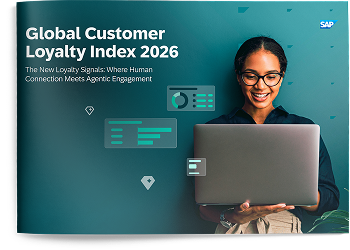
Hello, hello, hello and welcome to our webinar "Who Really Owns Customer Engagement". Thank you very much for joining, really glad to see all of you here. We got a great session lined up today and I think it's going to be genuinely useful for wherever you are in your engagement journey. So before we dive in today, let me quickly introduce the team who is with me here today to help. We have wonderful Fernando Pagani here, who heads our solutions team globally at SAP Engagement Cloud. And we have Sophia, who is one of our senior solution advisors. And myself, Bastian, I'm heading the services team here at SAP Engagement Cloud. Fernando and Sophia will run you through our demos later today, and you're in very, very good hands here. And I'm really looking forward to the webinar. A little bit of just housekeeping before we get started. Number one, I would like to highlight the resources that you have available today in the webinar console. So there is a lot of stuff that you can download. You'll have assets including the Engagement Index research report that we are going to talk about today. You have our Engagement Maturity Checklist that you can download so looking at the agenda this is how we are to spend our time today. We will start with a little bit of context around why this moment matters for marketers and round everything in our latest research. Then I will hand over to Fernando and Sophia who will walk you through three real scenario driven demos across a low, moderate and high engagement maturity. And then we'll take a closer look at where all of this is heading and we'll make sure that you leave with something tangible and concrete to take back to your teams. OK, so let's get started with the big picture, the reality of AI and the Engagement Era. So the way marketing gets done, we all know it is changing, and not in a small way. For years and years, the answer to growing complexity was, if you were honest, just more and more tools, more automation, more workflows, with marketers kind of still in the loop at every step. But marketers were still the ones interpreting data, building journeys, writing briefs, checking results. And if we're honest, that's still the situation across most of the marketing departments that we're seeing. But what we all, I think, all agree on, that this whole model is shifting. And the market is now moving from manual to AI assisting to finally AI that actually executes. Like from marketers that had to manage execution to marketer, really setting the direction, letting AI coordinate everything that follows. That's the direction that we're clearly seeing. And this is also where we at SAP are focused. And the maturity journey is what we are going to walk you through today. And it's not just a framework of where you stand right now. You can also see it as a roadmap of how to get there. So. Look, we all know what Agentic AI is actually able to do and how it is actually accelerating everything that we're doing in business. And the opportunity that this creates is actually significant, but not just significant. I think what's mainly important is that the impact it has is really immediate and measurable. Organizations are already seeing that AI is driving, scale, productivity, and efficiency across everything they're doing, and especially across engagement operation. You can see here the numbers and just a couple of sources that we're quoting here. All of this is especially important for marketing, because if you think about it, marketers really sit at this intersection between customer data, content, channels but also are supposed to really drive revenue outcomes and this is of course what Agentic AI where it comes in and actually changes the economics of engagement because it allows organizations to generate and orchestrate personalized experience at a scale that was simply not possible before and It also accelerates the execution speed because it moves you away from weeks of planning and optimization down to real-time adaptation of what you're doing. And also it reduces the operational overhead by continuously optimizing spend, audience selection, campaign performance, you name it, automatically. But what we also see, and this is where our research really also comes in, is that a lot of brands, a lot of companies are not positioned to capture any of this yet. And this is why we're actually here today and we're here to actually show you how we think about this. Because, if you think about it, this engagement goes actually beyond what the marketer does. And with the dependencies that AI brings, with the requirements that you have there, the landscapes that the market operates in is also changing, and it is more complex that it has ever, ever been. Because. AI is accelerating the expectations actually on both sides for the customer, but also the teams that are trying to reach them. And consumers are moving faster than the brands. I mean, we all know this from our private life. Also, loyalty when it comes to loyalty for brands is more and more fragile, and it's more fragile than it has ever been. If you think about it, one bad experience, one missed moment, one disconnected interaction, and that customer might be gone. And this is, I think, what has really fundamentally changed. Engagement really used to live in the marketing team. One team, one set of tools, one view of the customer, ideally just a marketing view of a customer. But all of these touch points have multiplied and the data is now spread across more and more systems and teams ever. And AI is just raising the bar on what is relevant, timely, and what a connected experience actually should look like. So in a way, engagement has gone beyond the marketer. And if we think about who is actually owning customer experience and customer engagement, we need to think about what that means. And the brands that we saw and we see are winning today, they have figured out how to connect the data, the teams and the technology around that single view of the customer. And the ones that have not are falling behind with every interaction. And this exact problem is what we're trying to measure with the research that we've been doing. So really our Global Engagement Index that we put together in 2026 where we surveyed around 10,000 consumers, 4,800 executive leaders across all of the markets you can see here. With this research, what that led us into is building this new engagement maturity score that will come back throughout this session. And the idea is that it really helps you as an organization to understand your readiness and embrace the Engagement Era. And what we also saw in this research is that we uncovered what we are calling the Engagement Divide. And what we mean by that is the huge gap between what customers are expecting from brands and what brands are actually able to deliver. And what do we saw is that this is actually a lot wider than people think. So as you can see, only 22% of the total brands actually recognize that they have a problem creating a seamless experience, but when we ask consumers, 82% of them say they feel regularly let down. And if you remember the 3X opportunity we just had on the slides, 78% of brands say they cannot practice real-time AI optimization to personalize at scale. So that means for brands that do not crack this divide, they are losing to the ones that do. And AI is just accelerating this divide on both sides. Because for the brands with the right foundation, this is a multiplier. But for the ones without it, it's making the gap just wider and wider every day. And what's also funny to see and very interesting is that it's not a lack of awareness or investment because the brands itself, while they still say they can execute, 78 percent already see as essential for 2026. So the intention is there. But it seems like, it also shows that fewer than 40% share the customer engagement data with their CX or CRM platform, which is crazy because without that data, even if you wanted to implement AI, which not everyone is there, it just doesn't have enough context to actually perform. And also if you think about it, consumers are already ahead of these brands because we could also see that 30% of consumers today say they are using AI agents to make purchasing decisions on their behalf. And honestly, I do this every day. Also from a brand perspective, the problem isn't really ambition, it is that the data, the systems, the teams are not really there and are not connected in a way that you need to actually get AI to perform for you. And this is exactly what the Engagement Maturity Index was built to address. So let me hand over to Fernando to walk us through the Engagement Maturity Index. Thank you so much, Basti. Let's go into it. So one of the asks I hear more often is, Fernando, how do I compare to other brands? What else could I be doing? Are we in the right path? Are we not in the wrong path? To help organizations understand where they stand, we decided to build a framework. It's basically a common baseline to measure where the brands are. OK, we build what we define as the SAP Engagement Maturity Index. And to do it, we bake 25 years of expertise in customer engagement, orchestration, and experiences from thousands of brands. The result, it's a framework that assesses maturity across six dimensions. AI and automation adoption, are we really using the tools that we are provided as brands? Connected data strategy, are connecting the dots between the silos of data that we have on our customers, which are fast, as you know. Are we doing some level of customer loyalty and then we need to define customer loyalty for the brand itself? Are we executing across multiple channels? Are we do an opening channel engagement? Are we hitting the customer where the customer wants to be reached? Are we personalizing experiences in real time? And last but not least, how much are we actually using that potential of email marketing? Those are the dimensions that we are using. The goal is very simple, to measure how well brands are connecting their data, their people inside the company, the processes and the technology to deliver intelligent experiences across the entire business, not just marketing. When we look at the results of the analysis, we see that most of the brands are stuck in the middle in that moderate maturity score. Let's break it down a bit. 16% score low, where engagement is essentially a marketing only responsibility. We see that quite often, okay? Data stays siloed within that function between sales, service, commerce, operations as a whole are all working from a completely different picture of the customer. You don't realize how many conversations I have where I go and say, have you tried to work with your customer service team to create a more cohesive marketing experience on its own? And the answer is probably not. Completely siloed team, okay? And this is exactly what Bastion was talking about, which is engagement is trapped in one team with no connecting foundation for AI to really work with. 63%, the big bucket, scores moderate. Where more teams are in the room. And some data is being shared, but coordination is uneven. How many times have we heard that IT needs to prioritize and ask potentially for marketing? Thousands of times. Maybe it's one month, maybe it's two months, whatever that is. Hopefully that rings a bell. Experiences feel still disconnected, and brands end up relying on short-term tactics rather than building deeper relationships with their customers. Okay, and just 21% score high. Every function is connected around shared data, and shared outcomes. AI runs across all of them, delivering personalized omnichannel engagement in real time at scale. And this is what it looks like when no single team owns the relationship, the engagement with the customer, but all of the do. And this where that 3x opportunity that Basti was talking about becomes real. So now let's look into a couple of scenarios that we play together so that you visualize it better. Off to you, Sofia. Great, thanks Fernando. And so we wanna kick off with the first scenario around low SEM score. And what we're finding is in today's digitally driven marketplace, many of the organizations are at this level where it's minimal adoption of enterprise wide customer engagement technologies and strategies. And we often find that a lot of this is fragmented, transactional. And managed within siloed departments rather than a coordinated organizational wide approach. And so taking a look at this scenario, our lower SEM performance is really closely tied to the state of our marketing databases. We're all engagement data lives exclusively with marketing. We're not seeing any loyalty signals. There's no purchase behavior and no cross-functional input. So we're seeing a large number of unsubscribes, unidentified contacts accumulating, and there's no clear path to win them back. And then we're finding is that this is the challenge where we can address this use case. And by using web pop-ups powered by predictive intelligence, we can start to identify those lapsed contacts and then prompt them to re-opt, re-subscribe in the moments that matter most. And this is really inclusive of peak traffic seasons. Where we can see that customers are already showing up. In the instance of pre-built forms, being able to capture category preferences at the point of re-engagement, so we're not starting from zero when we follow up. And how we address this is taking more of a strategic approach, where we're targeting high-intent moments to help rebuild that opt-in volume while capturing preference data that we didn't have before. And I think this allows us to really prioritize relevance over reach. Making sure that reactivated customers receive fewer, but making those moments more meaningful, those interactions more meaningful. I think that's really where we can help start to capitalize on those opportunities. But the most important thing about this is that we're not pulling back on growth. What the goal is, is that were protecting that long-term engagement, and most importantly, the revenue back towards the business. I think by focusing on those right moments, we can make that value exchange very clear. And if we're expecting any attrition, we can start to maintain that and help overall improve conversion and efficiency. And so by taking this approach, I want to really focus in on how we can address both the engagement and database quality health. And this is not just recovering lapse contacts, but as I mentioned before, reactivating the interaction count from the start. As you can see here, we're going to start by targeting customers in our database that have currently opted out, or we don't have any identification on them. And I think this is really a good start for us to help identify potential and high value customers that we're not reaching today. And so how we can bring them back, we're recommending that we create a web channel pop-up form that helps and asks customers to re-opt in. And why this is important is that we're showcasing the value that they will receive by being really transparent about their data use. This is a critical component in terms of compliance and governance, making sure that we are targeting individuals with the right content that's relevant for them. And so this ensures that when someone does reengage, they know exactly what they're signing up for. In the same time, we're going to capture preference data at the point of re-engagement. So then rather than following up with a generic message. We can start to use the form to collect category interests and that way we're ensuring everything is good to go, it's personalized immediately for the individual. And then after that's done, following up with email fires. So making sure that the content is matched with the subscriber just mentioned to us. And this makes sure that we show up and we're creating that relevant interaction and it's not just an impression on them. And in turn with that, we want to maximize the impact of the followup. And so this is why it's super critical to leverage send time optimization so that we're delivering this at the most preferred time of the individual where they're most likely to respond and be engaged. And this is gonna shift us from more of a batch and blast approach in more into a precision re-engagement model. And so the success factors that we can measure this across is the active customer base growth. The email opt-in rate, and then also the revenue generated from these contacts. And in turn, by combining it with smarter targeting, better personalization, optimized delivery with that send time optimization, we are working towards building a healthier, more contact data database. And then this is also gonna support the foundation that helps us move on to the next maturity level, which is the moderate SEM score. So with that, we want to talk about what this looks like from a moderate SEM score. And as Fernando mentioned, this is where the bulk of the 63% fall in within that Maturity Index. And this is moving beyond the foundational capabilities that I just discussed. We're talking about actively investing in the people process and technology that's also going to help support and enhance customer interactions. We're seeing at this level, companies are demonstrating adoption across different tools such as CRM systems, your marketing automation platforms, customer data platforms, as well as loyalty to better understand and serve customers. With this, we're able to see that this is data that's not just owned by marketing and that we're providing a solid foundation, but a meaningful portion of our audience is not actively interacting with us. We want to use loyalty data to help drive that engagement. What this means for us is that we're presenting a clear opportunity to reignite interest among the inactive and passive members and convert them into engaged loyal customers. When we focus on smarter targeting, more relevant messaging and these connective experiences, we're gonna start to move that needle to sustained high value relationships. And what that means for is that we can turn passive audiences into active participants. We're increasing the engagement without over-sending because it's targeted and personalized. Customer relationships are strengthened and providing lifetime value, and we're closing the engagement gap, improving our SEM score. Reconnecting those inactive customers in a personalized, meaningful way really transforms this entire process for more stronger, durable customer experiences that are gonna help solve this. Now, with this scenario, we wanted to provide a demo overview of what this looks like across the SAP solutions. And this is going to be inclusive of SAP Engagement Cloud, our customer data platform, and customer loyalty management platform. For the sake of the webinar, we prerecorded this session. But you'll be able to see that this is really what's going to support driving further loyalty and retention across these three product portfolios. So with that, I will go ahead and start the demo. We are gonna follow along with Thomas who is a loyalty member of Best Run. However, we've noticed that he hasn't made a purchase in quite some time. He receives an email as we've tailored this to his fitness and lifestyle journey and have also incentivized him to receive three times the rewards based on his activity levels as well as his interest in hiking since we know this about him. He goes to explore more and is taken directly to the website and is provided with a tailored overview of hiking material since we know that he's expressed interest in hiking before. He's able to see any additional products below, explore the collection, as well as add additional customizations to the look. So far, everything looks good. He adds the collection to the cart and then is able to go and complete his purchase. Within that, we're able to show off the additional bonus points that he is going receive that directly correlates to the email that he received. And also an additional point for spend for all loyalty customers. This is one example of how we can continue to reactivate loyalty customers and also identify them before they churn. Now, how we do this is by leveraging SAP customer data platform, as we're able to take a deep dive into Thomas's spend over time, his loyalty status, and we can see that he's dropped off within the last three months. All of this information is then supplied in our interactivity trail. And this is influenced by downstream events that's taken from the website, product overview, category overviews, as well as any additional activity indicators that are showcasing that Thomas is ready to buy. We can see he's abandoned a cart a couple of times and has also viewed certain products and all of this information is then provided to us in a unified profile, allowing us to capture and customize the journey for Thomas further. This information is influenced by S4HANA. It could be any data points from any other existing systems, and all of this is to allow our marketers to be able to see and identify individuals like Thomas before they churn. In addition to that, segmentation is also provided in order for us to send downstream to platforms such as SAP Engagement Cloud. Marketers will be able to have the ability to further segment into customer lifecycle stages, and this in turns allows us to identify individuals that are likely to churn, Or if they're a first time buyer, how do we further segment them and prioritize them to get them to convert? All the data attributes are readily available for us to help build out our segments further. And this allows us to send this information downstream to platforms such as SAP Engagement Cloud for further personalization. Now with that comes the creation process. All of this is done through SAP Engagement cloud by leveraging Juul. In an effort to help make marketing teams days easier, we are able then to use a Juul prompt to help us create this email. So let's say I want to reference any emails created before. Please show me a list of recently created emails to draw inspiration from my team. Juul is then able to provide us with everything that we need within the prompt and also make it easier for marketing teams to be able to access any content or programs, automations that are required. In order for us to effectively do our day-to-day job. So we can see here that this email campaign list is provided. If I wanna copy it, make any adjustments as needed, I'm then able to make that very easily. And so then I will put loyalty three times rewards. And once that's completed, we're able to then start the creation process for our email. And so now we can see that Jule has successfully done that and we can add that to our next part. And so with this, marketers are then able to further personalize the experience for Thomas as we can this is the email that he's received. But thinking about how we wanna adjust this and elevate it, personalization tokens that are pulled from CDP are reflected here. And then also opportunities for further content composition is supported. So what you're seeing here is the AI-assisted content composer that allows us to effectively change any of the content that's within the email body. So if I wanna make the selection here, can you reword? as an example. And once we do that, this will generate the prompt for us using contacts from your team brand guidelines, as well as if there's any specific government or regulatory rules that are required within your messaging, all of that is gonna be supported within the generated content. In the same fashion, we can see here that we have recreated the email in a matter of seconds. That way we're able to then scale this out further. After we have completed this and we know that this loyalty campaign is ready and good to go, we want to then shift gears into SAP Customer Loyalty Management, where all of the loyalty program inspiration and how we manage points is going to be supported. So having the points allocation is reflected here so we can see how well we're trending with our loyalty programs. Also, the ability to create specific tiers for our loyalty program to help incentivize folks such as Thomas to move over to the next tier. As well as elite club status, making this a very exclusive event for the individual to help further incentivize the loyalty program. SAP customer loyalty program also supports the ability to gamify the experience with journey building. So then we're able to really make the experience connected across the board for the individuals while there's no disruption to what they're seeing across marketing efforts. This way we make it easy for marketing teams to identify the interactions required, whether it's liking a social media post, interacting with a partner brand or the brand itself, making it easy for us to then reward those bonus points to help reactivate inactive customers, but then also keep our existing loyalty customers very happy. Thank you, Sofia, for that. I want to illustrate this scenario with a story from a slightly different industry. The industry is utilities. And utilities, hopefully, will help us visualize how we can pick up different signals which are relevant for customers. And my goal is to spike your curiosity, adapting this to your industry, not necessarily this scenario, but how you can use AI to translate this into relevancy in your own industry. Okay, so far we have talked about engagement cloud as the engine for marketing campaigns, journeys, personalization at scale, loyalty, but the same engine, the same data model can power something most utility companies haven't connected yet, and this is the proactive service. Let me give you two quick pictures of it. Bastian lives in the southern part of the service territory and a heat wave. Is forecasted five days, about 42 degrees Celsius. Meanwhile, Sofia is on the coast, and a tropical system is building with hurricane potential. They are two very different risks for two very customers, but in a traditional setup, they will likely receive a bulletin, OK, something generic, if anything at all. And any real action, a campaign, would be built by the team in a manual fashion, and probably it's going to be late on time. The most they would probably get is an SMS alert. After the grid is probably already under strain. OK, what we want to show you today is what happens when the loop closes itself, OK? Let's unpack this a bit further. The trigger point is real-time weather signals and grid signal data. Now we are not going to open up Business Data Cloud. I'm not going show that, or Gemini specifically, because this will leave behind the scenes. But it's worth knowing that it's not a mock-up. Google published in documentation how this is built, how to build an AI agent that connects directly to national weather service and feeds, monitors, conditions and reasons over them. OK? Business data cloud on the other side can spot in real time if there are big grid signals as well. That capability exists today and it's a kind of building block that when it is connected to the rest of the SAP ecosystem becomes a signal that kicks everything. We could even think of an agent-to-agent scenario where you have Google Gemini with the agent that we built and also Jewel talking to each other without any type of human intervention in the middle. Now, let's look into what we're measuring here, which is delivery rate, rate rates, peak demand reduction, how to just prevent it on the back of that, and at the end of the day, customer satisfaction. And hopefully, we'll save some lives on the back of it. But this is the step-by-step chain. Step one, there is the signal detection. The agent detects two distinct events, the stream hit and the hurricane on Sophia's region. Then we do the audience selection, which are signals that flow into customer and account data. We look into usage patterns, we look into the smart meter status, vulnerability flags in case, for example, you have the elderly residents or any customer that require medical equipment. Someone in Basti's house may need that type of device and gets flagged with priority outreach and Sofia gets flag based on her location on the storm path. And the step three is the actual content generation because there are different events, there are differences audiences, there is different content and it needs to be generated automatically in a very quick fashion. On the back of that, the step four is where engagement cloud really takes over and needs to prioritize, contextualize the audience for each scenario and resolve it in close to real time, okay? They need to choose. The optimal channel to send to the customer and deliver it in the right time window. And as I said here, there is no type of manual setup. The human is set the guardrails, but AI is the one doing the actual job. This is exactly the same infrastructure that you would use for your promotions in case you are in retail. Or selling products and journeys, but now it's triggered in operational and environmental contexts, running multiple and simultaneous region specific scenarios. Hopefully, this helps reduce the peak demand, how to just get avoided, and customers like Sophia and Bastian get the right guidance before an event like this hits. What I'm going to show you now, it's a quick video on how you can do all the Engagement Cloud bits where it's picking automatically the content on the back of it. Let's start with the template itself this one is an email template and as I scroll through you will see that it has built-in flexible blocks so this one's a banner you will say some copy here you will see the header alert over there and every one of these it's a placeholder that it's ready to be filled based on who is receiving it. And what's happening in their world. Remember that we did all the intelligence with either Business Data Cloud or some other tool that you have to select the audiences such as what Sophia showed you in the previous scenario. Right, let's go into the contact preview and we're gonna preview it for real customers. Bastian is on the heatwave region and Sophia will be in the coast close to a storm okay as you can see the template shrinked itself to adapt to where Bastion is located and he's located in an extreme heat alert zone and he has some tips in it and then if we go out Sophia we'll see that she's located into a storm zone and obviously the template adapts itself. But what you're seeing now are placeholders. No visuals, no tips. There's a structure there, but the content is yet not filled. So let's leverage technology to do this because that's where things grind to a halt. Briefing a designer, creating copy, waiting days potentially for approvals for an event that may take a couple of hours to happen. That's not acceptable. It can cost a lot of things, including danger, and obviously money on the back of it so instead of selecting it from a library let's do it and let's generate it live so go into content creation let's go for an image i'm gonna remove these ones very quickly we don't want the placeholders i'm going to copy my prompt you don't wanna see me writing in here and I am going to go into my prompt and generate content. Generate an image for Extreme Alert. I'm part of a utilities company and I want to inform my customers in the area. Good visual without being too crude for Tuesday 26. I can go here right away and place it into position number one. And there you go, extreme heat alert, Tuesday 16, and a couple of tips on the back of it. And let's do the same for a storm alert because we want to do the same for Sophia. So again, leveraging Google Gemini technology, we're generating images very quickly, very relevant as you can see. So there you go. You can accept or not and regenerate if you want and reprompt. Let's go in and insert it into position three, which is the winter storm over here. And let's see the template. We still have a hurricane placeholder, but the storm alert banner has been generated. Stay safe. Utility disruption possible, please be prepared. Okay, so... Let's go back. No, let's go back one second into copy. Let's going to content composer. Sophia showed you these on the middle scenario but I want to show you how flexible the prompt is. I have another prompt prepare in here which is gonna generate more tips or alternative tips for here so that my team of services not necessarily a marketer here can put this content piece in front of their customers very quickly, okay? The third thing that the generated content is going to do is show me the ones that I already have over here and then it's going to give me a couple of variances at the moment we're hitting the Gemini API. Okay, and as you can see, this is what I already had and here are some options. Raise your thermostat a few degrees and rely on ceiling and portable farms. Keep your phones charged, clear driveways and walkways of snow and ice to prevent accidents and allow cruise access. So let's go into variant number two and let's insert it into the template. As you can see, this adapts very quickly. What we can do now is really retest what we have just produced in minutes, couple of minutes to be precise, to what Bastien would see. And to what Sophia would see. If they receive the communication with the alerts. Okay? We just shrinked a process that may take hours, potentially days, into minutes. Being very relevant, very precise. This, obviously it's an email template, but it is valid not only for email, but also for mobile, for SMS, obviously, with a slightly different approach, although we have the possibility to reach media in SMS, or RCS, we can also do it for WhatsApp. And use the alerts and leverage the technology. Thanks. Good. Thank you, Fernando. So, look, with all of that, let's just quickly talk about the future of autonomous marketing and engagement. We have seen today how marketers can work together with technology, but also how technology can work for the marketer. And with that, I really want to come back to the original question. Who really owns customer engagement? And look, again, after everything we've seen today, the honest answer is it's not a single team anymore. It's not marketing, not commerce, sales or service. It's custom engagement is now a company wide responsibility. And if we're also honest, it probably should have been all along. But the brands that we see are winning now are the ones that have stopped treating it as a marketing function and started connecting also data, but teams, channels and every other source they have together to work as a team to make that possible. And the factor that really ties this all together is actually as a foundation data. But also the accelerator to really make this tangible is AI. And again, we've showed you today the different maturity tiers, the demos, the use cases, and they all point towards that. So from our point of view, the opportunity here belongs clearly to the brands that connect it all together. And for us, honestly, it doesn't even matter if it's inside of the platform, if you have your own agents that you train, but moving from just AI assisted marketing that is basically doing the same thing that we've been doing for a while, just with a bit more of an AI assisted approach, but it's still reactive, if you think about it, right? And what we are saying and what we're seeing is, that the successful brands, the successful companies out there are moving towards this autonomous marketing and engagement approach. So again, from being reactive to actually being predictive. Execution used to be static and rule-based, and now systems are actually adapting to that in real time. And ownership doesn't used to sit in isolated roles and teams, now it becomes a team sport. And perhaps most importantly, we also move from just insights to autonomous action. So again, static, adaptive, role-based, shared outcome, and insights to actually autonomous action where agents are doing the work. And we've seen that in the demos today. So instead of reacting to churn after it happens, the system predicted the churn before the revenue is actually lost. And instead of static journeys, experiences can actually adapt in real time based on behavior, inventory, business goals, all the weather. And instead, of silo teams, the AI agents can actually go out and coordinate everything around channels and outcomes. Really, in this autonomous model, marketers define the objective and the AI agents go coordinate and execute. This is really how AI is working to close the loop on this engagement divide instead of deepening it. Again, what we wanted to do today is give you an idea of what that direction looks like, and instead of just giving you any science fiction demo, really looking at it, what is tangible and possible today, and we hope that you could see yourself on one of the tiers. If not, again, you have our Global Engagement Index report available to download. You can also use the QR code. Thank you so much for your time today. And with that, see you in the next webinar. Thank you.