
I'm here with Christopher Dalley who is Director of Business and Wholesale Services at EDF, Linda Petherick, Chief Operating Officer at New Look. You've actually sat in the order I had your titles written down, which is very convenient. I love seeing your paper. Excellent. And Promise Akwaowo who is Process Automation Analyst at Royal Mail Group. So please join me in welcoming our panelists to the stage. Basically, we're here to chat about your experiences. And I'm keen to get into the nitty gritty of what you're actually doing and what your organizations are looking at. I think there's pretty broad agreement that customer centric growth is good and is something you should be aiming for. But I wanna hear about how you overcome fragmented systems, data silos, all the kind of issues that sometimes come up, especially as the pace of AI development seems to keep continuing faster and faster. So I'm kind of keen to just get straight into it. So can I kick off with Linda? Go straight in with New Look, which is obviously a retail physical goods provider. How do you actually make sure AI is genuinely helping you make a real difference? Sure, so I'm delighted to be here. So hopefully we'll do a few questions later. So look, just in terms of New Look, New Look is a business, we have over 9 million customers in the UK, just to give you an idea of scale. From a customer engagement perspective, we have over 300 stores and our business is a mix of online and store-based. In terms of our customer engagement and how we've got about it, we started about three years or so ago, building our enterprise data platform. So we were fortunate in having a bunch of people who'd been around the business a long time that actually understood data and where it sat. And we spent about 18 months putting all of our data into a data lake. And I mean, the time and energy investment in terms of getting to that place, I mean has been essential for where we are now. I would also say, I mean... and I'm sure many of you have been on similar journeys. I mean, you go back three years and actually it wasn't necessarily an easy sell to all execs and all directors in the business. Spend lots of money putting all your data in a data lake. Seemed like a relatively bizarre concept to some people. And actually you fast forward today and every other conversation is about data and AI and aren't we all glad that we did? But I think... recognizing that I think the first 12 months of the journey and actually being able to keep that sense of belief and harmonization across the organization in expending and focusing on that CapEx investment on that data lake and creating that foundation in the right way was hard yards at times, but I think and I look at it now, and I think this is important when we think about what comes next - and I'll just spend a couple of moments on that - is that if we hadn't spent the time and energy and the way that we had, having, creating a very clear data architecture and data vision that meant that all data was in the data lake, and we kind of had a relatively, kind of small team in comparison to many. I mean, we had 20 to 30 data engineers. Some of you will have hundreds of people. In terms of data engineering but we can compare ourselves with other people in our sector and indeed other sectors and actually architecturally what we've been able to achieve since the data lake's been in has moved exponentially above and beyond what others have because actually we were so clear in architecture and strategy terms around what we were building and solving for. And if I just could bring us up to today. You know, in the last 12 months or so, you know, just kind of other things could give you some parameters. I mean, we've put SAP Commerce Cloud into a place, Hybris. We have Databricks on top of Microsoft Azure in terms of our data lake. We work with Amperity, who is a specialist customer data platform. We stitched hundreds of millions, it might even be up into a billion, data items to create what was over nine million and analytic records of a customer. So now we understand if you are Linda at hotmail.com, LJP at hotmaill.co.uk, the transactions you've had in stores, we've stitched all that information together and that information is updated real time. So what we now have actually is an insight in terms of our customer cohort. And we'll come on later to what we're doing in terms the customer model that's being built on the top of that. And we see this as absolutely transformational in terms of business. In terms of thinking, not just in terms of improving cost to serve ratios, but also in terms of how you move the top line. I'm interested to ask a bit more about the, I guess, some of the data things and maybe the less sexy side of AI. The things that it's potentially a bit harder to convince at least non-technical executives of. How do you get the sort of buy-in for big initiatives that might not make that much sense to someone who doesn't actually understand the more underlying data, key technical component? Yeah, I mean, it's almost you forget sitting here today because the world's moved on so much. If you try and go to a board or an executive team now and say what we need to do is to be data-driven, they go, yes, let's be data driven. Whereas actually kind of going back three years or so, it was a kind of a different place. At the end of the day, I think, created that sense of belief that this was a direction that the world was evolving to and that certainly if you think obviously people in the room in different segments but certainly in the in the fashion sub-segment within retail I mean some of the biggest disruptors in our part of the market are data and technology companies that make clothes like a TEMU and a SHEIN, I mean they're data and technologies companies that makes clothes so let's not try and pretend it's just about what the old model was for whatever retailing is in our segment I mean the world's in the world shifting. So to imagine that you can just think about capabilities and ways of operating in the same way, to me would seem logical and actually that is the sense that the executive team and the board had is that actually being data driven was the right way to go. And therefore, I mean, we're private equity backed, but I mean they put a huge amount of money into enabling our data and tech transformation in pursuit of that. And Promise or Christopher, do either of you have any examples of ways that you've been able to push beyond sort of AI buzzword and discussion and into the actual real practical application? Yeah, definitely. Just before I move on, so I think Linda, you talked about the data-lake journey. Hasn't everybody been on one of those? Yeah. I don't know when I was starting and when it ended. I don't think it's ended, actually. I don't think it ever ends. I don't think it ever ends! But I certainly remember all those conversations around how much a million? Yeah. Get halfway. How much million? Another five, please. Yeah, exactly. Exactly. So that was definitely worthwhite investment. That's definitely enabled the foundations for how we proceed. I think one of the things that I've taken away from this is if you go back probably last 10 years, we've had automation. Do you remember when RPA and automation was the big thing? Then it was digital transformation. We all want to be digital CFOs. Then we got to AI. So when I reflect on how we're going to go on the AI journey, what I try to talk to the team about is... It's not actually an AI transformation. It's an outcome transformation. How do we put the customer outcomes at the heart of what we do? So we're not going to say we're going to do AI for the sake of doing AI. We're going, actually, we need to achieve this business outcome or this customer outcome. How can we use AI to enable that to be delivered faster? So that was the core of what was did. And I think if we look at, if I use an example of one of the challenges and one of things we're overcoming at the moment, we have a challenge with un-billed. So these are where customers we have who we've actually never billed. They've signed them up, some go back to 18 months. And the reason why they've never been billed is because there's so many technical preventions to stop the data passing through, or somebody going to site, or the data being lost in a service. And what we were doing, we were trying to work a lot of these manually, and that created lots of backlog, et cetera. When you get backlog, what typically happens, you just look at the most valuable customers and say, right, we're gonna put this bill through because it's the most, and then you keep putting these items back. So what we had to do was we had find a solution to that. So we created an unbilled AI agent. And that basically looks at all the data sources and it provides the next best action to every single account we have that's unbilled and that has got 99% accuracy and it's speeding up the process of doing it by about 60%. Promise, do you have any similar experiences? This is exactly a model that we use within our team. So I work with a team called the Rapid Automation and Digitization team and our focus is actually still in that area of releasing AI enabled systems and automation initiatives. One of the logic and theory that has really worked up as a model for us is really using the Microsoft narrative of rolling out initiatives on a bit by bit basis. First off, the idea is basically you want to really check on your inbound architecture. Just like Linda's mentioned, it is very, very important that our systems and data has that bandwidth to withstand the part where someone is actually raising or requesting for a thousand merchants, or how many types of parcels you want to get, especially when you're in peak in December, you don't want a situation where, because there is everybody asking for Christmas presents, we can't actually deliver, because we've actually introduced AI enabled systems and automation. So to do that, our model is simple. Why don't we create a centre of excellence? It has worked for us, which is basically what my team does. For every AI enabled system that comes out automation, we are actually like a point of contact. We create a system where we do a phase approach. We test it internally. We have solution engineers, software architects that actually just focus on ensuring that we do stage gates before we're rolling out into different teams. And most of our focus and project has been seated within the customer experience team because, of course, we want to ensure that the customers are happy to beat the competition that comes out there and that model has successfully helped us to scale a lot of time. When you work on a phase-by-phase approach, one thing I want us to also know when releasing AI models and automation initiatives, you are not supposed to just because of creating that whole model. You want to focus on outcome of what use is an AI enabled system or automation initiative. If at any point anything goes wrong, someone can audit it. Someone can actually fix it. So you want to be able to have that human in the loop type of direction where at any point we can actually fix things and it's been one of the successful use cases we've had internally as a team. I wanted to ask actually, similar to that note, Christopher, obviously EDF is a big company, it's an international company, you've got many different layers of different teams doing different important roles. How do you make sure that you're sort of aligned on a strategy without lots of people doing the same thing and wasting energy on that? Yeah, so I suppose for context, so the EDF UK business at the highest level is split into three different areas. So the nuclear business, the retail B2C business, and the business, which I love after. So that's the wholesale and trading area, and that's B2B area, so business supply area. So even within my area, the diversity of the types of people, teams, and activities and styles is completely different. The culture around the organization flips. Trying to get a trader who just likes to get on the trade to understand how a CSA feels, someone who's there advising a customer, is quite a challenge. So one of the things that we try to do to break down these barriers is we started to think about how do we move away from thinking about organizations and organizational structures and how we look at it from a customer journey perspective, because actually one of the most important things that try to get across early on is we're all in customer service. Our whole business is customer service. My role is customer services. The data engineers who are programming they're in the customer service. What's important is the end customer outcome that we're trying to achieve. So, although we might have organizational structures, our success and our targets and our KPIs and our measurements are all about how are we achieving that customer outcome that we are striving for, or the business outcome that we strive for. And that created great alignment with developing the ways that we try to achieve. Have you seen any places or sort of specific issues where that kind of alignment breaks apart? Totally, totally. I think when I took on the business, and I didn't save the business just me, but when I take on the business, it was quite fragmented. So we would go into places, go into different areas of the business and you'd see teams who were patting themselves on the back and have KPIs to say, my bit of the process is brilliant. I've done a great job. Met all my KPIs, et cetera. But the end outcome was failing. So just getting that alignment and trying to get everybody aligned to the goal that you're trying to achieve or the outcome they are trying to achieve. Rather than being happy and successful that your individual part of that process is working was quite a cultural shift that we had to try to overcome. Not to put you on the spot, but I saw both Promise and Linda nodding. So was that pure support or is that something that you've also experienced in a similar? Well, it's a hard two, but Linda go for it first. I mean, what's exciting when you go on a day-to-day journey is that, I mean huge, you know, you've lots of people enthusiastic in terms of wanting to get on board and experiment with AI and all these kind of things. I mean there's, I guess there's kind of two challenges as you go through that. I means one thing is there being true ROI and there's not the sense of I just want a new shiny object and make sure that my team is a shiny object. I mean, that's definitely a thing. And you can waste a lot of time and energy otherwise pursuing the wrong thing. So we were very structured around prioritizing what was ultimately going to move the P&L and could we measure it, and ultimately what was going to move cost-to-serve ratio, sale operating costs, and how to measure it. So I think that's kind of more on the business side in terms of prioritization. I think the other thing that... I mean, I still wrestle with on a day-to-day basis, is making sure, for me, the holy trinity of the enterprise architecture for across all of technology. So including the legacy, the data initiatives and data organization and what we're doing from a cyber information security and resilience perspective, those things keep in step. Because if they don't stay in step, what we are going to do is expect either. We are going to find there's going to be a blocker somewhere in amongst all of that in terms of scaling things out or we're going to introduce a risk that we don't understand. So I think there are so many things as we evolve through it that we're having to think about and I think the other dimension that certainly you know we're obsessing about and it may be different in different industries because actually my background in banking people thought about end-to-end processes more and efficiency across end- to-end processes. When you're in retail you're quite vertically driven, so you have a head of buying, a head of merchandising, ahead of finance and such like. So one of the things obviously we're driving through is how to think horizontally, particularly when you think about the application of AI and Agentic through those processes and how you can link together different solutions across those end-to-end processes to create differentiated outcomes. I mean that is requiring us again to rethink how we approach it in terms of governance. You know, what SMEs are involved, and actually people who are SMEs in data itself across end-to-end processes and how we bring that together. So that's every day. When it comes to the sort of horizontal thinking. Have you had any resistance to that? It feels like sometimes people like having their thing that they control. Yeah, I mean, I think the world, from my perspective, the world's reshaping. And as part of that, you know, we're all going to have to adopt different mindsets in terms of how we solve the problems. I mean you can't solve for everything at the same time. So I think, you have got to take, I mean, we've all got to kind of go on a journey around it and understand what the rationale is for doing it. I generally think if people can understand the business rationale and I believe strongly in the sense that people come to work with the right intention and want to do the best, you know, for the business. If you can then tap into the fact that actually what that's going to create for the business, how it's taking the business forward, that enables you to go through that change curve. But it's human nature that as you face into something new, different people have different ways of responding to that. Some people deal with it and go through that quickly, some people don't. But, I mean, taking everyone through is, I think, part of the job. Have you had, I'm sorry, dive in. I was just going to build on your point and pick up on Alex's point about he won't say processes anymore. So the reason why I find it quite funny is we were having the conversation a bit earlier and in my business I've tried to ban the word process because as soon as you talk about process you think linearly, linearly, and you don't actually think about - your mind is all matterly structured to say I have to do X, Y, D, go through that process and you actually don't think outside the box. And what's really important, especially in the AI world... Is you think of the circle, because you don't have to do stuff in parallel, you can do stuff in parallel or you can stuff in different time zones. So what's really important is we draw the circle and then we say, right, this is the information we need in this circle. And then we draw a circle around it, it's how do we get this outcome from all the information in the circle. And that's the baseline we use to build our business. And I think it's also almost like it's right-to-left thinking rather than left-to right. You have to start almost with the vision for where you want to go and reverse engineer it back into today because to your point, going that way in a linear way won't necessarily get you to that point, but you have to be very clear from a visionary perspective ultimately what your destination is. To support that, I think for us, myself and my team, and the narrative that we're actually pointing, is going to really focus on the ownership perspective. It might not be linear or in a circle, but you want to point where you're actually introducing AI models and automation initiatives. There has to be a level of ownership when it comes to the data and also coming to the pinpoint where we actually say, okay, if these guardrails actually fail us, what is the fail switch? Right, so it might not necessarily for us be a linear curve or circle, but we want to at every point have control as a governance body that actually says, OK, this is where this went wrong. We could fix it. But if we do not have pinpoints where we've actually standardized what we use as solutions across bodies of different teams, we most likely will not be able to do that. To add to the narrative that... Christopher, you were mentioning about really bringing AI without really, what type of handoff have we seen? The handoff could actually happen in many ways. You most likely find it when you are moving from, most likely say, okay, you're doing a discovery of releasing an AI initiative or an automation initiative and a client or a business unit says, this is what they want to do and your team, the guys executing this AI narrative into practice actually get a different description of what exactly that is. So how do we manage that handoff? You want to do a proper discovery analysis where you actually go in there live, watch these processes themselves, review documents if you have to, speak to many stakeholders that you have to document them, and most importantly, what benefits outcomes does it really give to the business, and what is the point of introducing automation initiatives if it doesn't really save us maybe 200,000 pounds per annum? But you want to really have those types of handoff, and we'll be able to then practically say, OK, it's a viable solution. We could do it, or maybe bring it another time. Yeah. You've all talked about sort of whole-team, horizontal, journey-wide views. How do you make sure that each different segment of your various teams has the right incentives to go towards the shared goal, if that makes sense? We haven't talked about matrixes yet. Yeah, tell us all about matrixes. On a serious note, again it's about making sure you have the right incentives and focus on the right outcomes. So in simple stuff like we changed our incentive scheme. We made sure people are aligned around end outcomes. We implemented a cultural program to help people understand what we're trying to achieve in the business. A lot more focus on those customer outcome goals, so a lot of it is actually cultural. Yeah, to support that. Other than just culture, it is embedded even in our ROI. The team wins, you win. Everyone got a bonus, 10%, 15%. And even as at this year, we've actually brought it from a very strategic level, where we have the director of AI and automation really leading strategic initiatives to ensure that the team is actually motivated towards that own goal. And we've also now had a thing where your goals and objective for the year is actually going to be about creating use cases of how you've embedded AI into the level of work that you do. What use cases did you use it for and how exemplary has it been in terms of bringing a proper outcome in the work that we actually do as a way of really creating value and putting team motivation to ensure that look, this is what happens when you actually accept the realities of AI. And another thing we've actually done again is creating semi-workshop sessions in between teams where they can actually get to do a simulation live and say okay this is my practical case study of the work that I do. Someone could probably be working in strategy, another person could probably be in data and we're using AI use cases to say okay how about we really manage this. So a lot really goes into that because governance has to also be there. What risk do we envisage? Have we considered that this week, how do we manage them? It helps teams to actually just work as a unit and say, okay, when we hit this mark in April next year, you're getting a 15% bonus because you've been able to really execute this in a real sense properly. It's quite interesting there because I suppose we would probably come at it in a different space and we wouldn't, we don't have an AI initiatives program. We don't have AI objectives. We have business outcomes, business objectives and AI will be the first tool we use to get to it. So we will never say we have an AI initiative plan. That just wouldn't exist. We'd have, we need to achieve this business outcome. What's the best way to do it? Let's try an AI-first approach to get to the business outcome. Rather than saying, we have some AI initiatives. But every business is different. I think that's what's important. The culture of the business, the rhythm routine of the business is different for our business, it's almost better not to talk about AI in that sense because it's just the way you work. It's just part of how you do things around here. And I think ours has evolved, to be honest. So to your point, Chris, I mean, as we had a data and AI program for the first couple of years, certainly when we were putting in the foundations that were required to establish what would be needed to be a data-driven business. I mean that was in program form, and the prioritization of initiatives was in program form. But we have shifted to the same point that you're talking to in terms of actually now it's inherent in the strategy. So if I think about the strategy exercise people went through four or five months ago, I mean, people are clamoring to understand how much data talent is going to be focused on the initiatives that they believe are going to drive the part of either the P&L that they're responsible for or the functional improvements that they are looking to drive. So demand far exceeds supply in terms of you know, what people are looking to do. But I think that is borne out of kind of successful use cases and successful impact. I mean, we had, I mean we improved our kind of working capital position just through one particular AI initiative by 40 million. I mean that was an extraordinary amount of working capital improvement just through one thing in the area of supply chain visibility. I mean if I look at another kind of again practical example, it's all these things and even the small examples, it's either the money or how cool it is inspires people to want to have these things in this area. I mean, one of the areas we've been working on is, I was talking to some people about it over lunch, it's actually around fit rooms. So when you design a garment, you have to fit it on a real life model and make sure that the garment fits as you'd expect before you go and make lots of them. And actually, that would have been six or seven people in a room with a model working out whether the sleeves are right length, you know, the... the skirt's the right length and it would take, you know, 10 days or so for all that information to be aggregated back and go back to the manufacturer of the garments. Now it takes three to four hours. You've got whisper, speech to text, there's one person in a room with a headphone and actually the next iteration of that AI that comes through will actually be able to help the person, the fit assistant in the room with model so hang on a minute the sleeve shouldn't be too short because actually from a returns perspective, where you actually find there's a high level of returns on that particular kind of shape of garment if the sleeve is a different length. So those things are really kind of fundamentally transforming, which is kind of more back to your kind of circle idea, is that thinking about how you solve the problem in a fundamentally different way. Interestingly, as part of that kind of speech to text, there were all sorts of things we had to work on in terms of accents, because actually different accents respond differently in terms of the accuracy of how that played through. So I think as we're all learning around the adoption of AI, there are new things that we're sort of facing into that may not have previously been a problem when kind of thinking about the activity itself. And I think just to touch on the points that you mentioned earlier, so it's definitely a journey, so it is definitely a journey, we've been on the journey and we've probably still got a long way to go but if I think about how we first started this, we were definitely like let's try as many AI tools as possible and we had we were patting ourselves on the back at the end of the yeaar, we we were supposed to deliver I think it was 50 AI tools and initiatives, we delivered 50, the adoption rate was like... 3%, 4%, 5% because they weren't being used, because we were just delivering tools and AI tools to say we've done them, and that's why we changed our whole approach. Yeah, I was gonna really had a bit there. So it really brings me to mind regarding one study that I read. I think it was a 2025 McKinsey statistics that talked about how we have about 80% of companies that are really introducing AI, but only less than one third of it actually scaling effectively that just juataposes that fact that one of the reasons when we want to talk about scaling at that point is we may want to take a step back to really have a conversation about what exactly is outcome for us as a business and that same question of do we even have the capacity in terms of architecture to do it? Do we have plans for change management? I mean, people are not going to trust an AI solution to do the job for them when there's literally no governance. We've heard stories out there in the public where people have said, my data actually leaked. I read one just two days ago saying that someone actually used AI to erase their entire stock portfolio outside, from the internet. So. How do you expect people to trust that if we've not established an internal type of governance layer policies and real cases where they actually say okay look this works and let's really have a phased approach to scaling otherwise we just wait with what we're using why don't we use if it's just this particular model we're using for now and these are the champions that are going to use it for now, see how it works, use it like a point of contact proof of concept I will go forward from there. I'm keen to make sure we have time for audience Q&A, so I'm about to turn over to that. But before we do that, I just want to quickly ask, ideally, efficiently, no offense, just keen to save time for them to ask questions, could you tell us a bit about what a proof point of success is for you when it comes to integrating AI? I mean, I'm sure some are more obvious than others, depending on how you're doing it. But how do you actually measure and present whether that's to your team members, to a board, that this actually worked? Yeah, so I suppose could say money, but I was going to pick a different example. So an end-to-end journey where an outcome is there. So one of the end- to-end journeys we have, which we were actually talking about earlier, is onboarding. So to onboard some of our larger field of region-based companies it might take 14 days. So we've set ourselves an objective of how can we get those 14 days to onboard to one day. And how we're going to do that is by reinventing the way to get to the outcome. Putting the data points into the circle and then figuring out the best way to point to each of the data points to get to that. Did anyone else have any thoughts? I mean, for us, it's a process of P&L. I mean the place of where the reality happens is the P&L. Does it actually save you money? I mean if you're expecting it to improve efficiency, have the head count come out, have they stayed out, or have they creeped back in under a different initiative? I mean that's where I think the kind of truth lies. I mean not to say you obviously have to experiment. I mean, this is... You know, I always kind of use the expression internally every day of school day, because it does feel like at the end of every day you've learned something new that you didn't know in the morning. And I think that's the mindset also the execs in the business do and have to have as we kind of go through this journey. So not everything will work. That's okay. We've learned that something along the way, what've we learned, make sure we distill it down and take it into the thing we're doing next. Two perspectives for me, from the customer experience perspective and then the operational perspective. The customer experience wants to really see how the outcomes actually affect the journeys of the customer. So, when they bring an AI and automation initiative to the front of me and say, okay, this is what they want to do, we are actually making decisions based on how many FTE savings am I actually having, how much in terms of... moneys am I actually saving? Am I saving about £140,000 by increasing the chat bot rights? Why wouldn't I jump on it? And how does it make the customer happy? The customer gets comfortable. In the end, that is success already defined by that initiative. That is already measured. You then want to look at it from the operational perspective in terms of team's outcome and ROI. So which is why I told you about having our measures and goals actually tied to AI initiatives you measured on a quarterly basis and you speak with your line managers and they're asking you, you present in cases and like this is how we've actually been able to achieve the entire business goal by really embedding AI into how we work. And in the end we get to really see the outcome. I'm saying this because I've actually benefited it. I got a 10% already. So yeah, that's how it's worked for us already. Have we got any audience questions? My question is around the expectations of the sponsors. I think right now one challenge is after you get the buy-in, the expectations are sometimes so high that it's almost a cult following forms around it. And the question is, how do you disagree with the results of AI? How do you sometimes say, you know what, we did it, this is the results, but my intuition says that this is not the right way forward, even when the sponsors are expecting you to go forward with it, because the investment has already been done. I think you have to be brave, but I mean, I think it's also important to understand how you're validating whether your solution meets your requirements. I don't think it doesn't really matter if it's AI or whether it's kind of old-fashioned kind of technology systems. I mean when you go through something, you want to make sure you understand, you know, why you're doing it, why are you spending your time and energy, and how you are going to validate at the end of it that actually it's delivered what you want. I mean we're having a big debate at the moment about, you know, deterministic. As I'm sure lots of you are, and thinking about which models we're using and actually if you need an answer that is the hundred percent answer, how close are you getting and how much checking is actually gonna be involved? Because for us, it's more about what is the true cost of it once you really factor everything in and obviously all the debates around tokens and actually how much is all of this kind of going to cost into the future. I mean, that piece I think we're all going to be grappling with right now is a number of the financial models around AI are shifting. That's going to give us also a different view in terms of ROI. But I think with execs, I think it's back to my point really around experimentation and innovation. Not everything will work and everyone has to recognize not everything will work because all I can guarantee, and I'll say to people is, I can absolutely guarantee two of the decisions we're making right now will be the wrong decisions when we look back in 12 months' time, guaranteed. So we just all need to kind of get comfortable with that. I think you've almost gone back to 2020 language, so my history is to... I've obviously spent too much time in business. But you go back to the 2020 language and you start going back to foundations of fail fast. Pivot. Iterate. You have to start in that sort of mindset to make sure that no matter what journey you're on, you always have to be prepared to iterate that journey or to pivot, but you have to set that foundation up in the beginning. You said the 2020 model, that's our start-up journey. We had very high boom start-ups that were really making things very, very fast. And that's exactly why we talked about strategic team that's called the centre of excellence, right? If we can't really spread it out, do we have guys that actually take responsibility to say, you know what, we have solution engineers in-house to really just test this internally, to confirm and say, okay, how do we validate this against the requirement that we've actually defined, right. When that happens, right, we then say, OK, we've passed the first phase, how don't we scale it on a piece by piece basis? It's like really raising a toddler. And you want the toddler to really just walk from here to that place. They don't make steps all at once. They make steps in bits. So they take one step in. OK, I can do it. Daddy, can you hold my hand one more time? That's the guardrail. Daddy, there's the guide rail. That's really the proof. Then they go there step by step. And it makes sense. And that's one model that I think we should really passed to any execs or anyone at all, there has to be a man in the loop to really guide how these decisions are really rolled out effectively. We've seen fines rolling everywhere because of that same reason. So we want to really support it, push it. However, watch it. I think we just have time for one more question. So does anyone have a question? We've got one back there. Well, we've got two. So I'll leave it to whoever gets a microphone first. Sorry. Is it working? Yes. Linda, you said it took 18 months to get all your data in a data lake. Yes. How did you manage business as usual in the meantime? And what value did you deliver along that 18 months? Yeah, so I think in terms of, I mean, we had a team that was kind of focused on that. I mean it might sound terrifying, but actually we were also putting in a new payroll platform, new till system and new order management system at the same time. So there's quite a lot going on at the time. So I think that that piece was less complex. I think what was important, as I said earlier, was the fact that actually our data was relatively organized in the first instance. I mean, if I go back to my sort of banking days 20 plus years ago, I mean there's an awful lot of data that can be disseminated in pockets all over the organization and sometimes just even getting to a place of organizing the data to start with can actually be a multi-year journey, so we didn't have that particular problem. I mean for us it was actually building out the engineering around how we were obviously approaching Azure and the Databricks build on top of it. I mean, as for me with any kind of the infrastructure kind of components, I mean you see a obviously a lower ROI associated when you have those kind of infrastructure phases, but I mean we were okay with that. I mean what we kept people very focused on was understanding what the use cases we were going to be building and what it was enabling and for us, the customer dimension to that, I mean, was the single biggest part of the top line growth. I mean, let's be under no illusion because if you can nudge a customer, every customer to buy one more item, I mean that's material in terms of the P&L. So we kind of kept everyone really, really clear and focused on what was going to be possible once we had that as opposed to necessarily worry about the kind of, oh, I kind of won that piece of journey, we kind got people to a place of realizing they weren't going to see very much for a period of time and they were just sort of going to have to go with that.
From Strategy to Reality: Making Enterprise Engagement Actually Work
Available On Demand | 40 minutes
About This Webinar:
Most leadership teams agree that customer-centric growth is the ambition. Yet inside complex organisations, data silos, conflicting KPIs and entrenched incentives often undermine execution. The real challenge is not defining the strategy; it is redesigning the operating model so engagement becomes a measurable commercial engine rather than a marketing aspiration.
- Where does cross-functional alignment most commonly break down and why?
- What does journey-level measurement look like in practice, beyond channel KPIs?
- How do you resolve data ownership battles and fragmented systems that undermine consistency?
- How do you align incentives across marketing, sales and service to prevent internal competition?
- What cultural resistance have you encountered when scaling AI-driven engagement and what didn’t work?
Watch it now

Christopher Dalley
Director of Business and Wholesale


Lynda Petherick
Chief Operating Officer


Promise Akwaowo
Process Automation Analyst


Stephanie Stacey
Leisure Industries Correspondent

Engage with the latest from the industry
Featured content

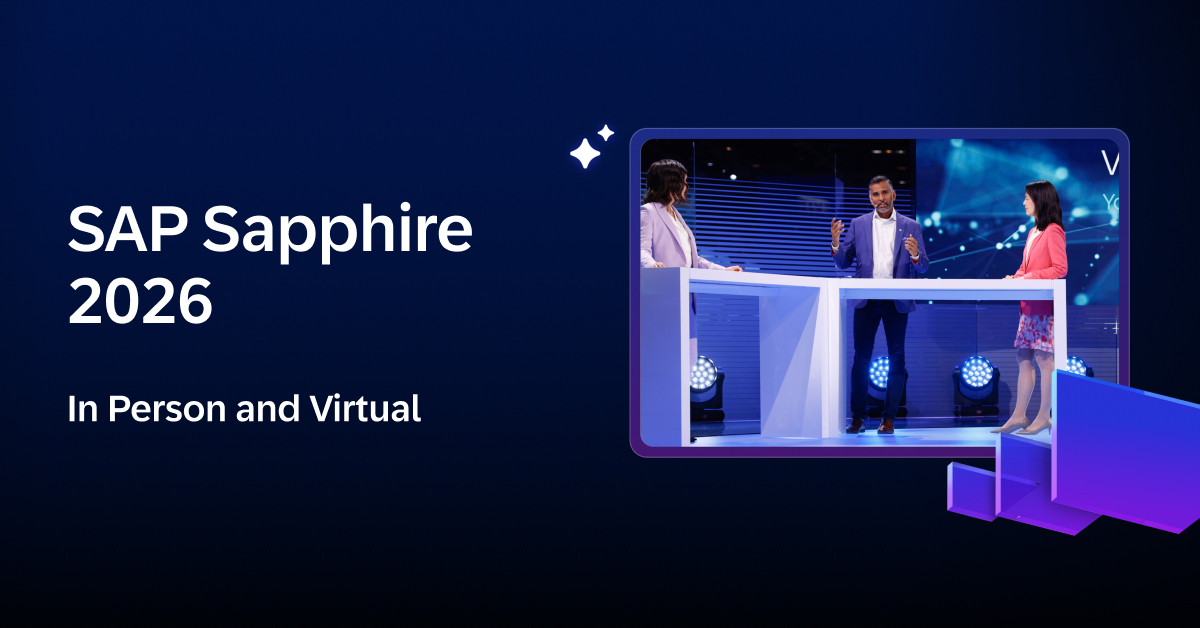

Real brands offering real customer engagement insights, including:


Context-aware engagement, powered by AI
I'm here with Christopher Dalley who is Director of Business and Wholesale Services at EDF, Linda Petherick, Chief Operating Officer at New Look. You've actually sat in the order I had your titles written down, which is very convenient. I love seeing your paper. Excellent. And Promise Akwaowo who is Process Automation Analyst at Royal Mail Group. So please join me in welcoming our panelists to the stage. Basically, we're here to chat about your experiences. And I'm keen to get into the nitty gritty of what you're actually doing and what your organizations are looking at. I think there's pretty broad agreement that customer centric growth is good and is something you should be aiming for. But I wanna hear about how you overcome fragmented systems, data silos, all the kind of issues that sometimes come up, especially as the pace of AI development seems to keep continuing faster and faster. So I'm kind of keen to just get straight into it. So can I kick off with Linda? Go straight in with New Look, which is obviously a retail physical goods provider. How do you actually make sure AI is genuinely helping you make a real difference? Sure, so I'm delighted to be here. So hopefully we'll do a few questions later. So look, just in terms of New Look, New Look is a business, we have over 9 million customers in the UK, just to give you an idea of scale. From a customer engagement perspective, we have over 300 stores and our business is a mix of online and store-based. In terms of our customer engagement and how we've got about it, we started about three years or so ago, building our enterprise data platform. So we were fortunate in having a bunch of people who'd been around the business a long time that actually understood data and where it sat. And we spent about 18 months putting all of our data into a data lake. And I mean, the time and energy investment in terms of getting to that place, I mean has been essential for where we are now. I would also say, I mean... and I'm sure many of you have been on similar journeys. I mean, you go back three years and actually it wasn't necessarily an easy sell to all execs and all directors in the business. Spend lots of money putting all your data in a data lake. Seemed like a relatively bizarre concept to some people. And actually you fast forward today and every other conversation is about data and AI and aren't we all glad that we did? But I think... recognizing that I think the first 12 months of the journey and actually being able to keep that sense of belief and harmonization across the organization in expending and focusing on that CapEx investment on that data lake and creating that foundation in the right way was hard yards at times, but I think and I look at it now, and I think this is important when we think about what comes next - and I'll just spend a couple of moments on that - is that if we hadn't spent the time and energy and the way that we had, having, creating a very clear data architecture and data vision that meant that all data was in the data lake, and we kind of had a relatively, kind of small team in comparison to many. I mean, we had 20 to 30 data engineers. Some of you will have hundreds of people. In terms of data engineering but we can compare ourselves with other people in our sector and indeed other sectors and actually architecturally what we've been able to achieve since the data lake's been in has moved exponentially above and beyond what others have because actually we were so clear in architecture and strategy terms around what we were building and solving for. And if I just could bring us up to today. You know, in the last 12 months or so, you know, just kind of other things could give you some parameters. I mean, we've put SAP Commerce Cloud into a place, Hybris. We have Databricks on top of Microsoft Azure in terms of our data lake. We work with Amperity, who is a specialist customer data platform. We stitched hundreds of millions, it might even be up into a billion, data items to create what was over nine million and analytic records of a customer. So now we understand if you are Linda at hotmail.com, LJP at hotmaill.co.uk, the transactions you've had in stores, we've stitched all that information together and that information is updated real time. So what we now have actually is an insight in terms of our customer cohort. And we'll come on later to what we're doing in terms the customer model that's being built on the top of that. And we see this as absolutely transformational in terms of business. In terms of thinking, not just in terms of improving cost to serve ratios, but also in terms of how you move the top line. I'm interested to ask a bit more about the, I guess, some of the data things and maybe the less sexy side of AI. The things that it's potentially a bit harder to convince at least non-technical executives of. How do you get the sort of buy-in for big initiatives that might not make that much sense to someone who doesn't actually understand the more underlying data, key technical component? Yeah, I mean, it's almost you forget sitting here today because the world's moved on so much. If you try and go to a board or an executive team now and say what we need to do is to be data-driven, they go, yes, let's be data driven. Whereas actually kind of going back three years or so, it was a kind of a different place. At the end of the day, I think, created that sense of belief that this was a direction that the world was evolving to and that certainly if you think obviously people in the room in different segments but certainly in the in the fashion sub-segment within retail I mean some of the biggest disruptors in our part of the market are data and technology companies that make clothes like a TEMU and a SHEIN, I mean they're data and technologies companies that makes clothes so let's not try and pretend it's just about what the old model was for whatever retailing is in our segment I mean the world's in the world shifting. So to imagine that you can just think about capabilities and ways of operating in the same way, to me would seem logical and actually that is the sense that the executive team and the board had is that actually being data driven was the right way to go. And therefore, I mean, we're private equity backed, but I mean they put a huge amount of money into enabling our data and tech transformation in pursuit of that. And Promise or Christopher, do either of you have any examples of ways that you've been able to push beyond sort of AI buzzword and discussion and into the actual real practical application? Yeah, definitely. Just before I move on, so I think Linda, you talked about the data-lake journey. Hasn't everybody been on one of those? Yeah. I don't know when I was starting and when it ended. I don't think it's ended, actually. I don't think it ever ends. I don't think it ever ends! But I certainly remember all those conversations around how much a million? Yeah. Get halfway. How much million? Another five, please. Yeah, exactly. Exactly. So that was definitely worthwhite investment. That's definitely enabled the foundations for how we proceed. I think one of the things that I've taken away from this is if you go back probably last 10 years, we've had automation. Do you remember when RPA and automation was the big thing? Then it was digital transformation. We all want to be digital CFOs. Then we got to AI. So when I reflect on how we're going to go on the AI journey, what I try to talk to the team about is... It's not actually an AI transformation. It's an outcome transformation. How do we put the customer outcomes at the heart of what we do? So we're not going to say we're going to do AI for the sake of doing AI. We're going, actually, we need to achieve this business outcome or this customer outcome. How can we use AI to enable that to be delivered faster? So that was the core of what was did. And I think if we look at, if I use an example of one of the challenges and one of things we're overcoming at the moment, we have a challenge with un-billed. So these are where customers we have who we've actually never billed. They've signed them up, some go back to 18 months. And the reason why they've never been billed is because there's so many technical preventions to stop the data passing through, or somebody going to site, or the data being lost in a service. And what we were doing, we were trying to work a lot of these manually, and that created lots of backlog, et cetera. When you get backlog, what typically happens, you just look at the most valuable customers and say, right, we're gonna put this bill through because it's the most, and then you keep putting these items back. So what we had to do was we had find a solution to that. So we created an unbilled AI agent. And that basically looks at all the data sources and it provides the next best action to every single account we have that's unbilled and that has got 99% accuracy and it's speeding up the process of doing it by about 60%. Promise, do you have any similar experiences? This is exactly a model that we use within our team. So I work with a team called the Rapid Automation and Digitization team and our focus is actually still in that area of releasing AI enabled systems and automation initiatives. One of the logic and theory that has really worked up as a model for us is really using the Microsoft narrative of rolling out initiatives on a bit by bit basis. First off, the idea is basically you want to really check on your inbound architecture. Just like Linda's mentioned, it is very, very important that our systems and data has that bandwidth to withstand the part where someone is actually raising or requesting for a thousand merchants, or how many types of parcels you want to get, especially when you're in peak in December, you don't want a situation where, because there is everybody asking for Christmas presents, we can't actually deliver, because we've actually introduced AI enabled systems and automation. So to do that, our model is simple. Why don't we create a centre of excellence? It has worked for us, which is basically what my team does. For every AI enabled system that comes out automation, we are actually like a point of contact. We create a system where we do a phase approach. We test it internally. We have solution engineers, software architects that actually just focus on ensuring that we do stage gates before we're rolling out into different teams. And most of our focus and project has been seated within the customer experience team because, of course, we want to ensure that the customers are happy to beat the competition that comes out there and that model has successfully helped us to scale a lot of time. When you work on a phase-by-phase approach, one thing I want us to also know when releasing AI models and automation initiatives, you are not supposed to just because of creating that whole model. You want to focus on outcome of what use is an AI enabled system or automation initiative. If at any point anything goes wrong, someone can audit it. Someone can actually fix it. So you want to be able to have that human in the loop type of direction where at any point we can actually fix things and it's been one of the successful use cases we've had internally as a team. I wanted to ask actually, similar to that note, Christopher, obviously EDF is a big company, it's an international company, you've got many different layers of different teams doing different important roles. How do you make sure that you're sort of aligned on a strategy without lots of people doing the same thing and wasting energy on that? Yeah, so I suppose for context, so the EDF UK business at the highest level is split into three different areas. So the nuclear business, the retail B2C business, and the business, which I love after. So that's the wholesale and trading area, and that's B2B area, so business supply area. So even within my area, the diversity of the types of people, teams, and activities and styles is completely different. The culture around the organization flips. Trying to get a trader who just likes to get on the trade to understand how a CSA feels, someone who's there advising a customer, is quite a challenge. So one of the things that we try to do to break down these barriers is we started to think about how do we move away from thinking about organizations and organizational structures and how we look at it from a customer journey perspective, because actually one of the most important things that try to get across early on is we're all in customer service. Our whole business is customer service. My role is customer services. The data engineers who are programming they're in the customer service. What's important is the end customer outcome that we're trying to achieve. So, although we might have organizational structures, our success and our targets and our KPIs and our measurements are all about how are we achieving that customer outcome that we are striving for, or the business outcome that we strive for. And that created great alignment with developing the ways that we try to achieve. Have you seen any places or sort of specific issues where that kind of alignment breaks apart? Totally, totally. I think when I took on the business, and I didn't save the business just me, but when I take on the business, it was quite fragmented. So we would go into places, go into different areas of the business and you'd see teams who were patting themselves on the back and have KPIs to say, my bit of the process is brilliant. I've done a great job. Met all my KPIs, et cetera. But the end outcome was failing. So just getting that alignment and trying to get everybody aligned to the goal that you're trying to achieve or the outcome they are trying to achieve. Rather than being happy and successful that your individual part of that process is working was quite a cultural shift that we had to try to overcome. Not to put you on the spot, but I saw both Promise and Linda nodding. So was that pure support or is that something that you've also experienced in a similar? Well, it's a hard two, but Linda go for it first. I mean, what's exciting when you go on a day-to-day journey is that, I mean huge, you know, you've lots of people enthusiastic in terms of wanting to get on board and experiment with AI and all these kind of things. I mean there's, I guess there's kind of two challenges as you go through that. I means one thing is there being true ROI and there's not the sense of I just want a new shiny object and make sure that my team is a shiny object. I mean, that's definitely a thing. And you can waste a lot of time and energy otherwise pursuing the wrong thing. So we were very structured around prioritizing what was ultimately going to move the P&L and could we measure it, and ultimately what was going to move cost-to-serve ratio, sale operating costs, and how to measure it. So I think that's kind of more on the business side in terms of prioritization. I think the other thing that... I mean, I still wrestle with on a day-to-day basis, is making sure, for me, the holy trinity of the enterprise architecture for across all of technology. So including the legacy, the data initiatives and data organization and what we're doing from a cyber information security and resilience perspective, those things keep in step. Because if they don't stay in step, what we are going to do is expect either. We are going to find there's going to be a blocker somewhere in amongst all of that in terms of scaling things out or we're going to introduce a risk that we don't understand. So I think there are so many things as we evolve through it that we're having to think about and I think the other dimension that certainly you know we're obsessing about and it may be different in different industries because actually my background in banking people thought about end-to-end processes more and efficiency across end- to-end processes. When you're in retail you're quite vertically driven, so you have a head of buying, a head of merchandising, ahead of finance and such like. So one of the things obviously we're driving through is how to think horizontally, particularly when you think about the application of AI and Agentic through those processes and how you can link together different solutions across those end-to-end processes to create differentiated outcomes. I mean that is requiring us again to rethink how we approach it in terms of governance. You know, what SMEs are involved, and actually people who are SMEs in data itself across end-to-end processes and how we bring that together. So that's every day. When it comes to the sort of horizontal thinking. Have you had any resistance to that? It feels like sometimes people like having their thing that they control. Yeah, I mean, I think the world, from my perspective, the world's reshaping. And as part of that, you know, we're all going to have to adopt different mindsets in terms of how we solve the problems. I mean you can't solve for everything at the same time. So I think, you have got to take, I mean, we've all got to kind of go on a journey around it and understand what the rationale is for doing it. I generally think if people can understand the business rationale and I believe strongly in the sense that people come to work with the right intention and want to do the best, you know, for the business. If you can then tap into the fact that actually what that's going to create for the business, how it's taking the business forward, that enables you to go through that change curve. But it's human nature that as you face into something new, different people have different ways of responding to that. Some people deal with it and go through that quickly, some people don't. But, I mean, taking everyone through is, I think, part of the job. Have you had, I'm sorry, dive in. I was just going to build on your point and pick up on Alex's point about he won't say processes anymore. So the reason why I find it quite funny is we were having the conversation a bit earlier and in my business I've tried to ban the word process because as soon as you talk about process you think linearly, linearly, and you don't actually think about - your mind is all matterly structured to say I have to do X, Y, D, go through that process and you actually don't think outside the box. And what's really important, especially in the AI world... Is you think of the circle, because you don't have to do stuff in parallel, you can do stuff in parallel or you can stuff in different time zones. So what's really important is we draw the circle and then we say, right, this is the information we need in this circle. And then we draw a circle around it, it's how do we get this outcome from all the information in the circle. And that's the baseline we use to build our business. And I think it's also almost like it's right-to-left thinking rather than left-to right. You have to start almost with the vision for where you want to go and reverse engineer it back into today because to your point, going that way in a linear way won't necessarily get you to that point, but you have to be very clear from a visionary perspective ultimately what your destination is. To support that, I think for us, myself and my team, and the narrative that we're actually pointing, is going to really focus on the ownership perspective. It might not be linear or in a circle, but you want to point where you're actually introducing AI models and automation initiatives. There has to be a level of ownership when it comes to the data and also coming to the pinpoint where we actually say, okay, if these guardrails actually fail us, what is the fail switch? Right, so it might not necessarily for us be a linear curve or circle, but we want to at every point have control as a governance body that actually says, OK, this is where this went wrong. We could fix it. But if we do not have pinpoints where we've actually standardized what we use as solutions across bodies of different teams, we most likely will not be able to do that. To add to the narrative that... Christopher, you were mentioning about really bringing AI without really, what type of handoff have we seen? The handoff could actually happen in many ways. You most likely find it when you are moving from, most likely say, okay, you're doing a discovery of releasing an AI initiative or an automation initiative and a client or a business unit says, this is what they want to do and your team, the guys executing this AI narrative into practice actually get a different description of what exactly that is. So how do we manage that handoff? You want to do a proper discovery analysis where you actually go in there live, watch these processes themselves, review documents if you have to, speak to many stakeholders that you have to document them, and most importantly, what benefits outcomes does it really give to the business, and what is the point of introducing automation initiatives if it doesn't really save us maybe 200,000 pounds per annum? But you want to really have those types of handoff, and we'll be able to then practically say, OK, it's a viable solution. We could do it, or maybe bring it another time. Yeah. You've all talked about sort of whole-team, horizontal, journey-wide views. How do you make sure that each different segment of your various teams has the right incentives to go towards the shared goal, if that makes sense? We haven't talked about matrixes yet. Yeah, tell us all about matrixes. On a serious note, again it's about making sure you have the right incentives and focus on the right outcomes. So in simple stuff like we changed our incentive scheme. We made sure people are aligned around end outcomes. We implemented a cultural program to help people understand what we're trying to achieve in the business. A lot more focus on those customer outcome goals, so a lot of it is actually cultural. Yeah, to support that. Other than just culture, it is embedded even in our ROI. The team wins, you win. Everyone got a bonus, 10%, 15%. And even as at this year, we've actually brought it from a very strategic level, where we have the director of AI and automation really leading strategic initiatives to ensure that the team is actually motivated towards that own goal. And we've also now had a thing where your goals and objective for the year is actually going to be about creating use cases of how you've embedded AI into the level of work that you do. What use cases did you use it for and how exemplary has it been in terms of bringing a proper outcome in the work that we actually do as a way of really creating value and putting team motivation to ensure that look, this is what happens when you actually accept the realities of AI. And another thing we've actually done again is creating semi-workshop sessions in between teams where they can actually get to do a simulation live and say okay this is my practical case study of the work that I do. Someone could probably be working in strategy, another person could probably be in data and we're using AI use cases to say okay how about we really manage this. So a lot really goes into that because governance has to also be there. What risk do we envisage? Have we considered that this week, how do we manage them? It helps teams to actually just work as a unit and say, okay, when we hit this mark in April next year, you're getting a 15% bonus because you've been able to really execute this in a real sense properly. It's quite interesting there because I suppose we would probably come at it in a different space and we wouldn't, we don't have an AI initiatives program. We don't have AI objectives. We have business outcomes, business objectives and AI will be the first tool we use to get to it. So we will never say we have an AI initiative plan. That just wouldn't exist. We'd have, we need to achieve this business outcome. What's the best way to do it? Let's try an AI-first approach to get to the business outcome. Rather than saying, we have some AI initiatives. But every business is different. I think that's what's important. The culture of the business, the rhythm routine of the business is different for our business, it's almost better not to talk about AI in that sense because it's just the way you work. It's just part of how you do things around here. And I think ours has evolved, to be honest. So to your point, Chris, I mean, as we had a data and AI program for the first couple of years, certainly when we were putting in the foundations that were required to establish what would be needed to be a data-driven business. I mean that was in program form, and the prioritization of initiatives was in program form. But we have shifted to the same point that you're talking to in terms of actually now it's inherent in the strategy. So if I think about the strategy exercise people went through four or five months ago, I mean, people are clamoring to understand how much data talent is going to be focused on the initiatives that they believe are going to drive the part of either the P&L that they're responsible for or the functional improvements that they are looking to drive. So demand far exceeds supply in terms of you know, what people are looking to do. But I think that is borne out of kind of successful use cases and successful impact. I mean, we had, I mean we improved our kind of working capital position just through one particular AI initiative by 40 million. I mean that was an extraordinary amount of working capital improvement just through one thing in the area of supply chain visibility. I mean if I look at another kind of again practical example, it's all these things and even the small examples, it's either the money or how cool it is inspires people to want to have these things in this area. I mean, one of the areas we've been working on is, I was talking to some people about it over lunch, it's actually around fit rooms. So when you design a garment, you have to fit it on a real life model and make sure that the garment fits as you'd expect before you go and make lots of them. And actually, that would have been six or seven people in a room with a model working out whether the sleeves are right length, you know, the... the skirt's the right length and it would take, you know, 10 days or so for all that information to be aggregated back and go back to the manufacturer of the garments. Now it takes three to four hours. You've got whisper, speech to text, there's one person in a room with a headphone and actually the next iteration of that AI that comes through will actually be able to help the person, the fit assistant in the room with model so hang on a minute the sleeve shouldn't be too short because actually from a returns perspective, where you actually find there's a high level of returns on that particular kind of shape of garment if the sleeve is a different length. So those things are really kind of fundamentally transforming, which is kind of more back to your kind of circle idea, is that thinking about how you solve the problem in a fundamentally different way. Interestingly, as part of that kind of speech to text, there were all sorts of things we had to work on in terms of accents, because actually different accents respond differently in terms of the accuracy of how that played through. So I think as we're all learning around the adoption of AI, there are new things that we're sort of facing into that may not have previously been a problem when kind of thinking about the activity itself. And I think just to touch on the points that you mentioned earlier, so it's definitely a journey, so it is definitely a journey, we've been on the journey and we've probably still got a long way to go but if I think about how we first started this, we were definitely like let's try as many AI tools as possible and we had we were patting ourselves on the back at the end of the yeaar, we we were supposed to deliver I think it was 50 AI tools and initiatives, we delivered 50, the adoption rate was like... 3%, 4%, 5% because they weren't being used, because we were just delivering tools and AI tools to say we've done them, and that's why we changed our whole approach. Yeah, I was gonna really had a bit there. So it really brings me to mind regarding one study that I read. I think it was a 2025 McKinsey statistics that talked about how we have about 80% of companies that are really introducing AI, but only less than one third of it actually scaling effectively that just juataposes that fact that one of the reasons when we want to talk about scaling at that point is we may want to take a step back to really have a conversation about what exactly is outcome for us as a business and that same question of do we even have the capacity in terms of architecture to do it? Do we have plans for change management? I mean, people are not going to trust an AI solution to do the job for them when there's literally no governance. We've heard stories out there in the public where people have said, my data actually leaked. I read one just two days ago saying that someone actually used AI to erase their entire stock portfolio outside, from the internet. So. How do you expect people to trust that if we've not established an internal type of governance layer policies and real cases where they actually say okay look this works and let's really have a phased approach to scaling otherwise we just wait with what we're using why don't we use if it's just this particular model we're using for now and these are the champions that are going to use it for now, see how it works, use it like a point of contact proof of concept I will go forward from there. I'm keen to make sure we have time for audience Q&A, so I'm about to turn over to that. But before we do that, I just want to quickly ask, ideally, efficiently, no offense, just keen to save time for them to ask questions, could you tell us a bit about what a proof point of success is for you when it comes to integrating AI? I mean, I'm sure some are more obvious than others, depending on how you're doing it. But how do you actually measure and present whether that's to your team members, to a board, that this actually worked? Yeah, so I suppose could say money, but I was going to pick a different example. So an end-to-end journey where an outcome is there. So one of the end- to-end journeys we have, which we were actually talking about earlier, is onboarding. So to onboard some of our larger field of region-based companies it might take 14 days. So we've set ourselves an objective of how can we get those 14 days to onboard to one day. And how we're going to do that is by reinventing the way to get to the outcome. Putting the data points into the circle and then figuring out the best way to point to each of the data points to get to that. Did anyone else have any thoughts? I mean, for us, it's a process of P&L. I mean the place of where the reality happens is the P&L. Does it actually save you money? I mean if you're expecting it to improve efficiency, have the head count come out, have they stayed out, or have they creeped back in under a different initiative? I mean that's where I think the kind of truth lies. I mean not to say you obviously have to experiment. I mean, this is... You know, I always kind of use the expression internally every day of school day, because it does feel like at the end of every day you've learned something new that you didn't know in the morning. And I think that's the mindset also the execs in the business do and have to have as we kind of go through this journey. So not everything will work. That's okay. We've learned that something along the way, what've we learned, make sure we distill it down and take it into the thing we're doing next. Two perspectives for me, from the customer experience perspective and then the operational perspective. The customer experience wants to really see how the outcomes actually affect the journeys of the customer. So, when they bring an AI and automation initiative to the front of me and say, okay, this is what they want to do, we are actually making decisions based on how many FTE savings am I actually having, how much in terms of... moneys am I actually saving? Am I saving about £140,000 by increasing the chat bot rights? Why wouldn't I jump on it? And how does it make the customer happy? The customer gets comfortable. In the end, that is success already defined by that initiative. That is already measured. You then want to look at it from the operational perspective in terms of team's outcome and ROI. So which is why I told you about having our measures and goals actually tied to AI initiatives you measured on a quarterly basis and you speak with your line managers and they're asking you, you present in cases and like this is how we've actually been able to achieve the entire business goal by really embedding AI into how we work. And in the end we get to really see the outcome. I'm saying this because I've actually benefited it. I got a 10% already. So yeah, that's how it's worked for us already. Have we got any audience questions? My question is around the expectations of the sponsors. I think right now one challenge is after you get the buy-in, the expectations are sometimes so high that it's almost a cult following forms around it. And the question is, how do you disagree with the results of AI? How do you sometimes say, you know what, we did it, this is the results, but my intuition says that this is not the right way forward, even when the sponsors are expecting you to go forward with it, because the investment has already been done. I think you have to be brave, but I mean, I think it's also important to understand how you're validating whether your solution meets your requirements. I don't think it doesn't really matter if it's AI or whether it's kind of old-fashioned kind of technology systems. I mean when you go through something, you want to make sure you understand, you know, why you're doing it, why are you spending your time and energy, and how you are going to validate at the end of it that actually it's delivered what you want. I mean we're having a big debate at the moment about, you know, deterministic. As I'm sure lots of you are, and thinking about which models we're using and actually if you need an answer that is the hundred percent answer, how close are you getting and how much checking is actually gonna be involved? Because for us, it's more about what is the true cost of it once you really factor everything in and obviously all the debates around tokens and actually how much is all of this kind of going to cost into the future. I mean, that piece I think we're all going to be grappling with right now is a number of the financial models around AI are shifting. That's going to give us also a different view in terms of ROI. But I think with execs, I think it's back to my point really around experimentation and innovation. Not everything will work and everyone has to recognize not everything will work because all I can guarantee, and I'll say to people is, I can absolutely guarantee two of the decisions we're making right now will be the wrong decisions when we look back in 12 months' time, guaranteed. So we just all need to kind of get comfortable with that. I think you've almost gone back to 2020 language, so my history is to... I've obviously spent too much time in business. But you go back to the 2020 language and you start going back to foundations of fail fast. Pivot. Iterate. You have to start in that sort of mindset to make sure that no matter what journey you're on, you always have to be prepared to iterate that journey or to pivot, but you have to set that foundation up in the beginning. You said the 2020 model, that's our start-up journey. We had very high boom start-ups that were really making things very, very fast. And that's exactly why we talked about strategic team that's called the centre of excellence, right? If we can't really spread it out, do we have guys that actually take responsibility to say, you know what, we have solution engineers in-house to really just test this internally, to confirm and say, okay, how do we validate this against the requirement that we've actually defined, right. When that happens, right, we then say, OK, we've passed the first phase, how don't we scale it on a piece by piece basis? It's like really raising a toddler. And you want the toddler to really just walk from here to that place. They don't make steps all at once. They make steps in bits. So they take one step in. OK, I can do it. Daddy, can you hold my hand one more time? That's the guardrail. Daddy, there's the guide rail. That's really the proof. Then they go there step by step. And it makes sense. And that's one model that I think we should really passed to any execs or anyone at all, there has to be a man in the loop to really guide how these decisions are really rolled out effectively. We've seen fines rolling everywhere because of that same reason. So we want to really support it, push it. However, watch it. I think we just have time for one more question. So does anyone have a question? We've got one back there. Well, we've got two. So I'll leave it to whoever gets a microphone first. Sorry. Is it working? Yes. Linda, you said it took 18 months to get all your data in a data lake. Yes. How did you manage business as usual in the meantime? And what value did you deliver along that 18 months? Yeah, so I think in terms of, I mean, we had a team that was kind of focused on that. I mean it might sound terrifying, but actually we were also putting in a new payroll platform, new till system and new order management system at the same time. So there's quite a lot going on at the time. So I think that that piece was less complex. I think what was important, as I said earlier, was the fact that actually our data was relatively organized in the first instance. I mean, if I go back to my sort of banking days 20 plus years ago, I mean there's an awful lot of data that can be disseminated in pockets all over the organization and sometimes just even getting to a place of organizing the data to start with can actually be a multi-year journey, so we didn't have that particular problem. I mean for us it was actually building out the engineering around how we were obviously approaching Azure and the Databricks build on top of it. I mean, as for me with any kind of the infrastructure kind of components, I mean you see a obviously a lower ROI associated when you have those kind of infrastructure phases, but I mean we were okay with that. I mean what we kept people very focused on was understanding what the use cases we were going to be building and what it was enabling and for us, the customer dimension to that, I mean, was the single biggest part of the top line growth. I mean, let's be under no illusion because if you can nudge a customer, every customer to buy one more item, I mean that's material in terms of the P&L. So we kind of kept everyone really, really clear and focused on what was going to be possible once we had that as opposed to necessarily worry about the kind of, oh, I kind of won that piece of journey, we kind got people to a place of realizing they weren't going to see very much for a period of time and they were just sort of going to have to go with that.