
Key Takeaways |
|
Identity-first loyalty drives stronger engagement: Sports organizations start with known fan identity and use it to inform every interaction, while retailers often rely on inferred data, limiting personalization impact. Lifecycle orchestration beats one-off campaigns: Fan engagement succeeds because every touchpoint—from purchase to post-event—is connected and triggered by behavior, not static campaign calendars. Contextual personalization increases relevance in real time: The most effective engagement uses live signals (like attendance or activity) to tailor messaging, ensuring the right message reaches the right person at the right moment. Emotional loyalty outperforms transactional loyalty: Points and discounts are easily replicated, but personalized, experience-driven interactions build lasting emotional connections that customers won’t abandon. |
Every retail marketer has heard some version of the same goal: “We want our customers to feel like fans.”
It sounds aspirational, maybe even a little vague. But if you look at how professional sports organizations run their engagement programs, the aspiration turns into a concrete operating model. This fan engagement model has valuable lessons for retail brands that are still measuring loyalty by redemption rates and repeat purchase windows.
Sports organizations have been practicing real-time, personalized, lifecycle-driven engagement for decades. And no, it’s not because they figured out martech before everyone else. Instead, it’s because every single game/event/match is a live interaction with tens of thousands of known individuals, and the consequences of getting that interaction wrong are immediate and public. When a fan shows up and the experience feels generic, they don’t quietly churn. They feel it and share that experience with their networks. That emotional feedback loop has forced sports organizations to solve problems that most retail brands are only now starting to name. Wild, right?
Here’s what the sports fan engagement model looks like in practice—and where the retail parallel breaks down.
Why sports organizations understand loyalty differently than retailers do
The structural difference here is identity. In sports, every single ticket is a known transaction tied to a known person. The moment a fan buys a seat, the organization knows exactly who they are, what game they are attending, where they are sitting, and what their purchase history looks like across seasons. Mega ticketing companies that shall not be named have even more data to leverage. Loyalty is not inferred from aggregated cohort behavior; it’s observed at the individual level, in real time, with physical presence as the signal.
Here’s a simple way to sum up this key structural difference:
- Most retail brands are still working backward from purchase data to guess at identity.
- Sports organizations start with identity and use it to inform every interaction that follows.
This is not a technology difference. It is a data philosophy difference, and it shapes every little detail about downstream interactions.
How sports engagement maps to the retail customer lifecycle
The fan lifecycle in professional sports runs in a closed loop: awareness, first purchase (ticket or merchandise), game day experience, post-game follow-up, and renewal/next purchase. What makes it notable is that each stage is instrumented, and the instrumentation connects. A fan who bought a single-game ticket last season becomes a season ticket candidate this season, but only if the organization can trace that journey across touchpoints and engage the fan at the right moment.
Adler Mannheim, the eight-time German ice hockey champion competing in the Deutsche Eishockey Liga, built exactly this kind of connected lifecycle engine. The club unified data from ticketing, their fan app, merchandise (through SAP Commerce Cloud), loyalty rewards, and their ERP into a single engagement layer. The result is that their marketing team can see a complete fan profile and orchestrate communication across email, push, and in-arena offers, all triggered by behavior rather than calendar.
Adler’s success speaks for itself:
- Pre-game communications now achieve over 80% open rates.
- The fan newsletter open rate increased by roughly 67%.
- Subscriptions grew more than 50%.
Those numbers haven’t come from better subject lines—they come from relevance architecture.
What retail marketers can learn from the in-game personalization model
One of the most instructive things Adler Mannheim did was solve a push notification problem that will feel immediately familiar to any retail marketer who has wrestled with segmentation.
Before implementing SAP Engagement Cloud, Adler was sending push messages to all app users during live games, which led to fans who were not in the arena receiving messages that made no sense for their situation. The experience created a lot of unnecessary friction for fans. The solution was not to send fewer messages but instead it was to use ticketing data to know who was physically present and who was not, and to route communication accordingly. Right person, right place, right time. Right?
- The in-game personalization model: Use behavioral signals to determine context and let context determine the message.
- What this model looks like in action: The fan with a valid ticket for tonight’s game gets the half-time merchandise offer. The season ticket holder who did not scan in gets a different message entirely, or no message at all.
Retail has the equivalent signals available, including browsing behavior, cart abandonment, in-store visit data, and app session activity during a sale event. So you see, the gap is not signal availability; the gap is connecting all of those signals in real time to the engagement layer and building the routing logic that makes them actionable.
How to build loyalty programs that drive emotional connection, not just points accumulation
Alexander König, Sales and Marketing Director at Adler Mannheim, made a distinction worth holding onto:
The goal of the loyalty program is not monetary loyalty. It is TRUE loyalty, the kind that comes from knowing a fan well enough to create a real connection by offering them value that a points system can’t replicate.
This is the “money-can’t-buy” problem in loyalty design:
- Points and discounts are table stakes. They are easy to copy and easy to walk away from when a competitor offers a better rate.
- Emotional loyalty is stickier because it is built on accumulated personal history, not accumulated currency.
The mechanism Adler uses is one-to-one communication grounded in individual fan data. The message you receive as a season ticket holder is not the message a single-game buyer receives. The offer served through the app reflects your purchase history, your attendance record, your engagement with previous communications. The fan feels known because the system actually knows them.
Here’s how you directly translate that for retail: A customer who has purchased three times in a category, attended a store event, and engaged with a product tutorial is not the same as a customer who made one purchase six months ago and has been silent. Treating them the same is not just a personalization failure. It is a loyalty investment that will not compound.
What happens when fan data is connected across every touchpoint
Adler Mannheim’s engagement infrastructure connects both fan and organizational data, including data from:
- Ticketing
- The fan app (mobile payment, social features, and location-based services)
- Merchandise
- CRM
- Loyalty rewards
- Enterprise Resource Platform (ERP)
That connectivity is enabling three things simultaneously:
- It creates a complete picture of each fan that is updated continuously, not in batch cycles.
- It allows the marketing team to automate journeys that would otherwise require manual effort for each communication: welcome sequences, renewal campaigns, win celebration messages, anniversary offers.
- It enables predictive AI. The team members can now build evidence-based estimates for future ticket sales rather than operating on intuition. They can deploy budget toward campaigns when predicted sales fall short, rather than reacting after the fact.
This is not a luxury architecture for a sports organization with unlimited resources. Adler Mannheim built this on an SAP-native stack because the existing commerce and ERP infrastructure was already in place. The incremental step was adding an engagement layer that could activate the data they already had.
Retail brands sitting on SAP infrastructure, whether Commerce Cloud, ERP, or both, are in the same position. The data is often already there. The missing piece is the activation layer and the willingness to route it through a unified engagement model rather than a collection of disconnected tools.

Why the vertical gap between sports and retail is smaller than it looks
The instinct when looking at a sports engagement case study is to file it under “interesting but not applicable.” Different business model. Different purchase frequency. Different relationship intensity.
That instinct is worth questioning.
The emotional investment a fan has in a team is an extreme version of something retail customers also feel, just at lower intensity and higher frequency. A customer who has been buying from a brand for three years, who has bought across categories, who has attended events or engaged with content, has developed a rich historical relationship that most brands are not tracking or activating. Customers are commonly being treated like an acquisition target rather than a known individual.
Sports organizations solved this problem because the emotional stakes of a bad game-day experience are too visible to ignore. Retail is further from that pressure, which is why the gap persists.
But the gap is a choice, not a constraint. The infrastructure exists. The signals are available, and the loyalty methodology is proven. The question is whether retail marketing leaders are willing to adopt the operating model that sports organizations have been running for years, which means investing in identity resolution, connected data, and lifecycle automation as foundational infrastructure rather than nice-to-have capabilities.
The fans are already there the only difference is that they are just being called customers.
Frequently asked questions
What can retail marketers learn from sports fan loyalty programs?
Sports organizations operate loyalty programs built on individual identity, real-time behavioral signals, and lifecycle automation. The core lesson for retail is that loyalty compounding requires knowing each customer as an individual, not a cohort. Personalization at the individual level, triggered by actual behavior and connected across channels, produces retention outcomes that points-based programs cannot replicate on their own.
How do sports engagement programs personalize at scale?
Leading sports organizations unify ticketing, app behavior, merchandise, and loyalty data into a single customer profile and use that profile to trigger automated, context-specific communications. Personalization at scale in this model is a function of data connectivity and automation architecture, not manual campaign management.
What is the difference between fan loyalty and customer loyalty in retail?
Fan loyalty is built on emotional connection reinforced by personal recognition. Customer loyalty in retail has historically been built around purchase incentives. The distinction matters because emotional loyalty is more durable and harder to replicate. The practical difference is that sports organizations invest in recognizing each individual and communicating with them accordingly, whereas retail loyalty programs often treat members as a homogeneous segment differentiated only by tier.
How do sports organizations use data to drive ticket renewals?
By connecting attendance data, purchase history, app engagement, and CRM records, sports organizations can identify season ticket holders at risk of non-renewal before the renewal window closes and activate targeted communication. Predictive models built on historical behavior enable marketing teams to allocate budget to at-risk segments rather than blanket renewal campaigns.
What marketing automation capabilities are needed to replicate a sports fan engagement model in retail?
The core capabilities are:
- A unified customer data layer that connects transactional, behavioral, and channel engagement data
- Automated lifecycle journeys triggered by individual behavior
- The ability to segment and communicate in real time across email, app, SMS, and in-person channels
A connected ERP and commerce integration is the foundation that makes all of these capabilities actionable rather than aspirational.
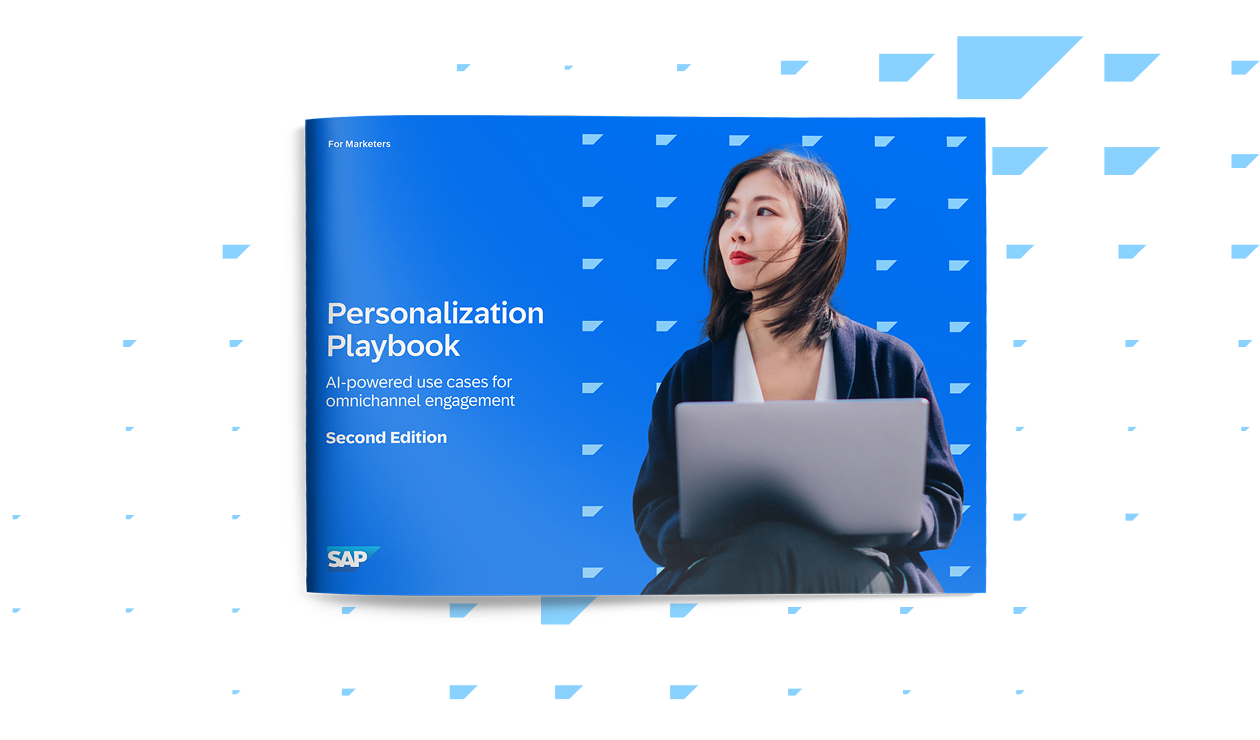
Ready to close the gap?
Get the Playbook!
About the author
Kate DeGroot is the kind of Global Growth Marketer who started in startups where “figure it out” is a job description and never quite shook the habit. Now she runs growth programs across the globe, armed with a healthy obsession with data and an unhealthy suspicion of vanity metrics.