
Stop me if you’ve heard this one.
You pull up a campaign dashboard and the numbers look solid. The open rates, click-throughs, and conversions are all tracking well.
Then, a quarterly NPS review lands on your desk, and the picture changes entirely.
Customers are getting promo emails for products they returned last week. They’re being retargeted with ads for something they already bought in-store. The data says one thing, but the experience says something else altogether.
That tension between what brands think they’re delivering and what customers actually experience is now backed by hard numbers. In our 2026 Global Engagement Index, a study of 10,000 consumers and 4,800 senior decision-makers across six countries, we call this the Engagement Divide.
Here’s why it’s getting wider and what you can do to prevent this from happening. Spoiler alert: AI is only as powerful as its data foundation.
Where brand assumption and consumer reality splits PwC’s 2025 Customer Experience Survey found the same pattern playing out across industries: roughly nine in ten executives said customer loyalty had grown in recent years, while only four in ten consumers agreed. More than half of the consumers surveyed said they’d stopped buying from a brand after a bad experience.
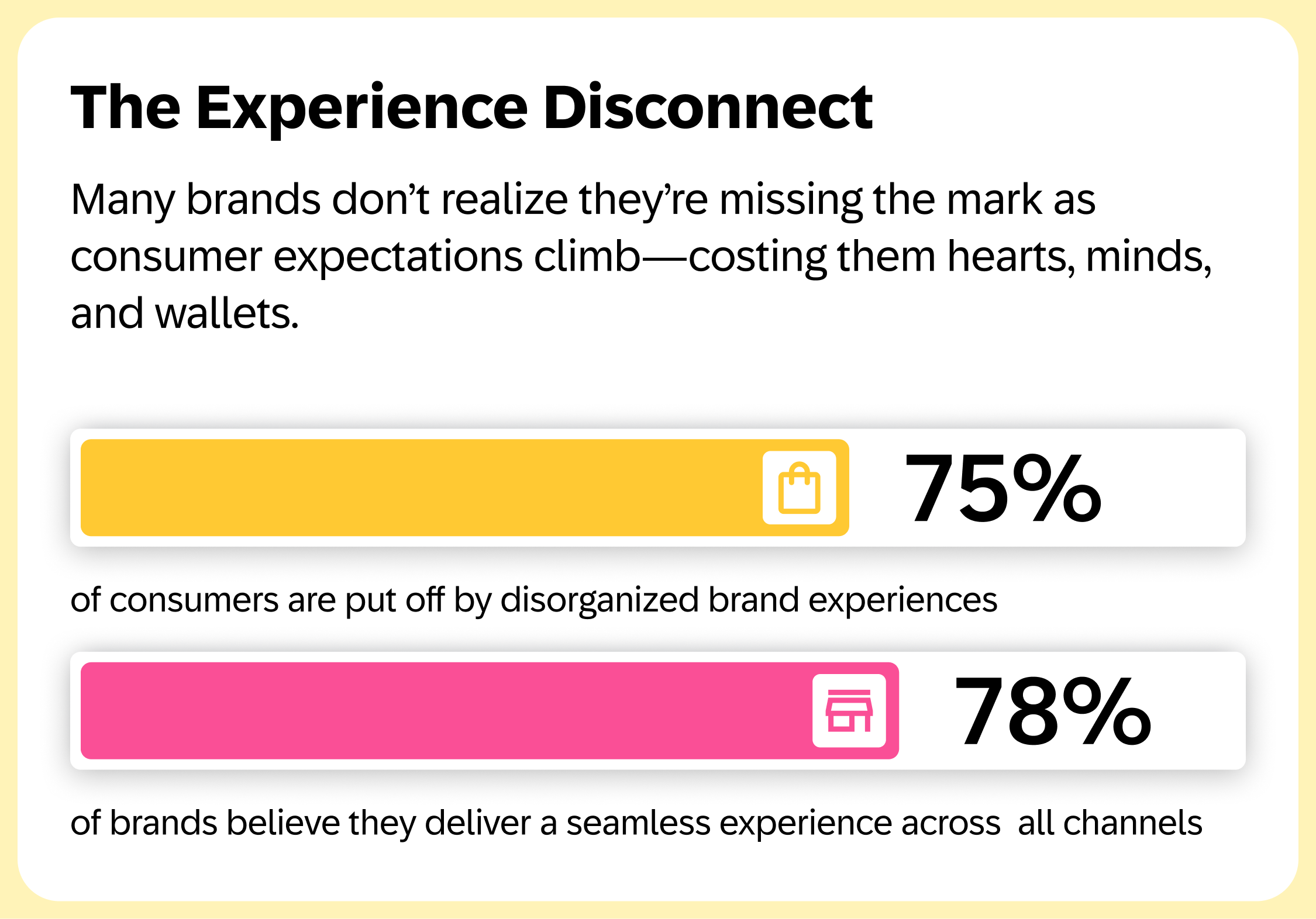
Our Global Engagement Index data tells a strikingly similar story. 75% of consumers say disorganized brand experiences put them off, specifically the kind where they are passed around like a hot potato between teams just to resolve a single issue.
Meanwhile, 78% of brands believe they’re delivering a connected experience across all channels.
Both statements can be true at the same time. But only one reflects what the customer actually feels.
AI Agents Are Already Making Buying Decisions
BCG research published in January 2026 found that shopping-related GenAI use grew by 35% in under a year.
More than 60% of consumers now express high trust in GenAI results when making purchase decisions. And once they start using it, they keep using it: two-thirds are weekly users.
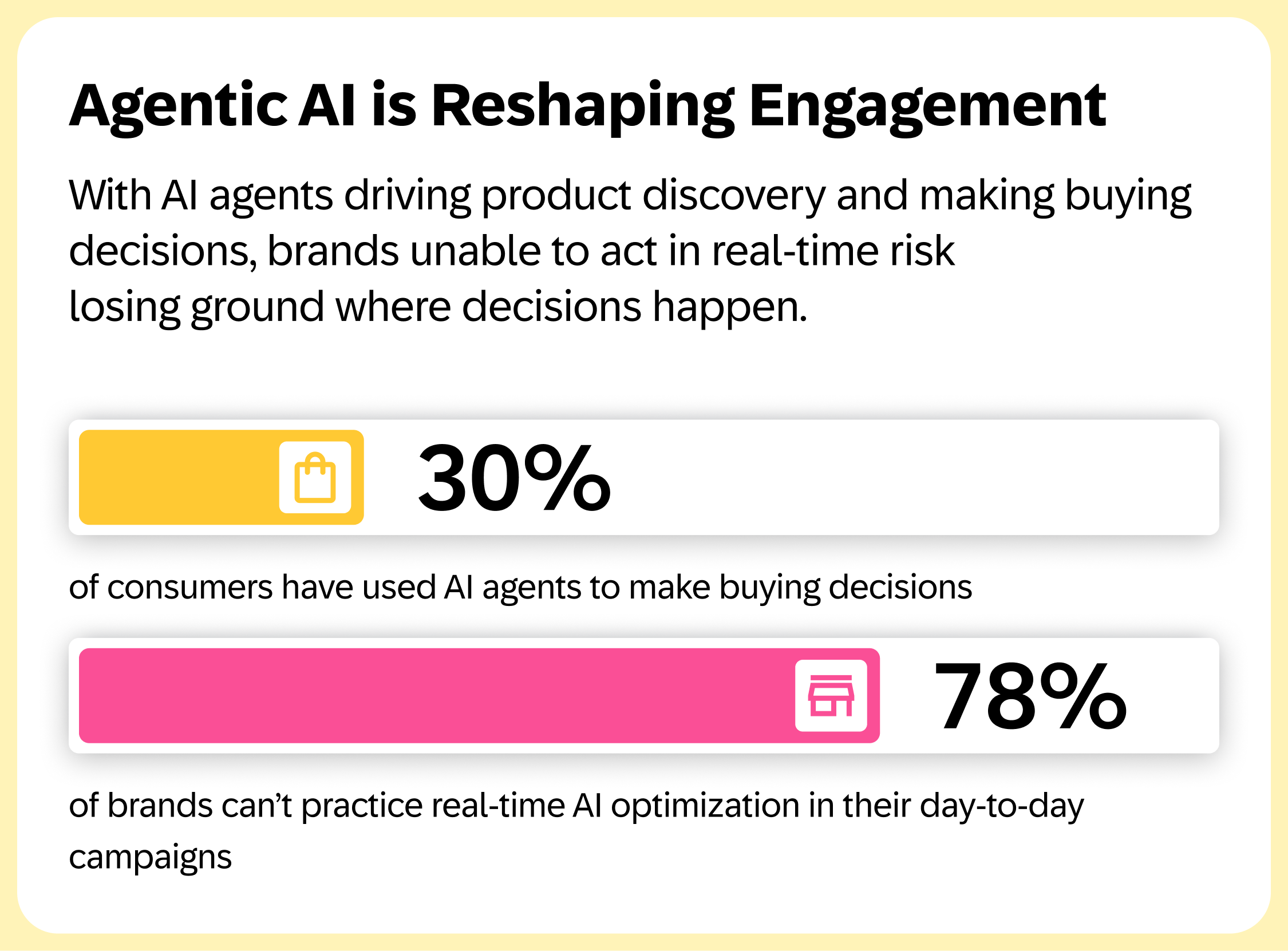
The Global Engagement Index puts a finer point on the brand side of this shift. 30% of consumers have already used AI agents to make buying decisions on their behalf. And yet 78% of brands say they can’t practice real-time AI optimization in their day-to-day campaigns.
When a customer’s AI agent is comparing offers across three competitors in milliseconds, a batch campaign sent hours later won’t register.
Consumers are already using AI to compare, evaluate, and switch brands faster than most marketing teams can build a segment. And 78% of brands still can’t activate enough of their data to make AI effective on their side of the equation.
The speed of decision-making has shifted, and the gap between how fast customers move and how fast brands can respond is only widening.
Most Customer Data Quite Literally Never Sees the Light of Day
Most brands aren’t struggling with a limited amount of customer data. In many instances, the opposite is true.
The problem is access and activation. Splunk’s global research of more than 1,300 business and IT leaders found that 55% of enterprise data is dark, i.e., collected, stored, and never used.
IBM cited the same research, noting that a full third of organizations estimated 75% or more of their data was sitting untouched.
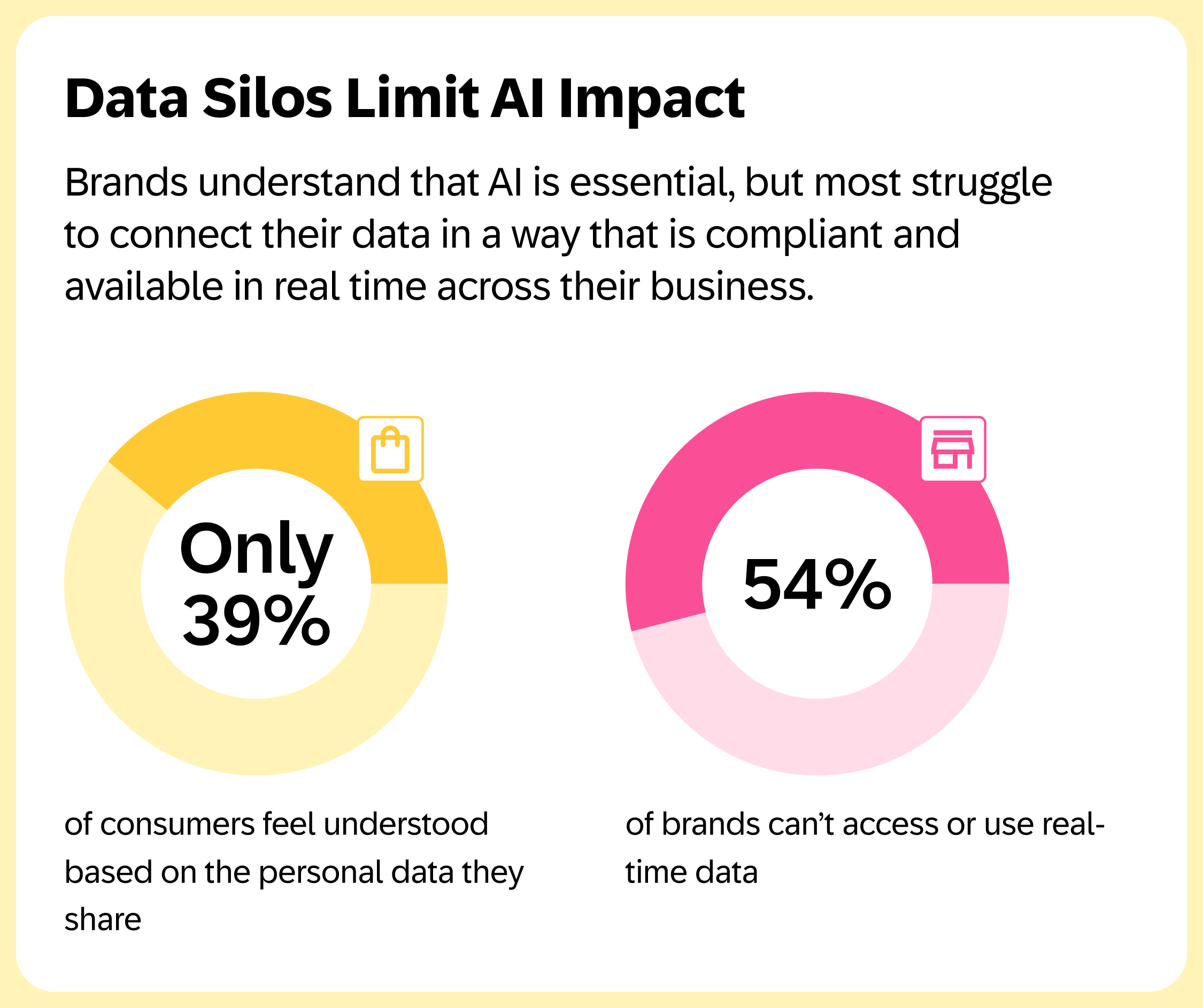
The Global Engagement Index confirms that this is directly affecting the customer experience. Only 39% of consumers feel understood based on the personal data they’ve shared with brands. On the other side, 54% of brands can’t access or use real-time data.
Brands ask customers to share more. Customers comply. Then nothing changes. The experience stays generic, and the trust that came with sharing starts to erode.
AI Conviction Without Data Infrastructure Is Just a Strategy Deck
There’s a line often attributed to Sun Tzu, “Tactics without strategy is the noise before defeat.”
In 2026, the equivalent for most brands is AI adoption without a connected data foundation.
Forrester’s 2025 Global Customer Experience Index found that 21% of brands’ CX rankings declined, while only 6% improved.
Across most US industries, CX quality dropped on all three dimensions Forrester measures: effectiveness, ease, and emotion. The gap between the experience brands intend to deliver and what customers actually receive is widening.
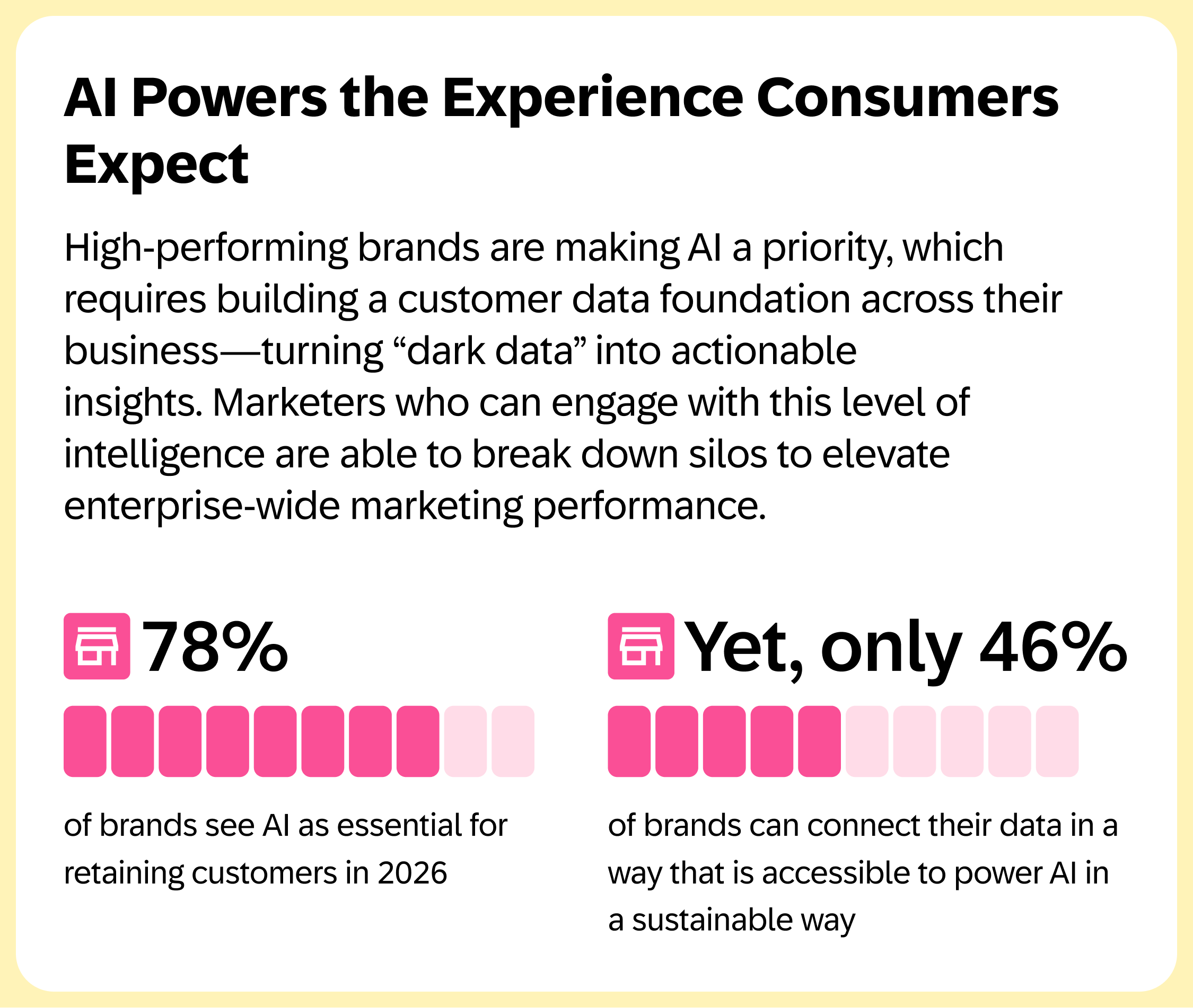
The Global Engagement Index adds the AI dimension. 78% of brands say AI will be essential for retaining customers in 2026. They’re right. But only 46% of brands can connect their data in a way that’s accessible enough to power AI sustainably.
That means more than half are running AI on a fragmented foundation: scattered systems, unstructured data, no shared view of the customer across departments and far too many instances where customers get passed like a hot potato between marketing, commerce, sales and service.
The brands that close the Engagement Divide will do so by building a solid data foundation before rushing into AI implementation to check a box for your boss.
Five Ways to Start closing the Gap
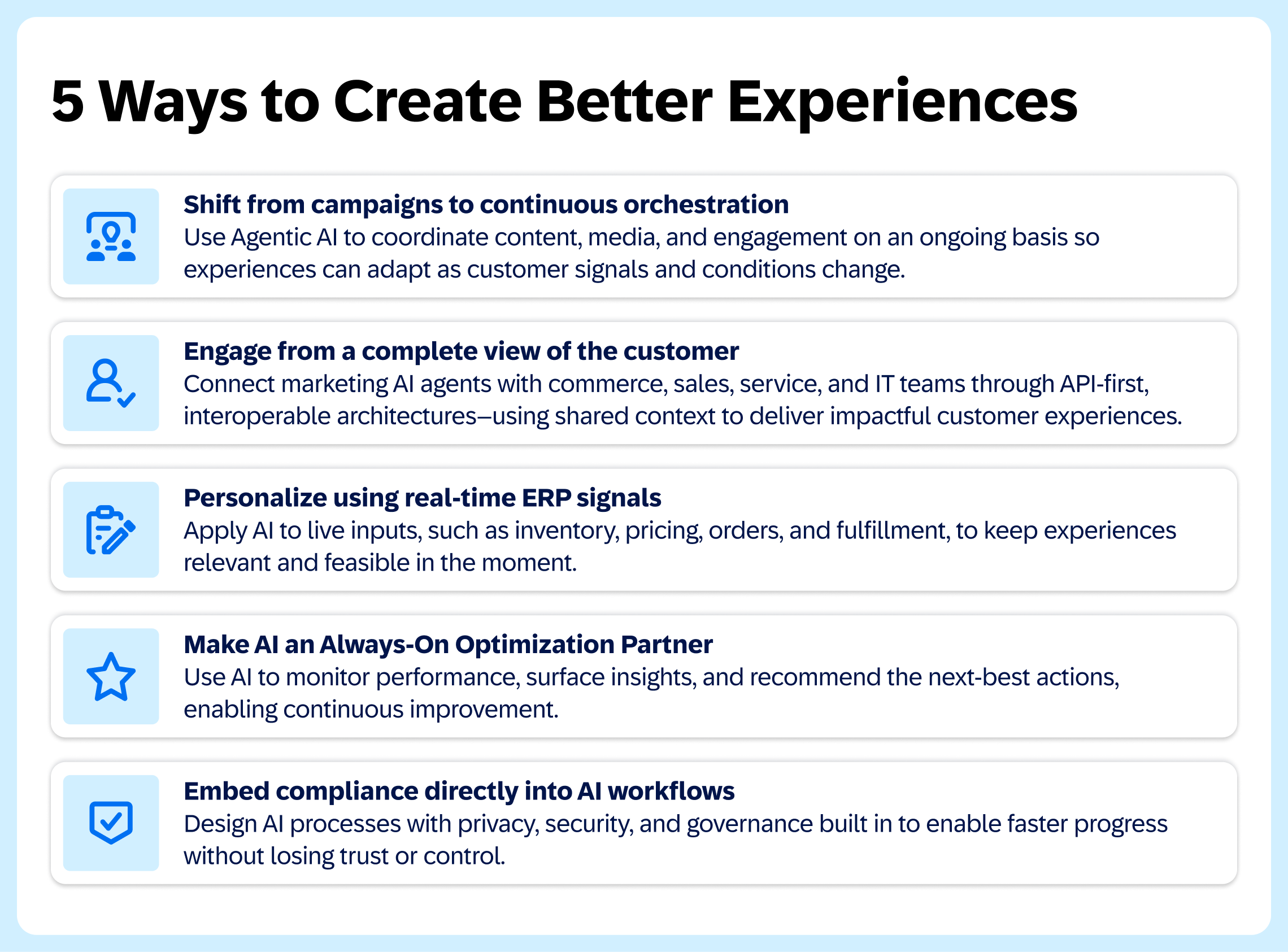
The Global Engagement Index identified five shifts that separate high-maturity brands (only 21% of those surveyed) from the 63% still stuck in the middle tier.
These are the operational patterns that showed up consistently among the brands whose CX scores, AI readiness, and cross-departmental coordination all tracked above average.
Here’s what they have in common:
The Full Picture
Considering the fact that 92% of marketers now use AI, we’ve moved from a situation where adoption was the big concern to one where the concern is now whether the of the business is organized to support what AI makes possible.
The big questions as you move into this phase are:
- Does your customer data span across ERP, commerce, service, sales, and supply chain systems, or is each department working from its own version of the truth?Are teams coordinated and AI-empowered?
- Are you using AI to build experiences that reflect what a customer actually needs in the moment they need it?
- Is your data infrastructure built to scale as the business grows, or will it buckle under the weight of the next expansion?
- And are your AI processes designed with privacy, security, and governance built in from the start, so you can move faster without putting trust at risk?
The full Global Engagement Index breaks down the Engagement Divide by country, industry, and department, with maturity benchmarks you can measure your own business against. Hit the link below to get your free copy.
Get Your Copy of the Engagement Index Report

About the author
Megan Hostetler is Global Head of Content Marketing at SAP Engagement Cloud and has spent 10+ years in the SaaS industry across the martech and sales enablement tech landscape. With a product marketing background, she understands features and functionality inside and out to help customers realize the full value of their purchase and translate those learnings to content that resonates. Formerly, she hosted The Marketing Cloudcast podcast, where she interviewed hundreds of experts to discuss trends, innovative tactics, and relevant insights in today’s marketing landscape.