
|
Key Takeaways
|
|
Back-to-school is a data exercise, not a creative exercise. Two thirds of shoppers had already started buying by early July last year. Segment by school calendar, purchase history, and lifecycle stage to reach them with relevant messages before the window closes. Use the season to reactivate lapsed customers. Now Optics drove 5.8 million engagements from one multichannel back-to-school campaign by using AI-powered segmentation to match each customer to the right journey based on lifecycle stage. Your loyalty program is a back-to-school data engine. Use the season to capture preferences, fill profile gaps, and build your segmentation foundation for Q4. Treat back to school as your Q4 dress rehearsal. Omnichannel coordination, inventory-aware personalization, and compressed timelines all get a lower-stakes test run now. The customer data you capture during this window becomes your segmentation foundation for the holiday season. |
Back-to-school spending in the US accounts for nearly $39 billion at the K–12 level alone, making it the second-largest retail event after the winter holidays. And shoppers are starting earlier than ever. According to the National Retail Federation, two-thirds of back-to-school shoppers had already begun purchasing by early July last year, up from just over half the year before. By mid-July, the window for capturing their attention is already narrowing.
Beyond the creative side of campaign planning—the themes, the hero images, the discount structures—the strongest back-to-school results are coming from teams that also treat the season as a data exercise. The question worth asking before you brief your creative team: Do you know enough about your customers to make every message in this campaign relevant to the specific parent, student, or teacher receiving it?
Here are five ideas grounded in what’s working across brands that use back-to-school as a real engagement opportunity.
1. Segment by school calendar, not by assumption
Back-to-school dates vary by region, district, and even school type. A family in Texas is shopping weeks before a family in the Northeast. Treating the season as a single launch date means half your audience gets the message too early and the other half gets it too late.
Location and behavioral data solve this. Platforms that connect real-time location signals with purchase history—the kind of data integration SAP Engagement Cloud and Google now enable—can match your campaign timing to regional school calendars rather than relying on a single national launch date.
Layer in purchase history to distinguish between first-time back-to-school shoppers and returning ones, then tailor the offer accordingly. A parent who bought from you last August is a different customer from one discovering your brand for the first time, and the campaign should reflect that.
2. Turn seasonal urgency into lifecycle activation
Back to school is one of the most natural re-engagement triggers on the retail calendar. Parents and students are already in buying mode, actively searching for solutions. That makes it the right moment to activate lapsed customers with category-relevant win-back journeys rather than sending a blanket discount to your full list.
Now Optics, the U.S. eye care company behind Stanton Optical, is a good example of this in practice. The retailer ran a back-to-school campaign coordinated across email, SMS, web, and digital ads, using SAP Engagement Cloud’s AI segmentation to identify where each customer sat in the lifecycle—active, lapsed, or at risk of churning—and route them into the right automated journey through the Automation Center. The campaign ran as a three-stage promotion, with each stage reaching customers on the channels where they were most active.
That approach drove 5.8 million engagements and a 65% year-over-year increase in win-back rate. The creative was strong, but the segmentation is what made the scale possible.
3. Bundle by need, not by margin
Bundling is one of the most common pieces of back-to-school advice, and one of the most common to be executed poorly. A bundle built around products a retailer wants to clear out feels very different from one that reflects how parents and students are thinking about their purchases.
Effective bundles need to map to real buying scenarios: a first-day-of-school outfit, a dorm essentials kit, and a school supply package based on actual classroom lists. When a bundle aligns with the customer’s natural buying process, it simplifies the decision. When it reflects the retailer’s margin goals, it adds friction to the decision-making process.
4. Use the season to build your data foundation for Q4
Back to school gives retailers a valuable and often overlooked opportunity to learn about their customers before the holiday season arrives. Use progressive profiling during this window to capture preferences: what age group they’re shopping for, which product categories matter to them, and which channels they engage on.
That data becomes the segmentation foundation for Q4. A parent who bought school shoes in August and indicated interest in kids’ clothing is a far warmer holiday prospect than a contact you’re still guessing about in November. Using back-to-school to build richer customer profiles creates a meaningful targeting advantage heading into the holiday season.
5. Put your loyalty program to work
Most retailers already have a back-to-school audience that’s identified, opted in, and trackable—their loyalty program members. With loyalty program members now driving most sales for many retailers, the season gives you a reason to activate that data in ways that go beyond point reminders.
A loyalty program that consolidates purchase history, category preferences, and engagement data into a single customer profile is already doing the segmentation groundwork for you. When a loyalty member shops for kids’ school shoes in August, you now know they have school-age children, which product categories they respond to, and which channel brought them in. Layer that against purchase frequency and tier status, and you have a targeting advantage heading into Q4 that generic acquisition data can’t match.
For inactive members—the ones enrolled but not engaging—back to school is a natural reactivation trigger. A targeted offer tied to a relevant school-season category, with a point bonus or tier perk attached, is a stronger pull than a generic “we miss you” email in November. And because loyalty members are already consented and identified, the cost of reaching them is a fraction of reacquiring a lapsed contact through paid channels.
The retailers getting the most from their loyalty programs during this window are the ones treating membership data as a segmentation input, not just a discount delivery mechanism.
Make back to school your Q4 dress rehearsal
Back to school exercises the same operational muscles as the holiday season: compressing timelines, coordinating across channels, aligning inventory with campaign logic, and stress-testing automations under real demand. Every capability you need for Q4—omnichannel execution, inventory-aware personalization, real-time campaign optimization—gets a rehearsal in a lower-stakes environment before the holiday pressure hits.
Treat this season as the dress rehearsal it is, and you’ll enter Q4 sharper, with richer data and tested workflows already in place.
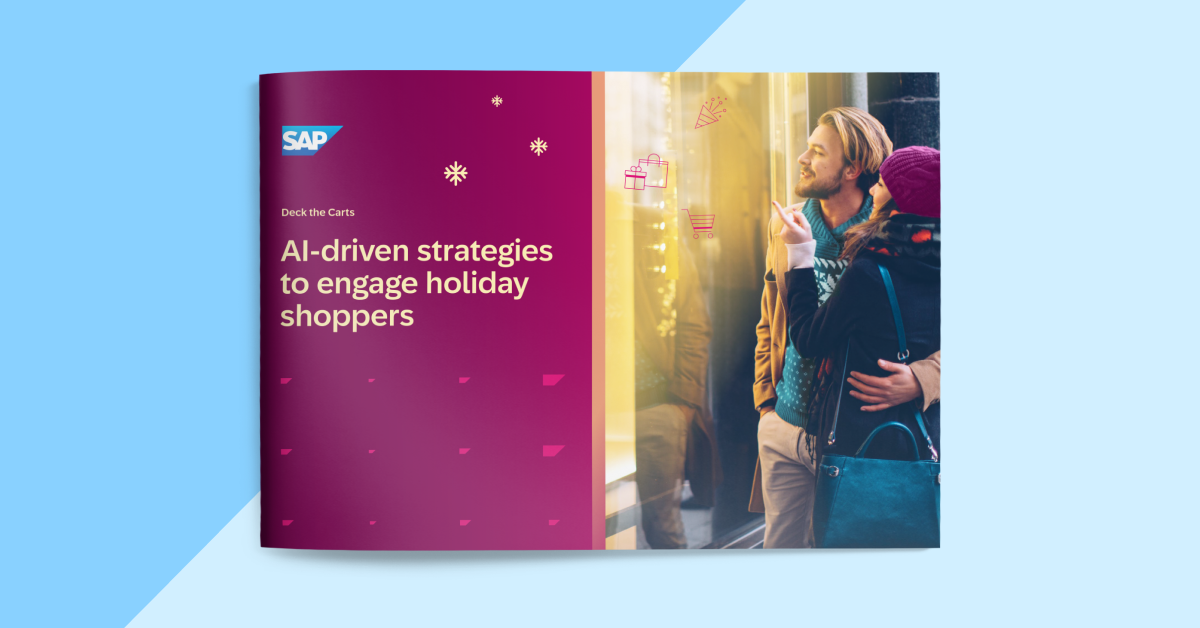
For a complete framework covering campaign planning, audience segmentation, and AI-driven personalization strategies across every peak shopping moment, download the Deck the Carts holiday readiness guide. And for month-by-month execution guidance throughout the year, see the 2026 holiday readiness playbook.
Get your holiday campaign playbook
About the author
Michelle Grant combines a background in global market research with deep experience in enterprise technology and digital transformation for Consumer Industries. At SAP, she helps organizations navigate digital transformation by translating market trends, customer insights, and technological innovation into actionable business strategies.