

New SAP Engagement Cloud data reveals enterprises are embedding AI into business workflows while keeping humans accountable
Indianapolis — July 22, 2026 — Enterprise AI is successfully moving beyond standalone chatbots and into the core workflows that shape customer engagement across the entire business, according to research from SAP Engagement Cloud.
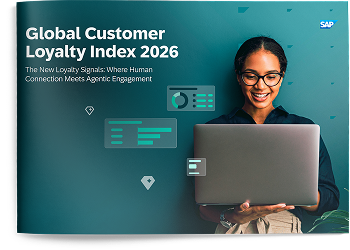
According to SAP’s 2026 Engagement Index, 75% of senior decision-makers say AI-driven assistants have increased productivity without reducing human control. More than one in three (35%) strongly agree that AI is now embedded in business workflows and is no longer a standalone tool. Together, these numbers demonstrate that organizations are exploring AI autonomy without compromising the clear lines set for human accountability.
This shift marks a new era of enterprise engagement. Rather than being deployed to react to customer signals, Agentic AI is being integrated directly into enterprise workflows, helping organizations shape the customer experience before it even begins.
“Most businesses already know that AI can help them. The question now is where it should be allowed to act, and where people still need to stay in control,” said Sara Richter, CMO, SAP Engagement Cloud. “AI agents can remove a lot of the slow, manual work that obstructs good customer engagement. But they are only successful when the data is connected, the rules are clear, and teams trust what the AI is doing.”
Professor Mark Ritson added, “AI is the racehorse, not the jockey. It’s remarkably effective at covering ground quickly, but it still needs someone holding the reins. The best companies are using AI to accelerate execution while keeping strategic decisions, judgement and accountability firmly in human hands.”
Guardrails shape the next phase of AI adoption
The research shows businesses are preparing for this transition. More than three quarters of business leaders (79%) say their organizations have clear AI guardrails around data lineage, PII handling, and human approval points. The same proportion say they are making significant investments in AI-powered customer engagement in 2026.
This investment reflects a broader change in how enterprises now think about engagement. As organizations bring AI into customer engagement workflows, consumer expectations for seamless, coordinated interactions are rising. Any friction exposes the flaws in disconnected interactions and is likely to have a negative impact on customer experience. The right connected data foundation is essential to ensure AI adds to the experience rather than detracts from it.
SAP’s view is that agentic AI marks a shift from personalization as a marketing tactic to engagement as an enterprise operating model. By connecting customer signals with business data across inventory, fulfilment, service, loyalty and finance, AI agents can help organizations turn insight into coordinated action.
The result is a smoother customer experience, with AI embedded in the workflow rather than placed at the center of the interaction. For enterprises, this human-led autonomy means AI helps turn insight into action, while people remain responsible for strategy, creativity, governance, and customer trust.
Connected data becomes the test for agentic AI
Some brands are already beginning to apply this thinking, infusing their customer engagement with a business-wide understanding of that customer. For example, Gibson, the iconic global music brand, is exploring how AI can unify customer data and surface insights that help teams engage customers in more relevant and timely ways.
“One of the biggest opportunities for us is using AI to make better sense of the data we already have,” said Jonathan Martz, Senior CRM Manager at Gibson. “Instead of teams manually digging through systems, AI can help identify patterns, behaviors and opportunities in real time. That allows us to move from broad campaigns to more context-aware engagement, while giving our teams more space to focus on strategy, creativity and customer impact.”
The move toward agentic enterprise engagement is also being accelerated by technology partnerships and ecosystem investment. SAP’s latest integration with Google is an example of how embedded AI is being brought closer to the enterprise data, systems, and workflows on which businesses already depend. By linking live signals like search trends, geo-demand, and seasonal behaviors with operational data, organizations can act on real time signals and insights. This moves engagement beyond personalization to deliver on promises the business can fulfil –– turning engagement into measurable revenue.
“AI agents are incredibly effective. But if your data is messy or your systems don’t talk to each other, layering AI on top will only make those problems more visible,” added Richter. “The brands that get this right will be those that start with strong foundations: connected data, clear permissions, and workflows that improve as they learn. That’s how you move faster with AI without losing control.”
