
|
Key Takeaways
|
|
True Loyalty sits at 29%, down five points year on year. Nearly a third of consumers who switched brands did so out of boredom. Product quality is still the top loyalty driver (59%), but it only creates satisfaction. Loyalty requires recognition, relevance, and connected experiences on top. Batch-and-blast marketing actively erodes loyalty. Nearly a quarter of consumers say generic communications damage their relationship with a brand. |
Your best-selling product has a 4.8-star rating and a return rate under 2%. Customers love it, tell their friends, and leave glowing reviews. Then they disappear.
They didn’t leave for a competitor, and nothing went wrong. They just never had a reason to come back.
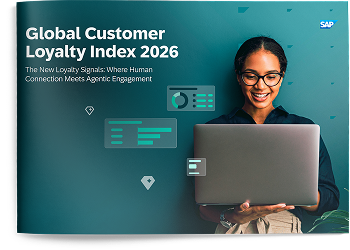
SAP’s Customer Loyalty Index 2025 puts a number on the scale of this problem: True Loyalty, the measure of genuine, unwavering brand commitment, sits at just 29%, down five percentage points from the previous year. And 28% of consumers have switched brands simply because they were bored. The product was usually fine, but nobody gave them a reason to come back for a second one.
Customer retention and loyalty strategies solve different parts of this problem:
- Retention is about earning the next visit.
- Loyalty is what happens when a customer stops considering alternatives altogether.
The distance between those two outcomes is where most of the long-term revenue in your business sits.
What is customer retention?
A DTC skincare brand has a hero moisturizer rated 4.8 stars. Customers love it. They just don’t come back for the serum, the cleanser, or anything else in the range. The product delivers, but the relationship doesn’t extend beyond that single transaction.
What customer retention measures
Retention rate, repeat purchase rate, and customer lifetime value. Together these tell you whether your product, pricing, and experience are working well enough to bring customers back – and how much each returning customer is worth over time.
But strong products alone don’t guarantee strong retention. SAP’s research shows that 60% of consumers don’t pay attention to brands even when the product meets their needs. Your moisturizer worked. Your brand didn’t register.
If the only time a customer hears from you is when you want them to open their wallet, they’ll eventually stop opening your emails.
Research from Bain & Company shows that increasing customer retention by just 5% can boost profits by 25% to 95%. Retained customers cost less to serve, spend more over time, and are far more likely to refer others.
That makes customer retention and loyalty strategies among the highest-ROI investments a marketing team can make.
What is customer loyalty?
Two customers buy the same pair of running shoes. One wears them until the soles give out, never visits the website again, and replaces them with whatever’s on sale at the time. The other joins the loyalty program, follows the brand’s training content, recommends them to three friends, and pre-orders the next model before it launches.
Same product, same price, completely different value to the business over time.
What customer loyalty measures
Net Promoter Score, loyalty program participation, referral rates, and advocacy. These go beyond purchase frequency to show whether customers are actively choosing you over alternatives – and telling other people to do the same.
High-quality products remain the top driver of loyalty, cited by 59% of consumers in SAP’s Customer Loyalty Index 2025. But quality creates satisfaction, which is a necessary foundation that isn’t sufficient on its own. Loyalty requires the layers on top: recognition, relevance, and consistent experiences that make the customer feel like a person you remember, not a row in a database.
Five types of customer loyalty
Understanding what type of loyalty your customers exhibit helps you figure out where to invest. Not all loyalty looks the same, and not all of it lasts.
Incentivized Loyalty is driven by rewards, discounts, and loyalty programs. Customers stay because the economics favor it. This is the most common starting point but also the most fragile: the moment a competitor offers a better deal, the customer moves.
Inherited Loyalty comes from familiarity and habit. Customers who grew up using a brand, or who associate it with a trusted recommendation from someone they respect, develop loyalty that doesn’t require active marketing. It erodes slowly, but it does erode when competitors deliver noticeably better experiences.
Ethical Loyalty is rooted in shared values. Customers choose brands that align with their beliefs around sustainability, social responsibility, or community impact. SAP’s research found that 39% of Gen Z consumers have switched brands over poor sustainability practices. For younger demographics, values work as a filter before price or convenience even enter the picture.
Silent Loyalty is the customer who buys consistently but never engages beyond the transaction. No reviews, no social follows, no program membership. They’re loyal in behavior but invisible in your data, which makes them easy to overlook and harder to retain when a compelling alternative shows up.
True Loyalty is the deepest form of brand commitment, built on trust and emotional connection. SAP’s Customer Loyalty Index 2025 reports that True Loyalty now sits at 29%, down five percentage points in a single year, the steepest annual decline since the Index began. At the same time, Trend Loyalty is rising. A total of 14% of consumers are now classified as trend-loyal, and 29% of that group quickly loses interest once a product stops trending. The loyalty you think you’ve earned may be more conditional than your dashboard suggests.
Customer retention vs. customer loyalty
Retention and loyalty are related but distinct. Retention tells you whether customers are coming back. Loyalty tells you why – and whether they’d stay if a competitor made switching easier.
A business can have high retention with low loyalty. Subscription models, high switching costs, or lack of alternatives can keep customers in place without any emotional connection. That’s retention without loyalty, and it’s vulnerable the moment a competitor removes the friction.
The strongest position is high retention driven by high loyalty, where customers stay because the experience, the brand, and the value consistently reinforce their decision. Customer retention and loyalty strategies work best when they’re designed as a connected system rather than treated as separate workstreams.
Why customer retention and loyalty matter now
Your competitors can match your product range and your pricing within a quarter. They can run the same promotions and target the same audiences. The thing they can’t replicate is the relationship you’ve built with your existing customers.
Indifference has become the primary churn driver. Nearly two-thirds of consumers (64%) ignore brand names entirely when buying, focusing on the product and the experience rather than the name on the label (SAP Customer Loyalty Index 2025). And 40% say brands don’t understand them as people. These customers left because nobody gave them a reason to stay.
Irrelevance makes the problem worse. Nearly a quarter (23%) of consumers say batch-and-blast marketing damages their relationship with a brand (SAP Customer Loyalty Index 2025). Every one of those ignored emails costs you money to send and attention to earn back.
Retention keeps customers in the funnel, and loyalty turns them into advocates who drive acquisition you don’t have to pay for. When you invest in customer retention and loyalty strategies across the full lifecycle, the returns in CLV, average order value, and organic growth build on each other.

Best strategies for customer retention and loyalty
Unify your data and channels so you can engage anywhere
Most businesses collect more data than they can act on. Purchase history sits in one system, email engagement in another, in-store behavior in a third. Until those sources connect, personalization is guesswork, and every campaign relies on incomplete customer profiles.
Unifying your customer data across channels and touchpoints is the first strategic step. When your CRM, email, commerce, and loyalty data share a single customer view, every interaction can build on the last rather than starting from scratch. Solutions like SAP Engagement Cloud connect these data sources into a unified foundation that AI-driven personalization and lifecycle automation can work from.
Gain insights by analyzing your existing data and channels
Before adding new channels or launching new campaigns, look at what your existing customer data is already telling you. Which customer segments have the highest repeat purchase rates, and what do they have in common? Where in the lifecycle does engagement drop off? Which channels drive the most second purchases?
These patterns are already in your data. The challenge is connecting them across systems so the insights are visible and actionable. A marketer who can see that customers acquired through a specific campaign have twice the 90-day retention rate can double down on what’s working rather than spreading budget evenly across everything.
Build personalized cross-channel experiences
A customer buys a winter coat from your website on a Tuesday. Wednesday morning, she opens an email from your brand promoting the same coat. By Friday she’s stopped opening the emails altogether, and by the time she needs a scarf to match, she buys it somewhere else.
That’s what happens when your email channel has no idea what your commerce channel just sold.
SAP’s Global Engagement Index 2026 found that 44% of consumers say brand interactions feel less personal and more generic than before, and nearly six in ten (58%) think most marketing emails they receive aren’t relevant. Yet consumers know what good looks like: 63% say their favorite brand delivers connected experiences across mobile, web, and in store.
Closing that distance is an infrastructure challenge. Better subject lines won’t fix it. Personalization at scale requires connected data, real-time decisioning, and the ability to act on individual behavioral signals across channels simultaneously. A personalization engine that unifies data across channels can close this gap, and there are proven data-driven personalization strategies that show what this looks like in practice.
Automate customer journeys to drive retention and loyalty
Manual campaign execution doesn’t scale, and it can’t respond fast enough to real-time customer behavior. Automated lifecycle journeys deliver the right message at the right time without requiring a marketer to press send every time a customer reaches a trigger point.
Welcome series for new customers, post-purchase cross-sell recommendations, re-engagement campaigns for customers showing early signs of churn, birthday and milestone rewards that make customers feel recognized: these are the building blocks of a customer lifecycle marketing strategy that works while your team focuses on strategy, not manual sends.
Measure results to demonstrate revenue impact
Customer retention and loyalty strategies need to connect to revenue. Track retention rate, repeat purchase rate, CLV, and churn alongside campaign-level metrics to show how lifecycle marketing activities contribute to the bottom line. When you can demonstrate that a specific win-back automation recovered a measurable amount of revenue, the business case for continued investment writes itself.
Trends in customer retention and loyalty
Predictive analytics and connected data
Predictive analytics lets marketing teams identify at-risk customers before they churn, forecast lifetime value at the individual level, and allocate resources toward the segments with the highest growth potential. The shift from reactive reporting to predictive action is one of the biggest capability leaps available to retention marketers right now.
But predictive models are only as good as the signals they’re built on. When customer data is fragmented across marketing, commerce, service, and operational systems, predictions reflect an incomplete picture. Connecting those signals, including operational data from ERP systems like order status, delivery events, and service interactions, gives AI models the full context they need to generate accurate, actionable predictions.
Discover the 5 hidden signals in your operational data that drive customer loyalty
Mobile apps and loyalty programs
Customers are shopping on mobile apps, but most brands still engage primarily through email and web. That disconnect creates a blind spot in your retention strategy. Brands that integrate loyalty directly into their mobile experience, through mobile wallet passes, in-app rewards, and personalized push notifications, see higher program participation and more frequent repeat visits.
In-app behavioral signals are some of the richest data available to retention marketers. App usage data gives you real-time insight into customer intent, preferences, and engagement patterns that website analytics alone can’t capture. When that data flows into your engagement strategy, it powers the kind of personalized, lifecycle-specific communications that drive long-term retention.
Combining retention and loyalty for sustainable success
Your 4.8-star product is still the foundation. Customers need to love what you sell. But sustainable growth comes from building the relationship around the product: personalized experiences that recognize individual customers, lifecycle strategies that stay relevant at every stage, and connected data that makes it all possible without a team of fifty pressing send.
Acquisition gets customers through the door. What happens after that, whether they come back a second time, a tenth time, and eventually stop comparing you to anyone else, depends on how well you build the relationship around the product. Invest in the full lifecycle, and the customers you’ve already earned become the growth engine you don’t have to keep paying for.
Customer retention and loyalty FAQs
Customer retention measures whether customers keep coming back. Customer loyalty measures whether they come back because they want to, or simply because they haven't switched yet. A business can have high retention with low loyalty – subscription models and high switching costs can keep customers in place without any emotional connection. The strongest position is high retention driven by genuine loyalty.
Retained customers are more likely to make repeat purchases, try new products, and generate higher lifetime value. Because they already trust your brand, they cost less to serve and convert at higher rates, making retention one of the most cost-effective growth strategies available.
Customer loyalty breaks down into five types: incentivized (driven by discounts and rewards), inherited (built on brand heritage and familiarity), ethical (rooted in shared values like sustainability), silent (consistent purchasing without public advocacy), and true loyalty (deep emotional commitment to the brand). True Loyalty currently sits at just 29% according to SAP's Customer Loyalty Index 2025.
Four core metrics: Net Promoter Score (willingness to recommend), repeat purchase rate (how often customers come back), customer lifetime value (total revenue across the relationship), and customer engagement metrics like email open rates, app usage, and loyalty program participation. Declining engagement is typically the leading indicator of churn.
Indifference. SAP's Customer Loyalty Index 2025 found that 28% of consumers switched brands simply because they were bored, and 64% ignore brand names entirely when buying. The biggest risk to loyalty isn't a competitor offering something better – it's failing to give customers a reason to stay engaged.
About the author
Matthew Gardner has over 25 years of experience in the retail industry, having held leadership positions at companies like The Kroger Co, Office Depot, and Sports Authority. As an executive consultant at SAP, he collaborates with clients to accelerate positive outcomes. Matthew helps retailers explore relevant emerging capabilities, market insights, industry trends, and best practices to guide profitable investment decisions.