






In a world buzzing with digital interactions and countless advertising messages vying for attention, businesses face an ever-growing challenge: standing out from the competition and effectively engaging their target audiences.
But as consumers become more discerning and their preferences evolve, marketers must embrace new strategies to engage and retain their valuable customers.
Enter omnichannel marketing.
By harnessing the power of data, technology, and consumer insights, omnichannel marketing enables brands to create seamless, 1:1 personalized engagements that forge deeper connections, foster customer loyalty, and ultimately drive business growth.
Whether you’re a seasoned marketer seeking to fine-tune your omnichannel strategy, or an aspiring entrepreneur eager to leverage the latest trends, these statistics will empower you with valuable insights, practical takeaways, and a solid edge over the competition.
From revealing the impact of personalized experiences to exploring the ROI of integrated campaigns, let’s dive deep into the numbers that shape the future of customer-centric marketing.
The State of Omnichannel Engagement in 2026
Customer expectations, competitive pressure, and shifting loyalty patterns are forcing brands to rethink how they engage across channels. These stats highlight why transformation is no longer optional.
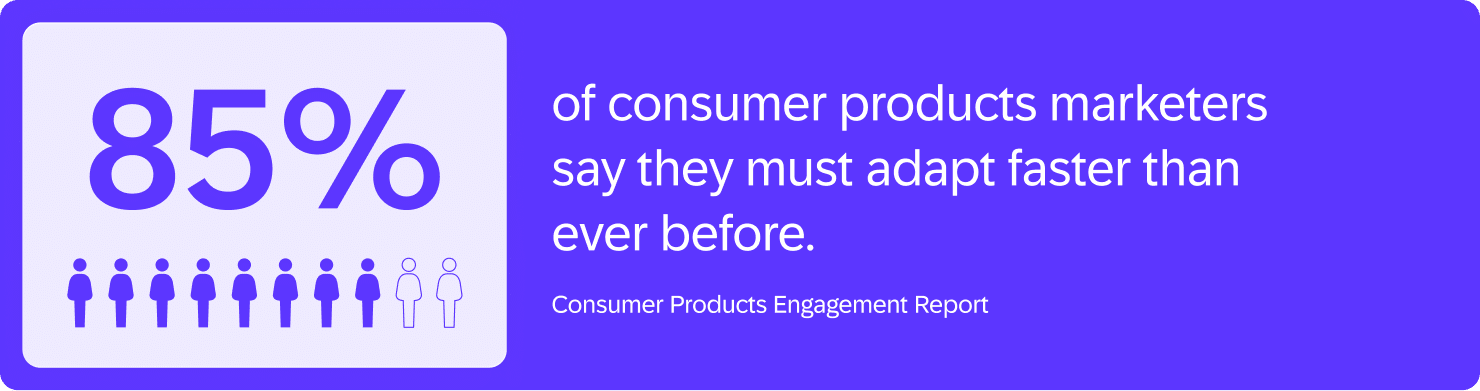
85% of consumer products marketers say they must adapt faster than ever before. [Consumer Products Engagement Report]
Speed has become a strategic advantage. Customer behaviour evolves quickly, and the brands that respond slowly lose visibility, conversions, and loyalty. This pressure is driving investment in AI, automation, and connected platforms that make omnichannel engagement more agile. If your workflows aren’t built for rapid change, you’ll feel the impact throughout the customer journey.
88% of consumer products marketers say they need to significantly transform customer engagement this year. [Consumer Products Engagement Report]
This shows how rapidly expectations are changing. Marketers aren’t looking for incremental improvements, they’re recognising the need for foundational shifts in how they connect data, channels, and content. You’re competing in a landscape where transformation is the new baseline, and the brands that move decisively will see the strongest gains.
57% of consumers have switched to cheaper or own-label alternatives. [Consumer Products Engagement Report]
Price-driven switching is reshaping loyalty across sectors. Even strong brands are losing customers when value doesn’t feel clear or consistent. An omnichannel strategy that reinforces relevance, exclusivity, and personalised benefits can help offset price sensitivity. Without these layers, consumers have little reason to stay.
56% of Gen Z say they don’t care about brands as long as products meet their needs. [Consumer Products Engagement Report]
Younger consumers prioritise function and alignment with their preferences, not brand heritage. That makes personalised journeys essential, especially for onboarding and retention. If you don’t demonstrate relevance early, Gen Z shoppers switch quickly and without hesitation. Meeting their needs across channels is what earns long-term engagement.
Personalization, Trust, and the Value Exchange
Customers are willing to engage deeply with brands, but only when they feel the experience is personal, transparent, and valuable. These stats highlight why trust and relevance now sit at the center of every successful omnichannel strategy.

60% of consumers value highly personalized content. [Customer Loyalty Index 2025]
Personalisation has moved from a competitive advantage to a baseline expectation. When customers see content that reflects their interests, behaviours, and needs, they feel understood and are more likely to stay engaged. This expectation stretches across every channel, from email and apps to on-site recommendations and loyalty offers. If your experiences aren’t tailored, customers quickly tune them out.
41% of consumers want more personalized deals and offers. [Customer Loyalty Index 2025]
Customers associate personalisation with tangible value, not just tailored messaging. They expect offers that reflect their purchase history, preferences, and timing. When those incentives feel relevant, they reinforce loyalty and help customers justify choosing your brand over cheaper alternatives. In an inflationary environment, this kind of value exchange becomes even more important.
Only 29% of consumers believe brands offer enough value in exchange for their data. [Customer Loyalty Index 2025]
There is a major gap between what brands think they’re delivering and how customers actually perceive it. While marketers often feel confident in their value propositions, fewer than a third of customers agree. This undermines loyalty and impacts willingness to opt in to personalized experiences. Closing this gap requires clearer communication, more meaningful benefits, and a consistent delivery of personalised value.
Only 26% of consumers report a high level of trust in retailers to protect their personal information. [Customer Loyalty Index 2025]
Trust is fragile, and brands must earn it with every interaction. Concerns around privacy, data handling, and AI usage shape how customers engage across channels. When trust is low, customers hesitate to share the data you need to fuel effective personalisation. Building confidence requires transparency and consistent follow-through across the entire journey.
63% of consumers are not confident in the data privacy of AI. [Customer Loyalty Index 2025]
AI-driven experiences are becoming more common, but many customers still feel uncertain about how their data is used. This doesn’t mean they reject AI — it means they need reassurance. Marketers who communicate clearly about safeguards and benefits can build trust while delivering richer, more relevant experiences. Without that effort, AI-powered engagement risks creating hesitation instead of loyalty.
How AI Is Rewriting the Omnichannel Playbook
AI is transforming how brands plan, launch, and optimise engagement across every channel. These stats show how deeply AI is embedded in modern marketing workflows and why it’s become essential for delivering real-time, personalised experiences at scale.
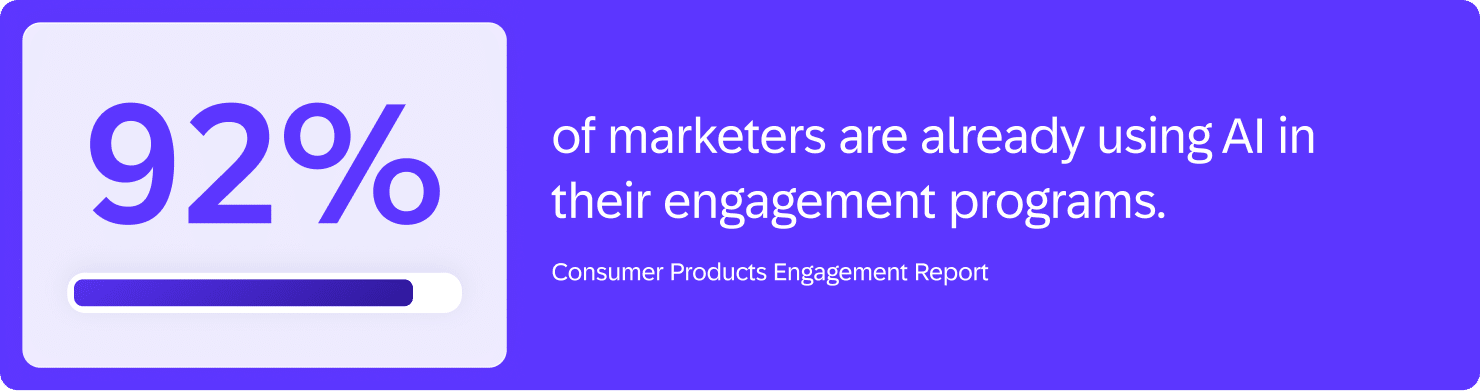
92% of marketers are already using AI in their engagement programs. [Consumer Products Engagement Report]
AI is no longer reserved for innovators — it’s the standard. Nearly every marketing team now relies on AI to analyse data, personalise content, or automate key steps in the customer journey. This level of adoption reflects both the maturity of the technology and the pressure to keep up with rising expectations. If you’re not using AI today, you’re competing against brands that can move faster and deliver more relevance with less effort.
71% of marketers say AI helps them build and launch campaigns faster, saving an average of 2.3 hours per campaign. [AI in Retail Global Report]
AI dramatically reduces the manual work that slows teams down. From generating content to analysing performance, AI shortens cycle times and frees marketers to focus on strategy and creativity. These time savings compound across the campaign calendar, creating more room for testing, optimisation, and experimentation. When you’re managing omnichannel journeys, this efficiency becomes a major advantage.
60% of marketers report increased customer engagement after adopting AI. [AI in Retail Global Report]
AI doesn’t only improve internal productivity — it drives better customer outcomes. Marketers who use AI see stronger engagement, which suggests that relevance, timing, and message fit are improving across channels. As algorithms learn from behaviour and preferences, those gains accelerate. For brands balancing email, mobile, onsite, and in-store touchpoints, this lift can be decisive.
58% of marketers say AI has improved customer loyalty. [AI in Retail Global Report]
AI-powered personalisation helps strengthen relationships through consistent, contextual value. When customers feel seen and understood, they stay longer and spend more across categories. This loyalty lift shows that AI isn’t only about automation — it’s about creating better human experiences at scale. Customers reward brands that feel tailored and timely.

66% of marketers use AI to predict future customer behavior, and 70% use it to optimize campaigns in real time. [AI in Retail Global Report]
Predictive insights have become a core capability for leading brands. Being able to anticipate what customers will do next allows marketers to build journeys that feel proactive instead of reactive. Real-time optimisation then ensures that each touchpoint adjusts as behaviour changes. Together, these capabilities create a more fluid and personalised omnichannel experience.
64% of marketers plan to increase their investment in AI this year. [AI in Retail Global Report]
AI investment is accelerating because marketers see measurable returns. As AI unlocks speed, precision, and deeper insights, teams are expanding their use cases across the entire journey. This includes recommendations, segmentation, lifecycle automation, and content generation. The brands who invest early gain a compounding advantage in capability, efficiency, and engagement.
48% of defecting customers were won back within 90 days using AI-powered lifecycle campaigns. [AI in Retail Global Report]
AI goes beyond acquisition, actively helping marketers improve retention, too. By identifying churn risk early and triggering the right incentives or content at the right moment, brands can re-engage customers who would otherwise disappear. Recovering nearly half of defecting customers shows the power of predictive insights combined with automated execution. For omnichannel marketers, this is one of the clearest demonstrations of AI’s value.
In-Store and Online Are Now One Continuous Journey
Customers no longer differentiate between physical and digital channels — they expect every interaction to feel connected. These stats show how in-store behaviour, digital engagement, and AI-driven experiences now blend into one unified journey.
55% of retail purchases still take place in physical stores. [AI in Retail Global Report]
Despite the growth of e-commerce, the store remains a critical part of the buying journey. Many customers start their research online but still rely on in-person experiences to evaluate products, compare options, or complete their purchase. This makes it essential for brands to connect digital discovery with in-store activity. When these touchpoints work together, customers experience fewer gaps and more confidence in their decisions.
39% of consumers say AI is already improving their retail experiences. [AI in Retail Global Report]
Customers are beginning to notice the benefits of AI in day-to-day shopping. Whether through better recommendations, smarter search, or more helpful support, AI is shaping how customers interact with brands across channels. Even small improvements in speed or relevance make a difference in-store and online. As these capabilities mature, customers will expect this level of intelligence everywhere.
51% of consumers have had a positive experience using a chatbot for support. [AI in Retail Global Report]
Conversational experiences are becoming a natural part of the customer journey. More than half of customers report positive interactions with chatbots, which suggests that well-designed conversational AI can enhance both convenience and satisfaction. This support often acts as the bridge between channels — answering questions online before a store visit or resolving issues after a purchase. When chatbots are integrated across touchpoints, they help maintain continuity throughout the journey.
How Consumers Shop, Discover, and Evaluate Products Across Channels
Customers now expect every interaction to feel consistent, connected, and tailored to their needs. These stats show how behaviour is shifting across channels, and why unified engagement is essential for meeting demand.

Email and brand websites remain the top channels customers use to interact with consumer products brands. [Consumer Products Engagement Report]
Even as new channels emerge, customers continue to rely on email and brand websites as their primary touchpoints. These channels anchor the discovery, consideration, and loyalty journey because they offer clear information and high trust. For marketers, this means your owned channels still carry the weight of expectation and need to deliver personalised, seamless experiences. When email and web perform well, every other channel becomes easier to orchestrate.
36% of consumers use repeat subscriptions to save time and money. [Consumer Products Engagement Report]
Subscriptions are no longer a niche convenience — they’re a core behavior for more than one-third of shoppers. This shift turns replenishment journeys into a critical omnichannel use case, from onboarding to renewal reminders and upsell opportunities. Customers expect these experiences to feel automatic, personalised, and supported across email, app, SMS, and web. When they don’t, renewal risk increases quickly.
44% of consumers value immersive experiences such as AR and VR when shopping. [Consumer Products Engagement Report]
Immersive discovery is becoming part of the standard shopping journey, not just a novelty. Customers want richer ways to explore products and understand how they fit into their lives. As AR and VR mature, they create new opportunities to connect digital and physical touchpoints in meaningful ways. Brands that invest in these experiences can differentiate themselves earlier in the decision process.
37% of consumers value marketing delivered through voice assistants like Alexa and Google Assistant. [Consumer Products Engagement Report]
Voice is rapidly evolving into a recognised marketing channel. Customers appreciate the convenience of receiving updates, reminders, and personalised recommendations through assistants they already use daily. This expands the definition of “omnichannel” beyond screens and inboxes, and pushes brands to think about conversational design. When done well, voice adds simplicity and accessibility to the customer experience.
Conclusion
Looking at these stats, it’s clear how pivotal omnichannel marketing has become in the modern digital landscape, not to mention having the right omnichannel marketing technology. From the importance of personalized customer experiences to the balance of in-store and online interactions, these aren’t just numbers — they’re insights into changing consumer behavior and how brands are adapting to those changes.
For an in-depth look at every aspect of a results-generating omnichannel marketing strategy, head over to our Definitive Guide to Omnichannel Marketing where we answer all the big questions on omnichannel marketing, provide real-world success stories and use cases, and share actionable strategies and tactics.