|
Key Takeaways
|
|
Holiday readiness is an enterprise-wide exercise. Aligning customer engagement with inventory, fulfillment, and service operations is what separates peak-season winners from brands firefighting through December. AI delivers the greatest value when connected to real signals. Customer behavior, inventory levels, demand fluctuations, and fulfillment data should all feed into how AI supports marketing decisions during peak periods. Marketers set the strategy; AI and automation execute. The smartest brands define what AI is allowed to do, what requires human approval, and where automation increases speed without eliminating oversight. The post-purchase experience is as important as the purchase. Most customer frustration occurs after checkout. Proactive delivery communications and transparent expectations turn one-time buyers into repeat customers. Plan acquisition and retention together. Every holiday acquisition campaign should have a retention strategy attached before launch day, whether that means loyalty enrollment, a second-purchase journey, or a subscription path. The brands that win can act on signals in real time. Connected customer and business data enables more relevant, timely engagement and is what allows brands to respond when consumer behavior shifts during peak season. |
The holiday season can make or break a retailer’s year. Yet many brands still approach Black Friday, Cyber Monday, and year-end shopping periods as isolated campaigns rather than enterprise-wide moments that test every part of the customer experience.
That approach is becoming increasingly risky.
According to SAP’s 2026 Global Engagement Index, 75% of consumers are frustrated by disorganized brand experiences, while 82% say a disappointing brand interaction causes them to disengage.
At the same time, 78% of brands believe AI will be essential for retaining customers in the coming year. The challenge goes beyond making AI investments though; it lies in whether brands can connect customer insights, business data, and operational signals well enough to act on them.
Meet the experts
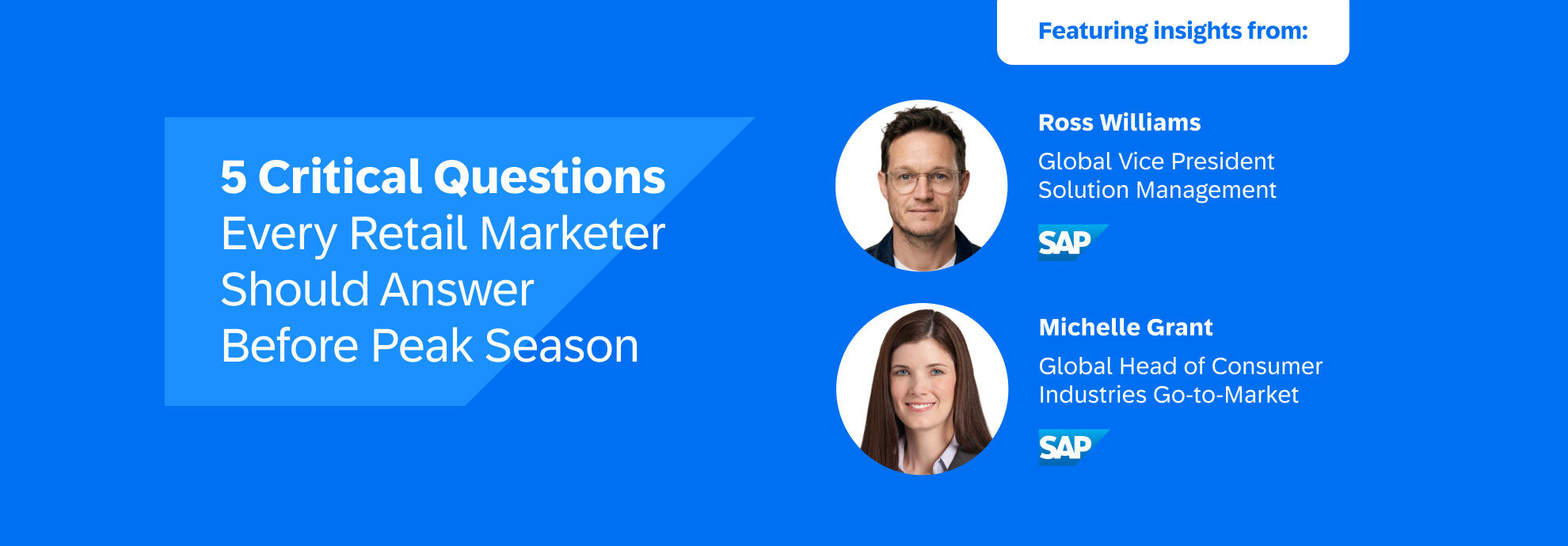
Ross Williams is a global technology executive and product strategy leader with extensive experience in both retail and SaaS environments, currently serving in a Product Strategy role at SAP. His career spans major retailers such as Tesco and N Brown, where he led large-scale digital transformation teams of 100+ and managed platform migrations for high-volume consumer brands, ensuring resilience during peak trading events like Black Friday and Cyber Monday.
Favorite holiday
While Ross admits he is not naturally a "holiday season person," he especially enjoys finding gifts for his children and still prefers visiting stores when shopping for clothing and footwear. His perspective is simple: technology should help brands create better human experiences, not replace them.
Michelle Grant combines a background in global market research with deep experience in enterprise technology and digital transformation for Consumer Industries. At SAP, she helps organizations navigate digital transformation by translating market trends, customer insights, and technological innovation into actionable business strategies.
Favorite holiday
Michelle's favorite part of the holiday season is finding the perfect, unexpected gift. Throughout the year, she keeps a running list of ideas inspired by family and friends. That same philosophy applies to customer engagement. The best experiences come from truly understanding what matters to people and delivering something relevant when they least expect it.
Here’s what they had to say:
1. What is the single most important strategy or tactic brands should do now to prepare for a successful Black Friday and Cyber Monday season, and why?
"The biggest mistake I see brands make is focusing only on promotions and forgetting everything required to support them. Inventory, fulfillment, website performance, delivery expectations, supplier alignment, customer service readiness, and clear messaging all need to work together. Holiday success is more than one great campaign; it's about making sure every operational piece is ready for the surge in demand. If customers encounter stock issues, confusing delivery promises, or fulfillment delays, marketing becomes irrelevant. The best brands simplify the experience for customers while reducing complexity behind the scenes. That's how they avoid the problems that typically create service issues during peak periods."
"The biggest priority this year is flexibility. Retailers need plans for both stronger-than-expected demand and weaker-than-expected demand. Consumer behavior remains difficult to predict. Brands should know which products they plan to promote, what happens if inventory sells out, what substitute products are available, how messaging changes if demand slows, and when to adjust pricing or media spend. Agility is what separates successful retailers from struggling ones. Holiday planning is all about preparing multiple paths forward and being ready to react quickly when consumer behavior shifts."
What marketers can do now
Stop treating holiday planning as a marketing exercise. Build a readiness strategy that connects inventory, fulfillment, customer service, commerce, loyalty, and engagement teams around shared business outcomes. The brands that win during peak season do more than run better promotions. They operate from a complete view of customer demand and business capacity.
2. Where do you see AI and AI agents having the biggest impact during the holiday shopping period this year?
"Most retailers are seeing more and more customers using tools like ChatGPT, Claude, Gemini, and similar platforms during the research phase. So, brands need to think about how they appear inside those environments because that's increasingly where discovery begins. If companies haven't started investing in answer engine optimization, generative search visibility, or content that can be surfaced by large language models, they're already behind. On the business side, AI will help marketers plan faster, identify opportunities, automate reporting, and operate more efficiently."
"AI's greatest impact will be on customer experience. Consumers are increasingly using conversational tools to research products, compare options, and find gift ideas. At the same time, retailers are embedding AI into search, product discovery, customer service, and support experiences. During holiday periods, customer service inquiries spike. AI agents can help manage that volume, answer routine questions, and provide shoppers with immediate information about delivery, returns, and product availability. They can also help marketers react faster to changes in performance, identify issues, and recommend actions in real time."
What marketers should do now
Audit every customer-facing experience for friction. Focus on the moments where AI can help customers find products faster, receive answers faster, and make decisions with greater confidence. Internally, identify where AI can accelerate insight generation, campaign optimization, and operational decision-making. Customers are now more comfortable with AI in the shopping process. And what they care about the most is an effortless experience.
3. The concept of the Autonomous Enterprise is gaining momentum, where marketers, AI, data, and automation work together to make real-time decisions. How should brands be planning today to take advantage of this shift ahead of the holiday season?
"The holiday season isn't the time to experiment with major changes. It's the most important quarter of the year for many retailers. What marketers should focus on is using automation to remove low-value work after peak season so their teams can spend more time on strategy, creativity, and growth. The real opportunity is creating space for people to contribute where human thinking matters most. AI should eliminate repetitive tasks and operational friction. If it does that well, marketers can spend more time creating value, exploring new markets, improving customer experiences, and developing better ideas."
"Humans still want to remain involved in important decisions. Most marketers are comfortable using AI for recommendations, analysis, and alerts. Fewer are comfortable fully automating high-stakes decisions during a critical sales period. That's understandable. Holiday performance carries significant accountability. The smartest approach is defining what AI is allowed to do, what requires human approval, and where teams are comfortable automating actions. Automation should increase speed and confidence, not eliminate oversight."
What marketers should do now
Autonomous marketing starts with connected data. Identify which business signals should influence real-time customer engagement decisions, including inventory levels, demand fluctuations, fulfillment constraints, customer behavior, loyalty activity, and campaign performance. Marketers should set the direction. AI should help execute and optimize against those goals at scale.
4. What is one common mistake brands make during Black Friday and Cyber Monday planning that could easily be avoided?
"Many holiday problems are predictable. Delivery delays, inventory shortages, pricing confusion, and service bottlenecks happen because brands didn't plan far enough ahead. Every touchpoint needs to be considered before peak traffic arrives. Customers shouldn't have to guess when orders will arrive or what happens if circumstances change. The simpler you make things for customers, the fewer issues you create for your teams. Holiday periods expose operational weaknesses very quickly, so preparation matters more than last-minute execution."
"One of the most common mistakes is underestimating the importance of delivery communication. Customers don't stop caring once they've purchased. In many ways, that's when anxiety peaks. They want updates, confirmation, transparency, and confidence. Brands should think carefully about how delivery communications can become part of the customer experience. Another mistake is focusing only on the transaction. The most successful retailers think about the next action they want customers to take after the purchase."
What marketers should do now
Map every touchpoint between purchase and delivery, then stress-test the experience. Most customer frustration occurs after the checkout process. Invest in proactive communications, accurate fulfillment data, and transparent expectations. A seamless post-purchase experience is often the difference between a one-time buyer and a repeat customer.
5. How can brands turn holiday shoppers into loyal customers?
"Holiday is often the largest customer acquisition period of the year. That means retailers need a plan for what happens next. Acquiring a customer is only the first step. If brands don't actively work to generate repeat purchases, they've missed one of the biggest opportunities available to them. The goal should be to build relationships that continue long after peak season ends."
"Retailers spend enormous amounts of money acquiring customers during the holidays. The brands that win long-term think beyond that first conversion. What behavior led customers to become loyal in previous years? Can it be replicated? Can it be systematized? Should shoppers join the loyalty program, make a second purchase, subscribe, or engage with another product category? Every acquisition strategy should include a retention strategy. Otherwise, marketers are forced to start from zero again next season."
What marketers should do now
Every holiday acquisition campaign should have a retention strategy attached to it before launch day. Define the next action you want customers to take, whether that’s a second purchase, loyalty enrollment, subscription, referral, or personalized engagement journey. Customer lifetime value is built after the transaction, not during it.
Three important steps you can take right now
1. Connect your holiday plan to operational reality
Before launching campaigns, validate that inventory availability, fulfillment capacity, shipping timelines, loyalty offers, customer service staffing, and promotional plans are aligned. Every customer promise should be backed by operational truth. Marketing can no longer operate independently from the systems and teams responsible for delivering the experience.
2. Identify the business signals that should trigger action
Determine which customer and operational signals should influence real-time engagement. This could include low-inventory alerts, product demand spikes, abandoned carts, loyalty milestones, delivery delays, or changes in campaign performance. Then decide which actions require marketer approval and which can be automated. The brands moving fastest are the ones that have already defined these workflows before peak season begins.
3. Build retention journeys before acquiring customers
Now is the time to design post-purchase experiences. Create journeys focused on second purchases, loyalty program enrollment, replenishment reminders, subscriptions, referrals, and personalized recommendations. Holiday acquisition is expensive. The highest-performing brands treat it as the start of a customer relationship, not the finish line.
Learn how leading brands are delivering exceptional holiday experiences
Holiday Readiness FAQs
Connect marketing plans to inventory, fulfillment, customer service, and loyalty operations so every campaign promise can be delivered consistently
Product discovery, customer service, campaign optimization, and real-time decision support are expected to generate the most immediate value.
Autonomous marketing is an approach in which marketers set business goals and guardrails, while AI, automation, and connected data coordinate execution and optimization in real time.
Design post-purchase journeys that encourage loyalty program enrollment, second purchases, subscriptions, referrals, and ongoing engagement.
Customer engagement performs better when it reflects what's actually happening across the business, including inventory, fulfillment, loyalty, service, and purchasing behavior. This enables more relevant, timely, and trustworthy experiences.
About the author