
A new CRM manager logs in on her first Monday and finds 47 active automations. Welcome flows, cart abandonment sequences, win-back campaigns, post-purchase drip series, re-engagement triggers. Some were built two years ago. A few are still targeting a customer segment that was renamed in January. One sends a discount code to customers who already purchased the product at full price the previous week.
The problem with marketing automation is that it’s so easy to set up, which makes it easy to forget. The technology runs on autopilot whether the decisions behind it still hold or not. And when automations operate on stale data, stale segments, or stale assumptions, rather than fulfilling the dream of saving you time, they end up scaling bad decisions to the moon.
The marketing automation best practices we’ve listed here are designed to stop all of that from happening. They cover:
- The foundation (data and segmentation)
- The strategy (lifecycle design and personalization)
- The intelligence layer (AI and omnichannel orchestration), and
- The discipline (measurement and governance)
Those central pillars keep automation working for you and your customers.
What is marketing automation?
Marketing automation uses software to execute repetitive marketing tasks across channels, triggered by customer behavior, lifecycle stage, or business rules. At its simplest, it’s a welcome email sent when someone creates an account. At its most sophisticated, it’s a coordinated, cross-channel customer journey that adapts in real time based on what a customer does, what they’re likely to do next, and what the business knows about their order history, loyalty status, and preferences.
Automation used to mean scheduling emails and setting up basic triggers. Now it combines connected customer data, AI-powered decision support, and omnichannel orchestration to deliver relevant experiences throughout the customer lifecycle.
1. Build automation on connected customer data
A browse abandonment email lands in a customer’s inbox 30 minutes after they left a product page. Helpful, in theory. But the product they browsed is already in their cart from an in store visit that morning, and it’s out of stock in their size. The automation didn’t flag this, because the data feeding it was limited to web behavior.
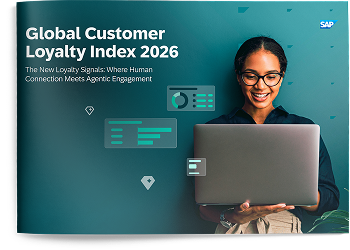
According to SAP’s 2026 Global Engagement Index, 63% of brands are stuck in the moderate maturity tier, able to deliver basic personalization but unable to connect the data that would make their automations useful. Data sits in silos across marketing, commerce, service, and operations, and each automation only has access to the slice it was built on.
Before building any automation, ask what data it needs to make a good decision:
- Behavioral data: browsing, email engagement, app activity
- Transactional data: purchase history, order value, returns
- Preference and consent data: opt-ins, channel preferences, communication frequency
- Operational data: inventory levels, fulfillment status, margin
That last category is where most automation setups fall short. When your automations have access to inventory and fulfillment data alongside customer behavior, they stop recommending products you can’t ship and start promoting items that are both relevant to the customer and profitable for the business.
Automating campaigns with incomplete data scales poor customer experiences. Clean the data first, then automate.
2. Use dynamic segments instead of static lists
A static list is a snapshot. A dynamic segment is a living filter. The difference matters because customers change faster than most teams can update a spreadsheet.
Static lists go stale the moment they’re created. A customer who was in your “high-value repeat buyers” segment last quarter might have stopped purchasing entirely. A first-time buyer who showed strong engagement signals in the past two weeks might be ready for a loyalty program invitation, but she’s still sitting in the “new customers” list because nobody moved her.
Dynamic segments update automatically based on behavior. Build them around:
- Lifecycle stage: new subscriber, first-time buyer, repeat customer, at-risk, lapsed
- Engagement level: active, cooling, dormant (based on composite engagement scores across channels)
- Purchase patterns: recency, frequency, monetary value
- Predicted value: AI-driven forecasts of future spend
- Channel preference: email-first, app-first, SMS-responsive
- Product affinity: category browsing patterns, wishlist activity, repeat category purchases
When a customer’s behavior changes, the segment should update and the automation should respond accordingly. A customer who moves from “active” to “cooling” should trigger a re-engagement flow without anyone manually adjusting a list.
3. Personalize beyond the first name
Everyone’s first-name merge tag works. Every email tool can do that. The marketing automation best practices that move the needle go deeper: personalizing the content, timing, and channel based on what you know about each customer’s relationship with your brand.
A customer who bought running shoes three weeks ago doesn’t need another email about running shoes. They might respond to a message about performance socks or a running playlist on the app. A loyalty program member who hasn’t redeemed points in four months might need a reminder of what their balance could get them, delivered via push notification because that’s the channel where their engagement is highest.
Think: “Your 2,400 points are worth a free pair of shorts. Here are three that match what you bought last month.”
That message works because it combines loyalty data (points balance), purchase history (last product category), and product affinity (recommendations based on previous orders). Each data point makes the personalization more useful and harder for the customer to ignore.
SAP Engagement Cloud uses product affinity, channel, and purchase predictions to recommend products tailored to each customer, while maintaining consistency across email, web, mobile, and in store.
4. Design automation around the full customer lifecycle
Most automation programs are heavy at the top and thin everywhere else. The welcome sequence gets built first, the cart abandonment flow gets refined endlessly, and everything after the first purchase is an afterthought.
SAP’s Customer Loyalty Index 2025 found that 28% of consumers switched brands because of sheer boredom. No service failure, no pricing dispute. They just drifted. This can happen after an initial purchase; they just stop hearing from the brand in a way that feels relevant to them.
Marketing automation best practices require automations that cover the full lifecycle:
- Welcome and onboarding: set expectations, introduce the brand story, drive the first purchase
- Product discovery: browsing triggers, category recommendations, new arrival alerts based on affinity
- Abandonment recovery: cart, browse, and checkout abandonment with escalating incentives and channel rotation
- Post-purchase: order confirmation, delivery updates, product care tips, review requests
- Repeat purchase: replenishment reminders, complementary product suggestions, loyalty program nudges
- Loyalty and advocacy: tier upgrades, exclusive access, referral program triggers
- Re-engagement: declining engagement triggers, “we miss you” sequences with a clear value proposition
- Churn prevention: at-risk scoring triggers intervention before the customer has mentally left
Map these as interconnected journeys that hand off to each other, with exit conditions and suppression rules. A customer in an active post-purchase flow shouldn’t simultaneously receive a re-engagement campaign.
5. Create omnichannel experiences
A customer browses winter coats on Saturday afternoon in store. By Sunday morning, she’s seeing coat ads across Instagram, a coat-focused email in her inbox, and a push notification about a coat sale. What’s invisible to the brand is that she bought a coat from them that Saturday afternoon and therefore every one of those messages represents wasted spend AND a small erosion of trust.
Omnichannel automation coordinates the message across channels so the customer gets one coherent experience instead of the same message echoed across five channels. That means:
- Suppression rules: if a customer converted, suppress related promotional messages across all channels
- Channel sequencing: email first, then SMS if no open after 24 hours, then push, with wait steps between each
- Frequency capping: limit total messages per customer per week regardless of how many automations they qualify for
- Unified identity: recognize the same customer across web, app, email, in store, and service
SAP Engagement Cloud connects all channels into a single journey builder, so a trigger in one channel can suppress, delay, or redirect activity in another. The customer sees one journey, even if six automations are running behind it.
6. Use AI to support automation decisions
AI makes automation smarter in specific, measurable ways:
- Predictive segmentation: identify customers likely to churn, likely to purchase, or likely to respond to a specific offer, before they’ve taken the action
- Send-time optimization: deliver messages when each individual customer is most likely to engage, based on their historical patterns
- Product recommendations: surface items based on purchase history, browsing behavior, and affinity models rather than bestseller lists
- Churn scoring: flag at-risk customers early enough for intervention
- Journey optimization: test and adapt journey paths based on performance data rather than manual A/B branching
The critical principle: AI supports decisions, and human judgment still sets the guardrails. Every AI-driven automation should have business rules, frequency limits, and human review built in. A churn model that sends a 20% discount to every at-risk customer will save some customers and train the rest to expect discounts. Set thresholds, define escalation paths, and monitor for unintended patterns.
7. Scale personalized communication without losing control
A brand operating across four markets with two product lines and three customer tiers can quickly end up building the same journey twelve times with minor variations. That doesn’t scale, and it creates maintenance nightmares when the core logic needs updating.
Build for reuse:
- Journey templates: create a master cart abandonment flow with configurable content blocks, then adapt by market or brand
- Modular content blocks: headers, product recommendation grids, CTA buttons, and footer compliance text as reusable components
- Regional business rules: currency, shipping thresholds, legal opt-in requirements, and holiday calendars managed centrally
- Frequency controls: global caps that prevent a customer from receiving more than a set number of messages per week, regardless of which market or automation triggers them
- Suppression and exclusion logic: VIP customers excluded from broad discount sends, recent purchasers suppressed from acquisition campaigns
Scale should never come at the cost of relevance. Every layer of reuse needs a mechanism for local teams to adapt messaging without breaking the underlying logic.
8. Measure and continuously optimize
A cart abandonment automation shows a 12% conversion rate. Is that good? It depends. If the customers in that flow would have purchased at an 11% rate anyway, the automation is generating 1% incremental lift, and the discounts it’s offering might be eroding more margin than they’re creating.
Most automation measurement stops at campaign metrics: open rate, click rate, conversion rate. Marketing automation best practices require measurement that goes deeper:
- Holdout groups: withhold a small percentage of qualified customers from each automation to measure what would have happened without it
- Incrementality testing: compare automated cohorts against holdout groups to isolate the true lift
- Journey-level attribution: track conversion across the full journey rather than attributing it to the last email clicked
- Revenue attribution: connect automation activity to actual revenue, including margin contribution
- Time savings: quantify the hours your team would spend on manual tasks the automation handles
Review every active automation quarterly. Kill the ones that aren’t generating incremental value. Optimize the ones that are. The 47 automations your team inherited might perform better as 20 well-maintained ones.
Build more intelligent customer journeys with marketing automation
Those 47 automations the new CRM manager arrives and sees on her dashboard? Her best first move is auditing the ones already running. Which are still targeting the right segments? Which are operating on connected data? Which have been measured against a holdout group?
Marketing automation works when the data behind it is clean and connected, when segments update as customers change, and when every automation is measured against what would have happened without it. SAP’s Global Engagement Index identifies 21% of brands as high-maturity. Those teams have built this discipline into their operations, running fewer, smarter automations on better-connected data.
SAP Engagement Cloud brings customer, product, and operational data together into a single engagement layer with pre-built tactics, AI-powered segmentation, and cross-channel journey orchestration. It’s how marketing teams stop running on autopilot.
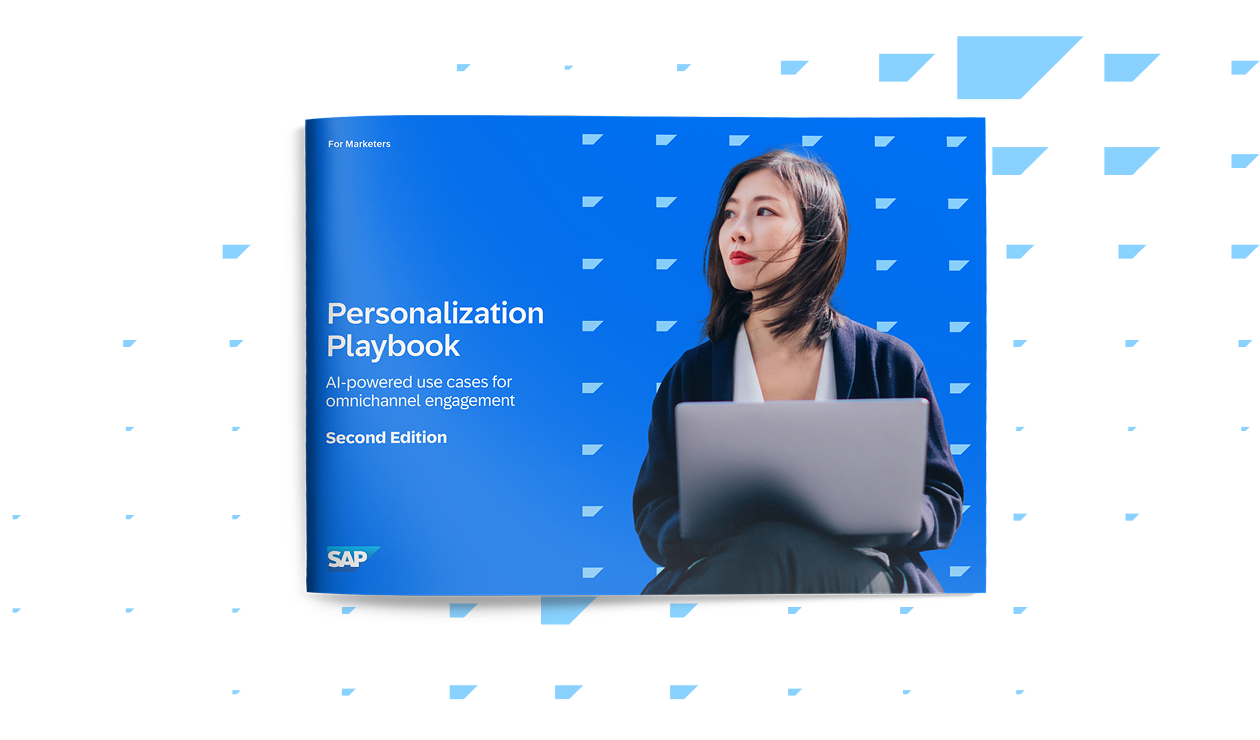
Get 10 personalization plays built on your automation data
Marketing Automation FAQs
Marketing automation uses software to execute repetitive marketing tasks across channels, triggered by customer behavior, lifecycle stage, or business rules. It covers everything from a welcome email sent after account creation to coordinated, cross-channel journeys that adapt in real time based on purchase history, engagement patterns, and operational data like inventory and fulfillment status.
A CRM stores and organizes customer data: contact details, purchase history, support interactions. Marketing automation acts on that data by triggering messages, campaigns, and journeys based on customer behavior and business rules. Most marketing teams use both, with the CRM feeding the automation engine the data it needs to send the right message at the right time.
Start with your data. The most common gap in marketing automation is disconnected data, where automations only have access to web behavior and lack purchase history, loyalty status, or inventory data. Look for a solution that connects customer, product, and operational data into a single engagement layer, so your automations can make decisions based on the full picture.
Go beyond open rates and click rates. The metrics that matter most are incrementality (what would have happened without the automation), revenue attribution (actual revenue driven, including margin), and journey-level conversion (tracking the full path rather than crediting the last email clicked). Holdout groups, where you withhold a small percentage of qualified customers from an automation, are the simplest way to measure true impact.
At minimum, quarterly. Review which automations are still targeting the right segments, which are operating on connected data, and which are generating incremental value above what would have happened without them. Most teams find that a tighter set of well-maintained automations outperforms a larger library of set-and-forget flows.
About the author
Mikkel Tophoj has worked in digital marketing for 11 years with a focus on strategy. As a Services Consultant at SAP Engagement Cloud and previous roles at agencies, he has helped Fortune 1000 brands across all industry verticals connect their data to create dream customer experiences and drive measurable results. Keeping up with innovation, he is focusing on how AI can amplify marketing efforts. He holds a BS in business administration with an emphasis in marketing and a minor in economics from CU Denver.