




Choosing the right email automation solution is one of the most important decisions an enterprise marketing team will make. The wrong choice can mean siloed data, inconsistent customer experiences, and wasted investment. The right one becomes the foundation for personalization at scale, measurable ROI, and long-term growth.
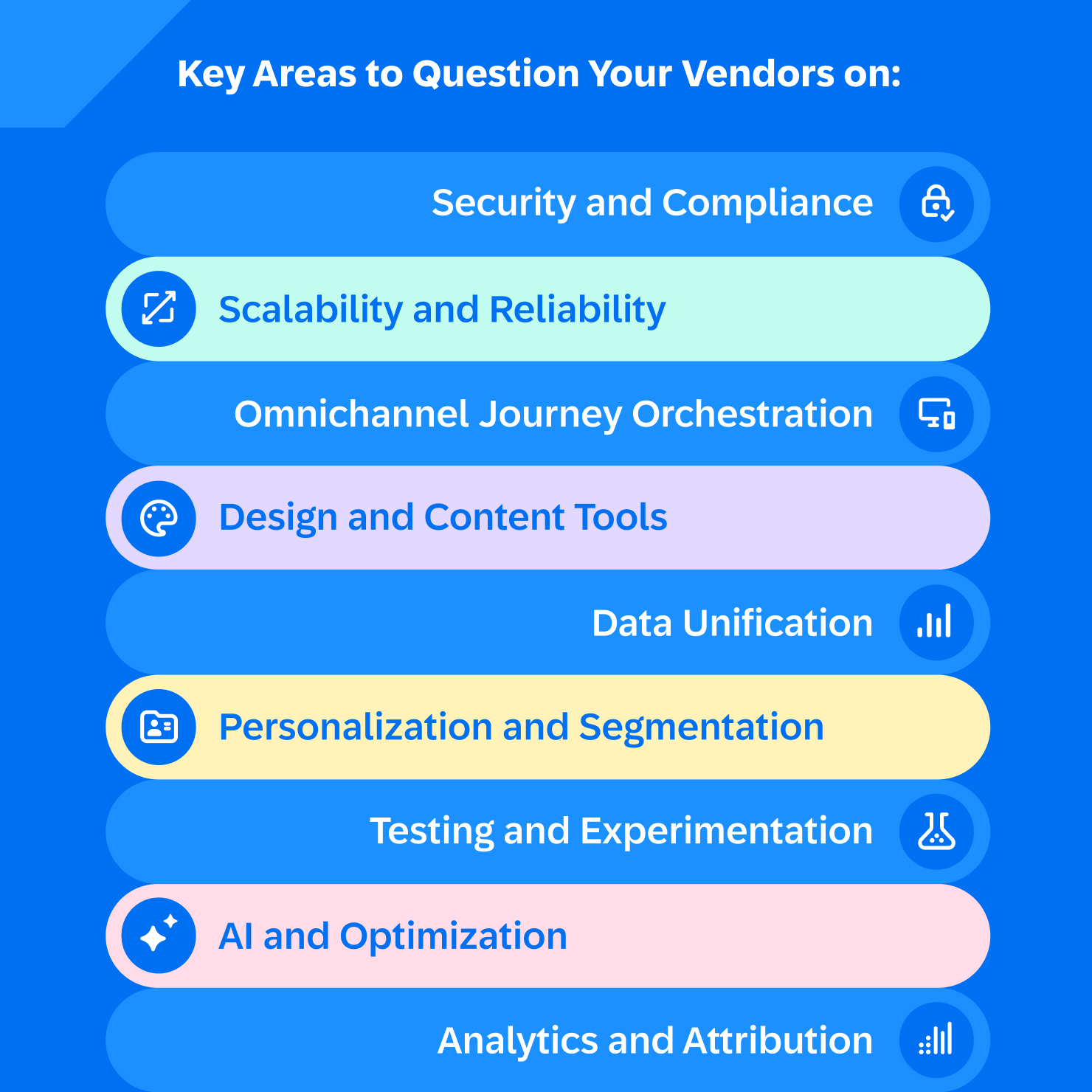
But with dozens of vendors promising similar capabilities, how do you separate marketing hype from genuine enterprise readiness? That’s where a structured evaluation helps. This checklist distills the most critical requirements, spanning data, personalization, compliance, scalability, and analytics, so you can assess each solution with clarity and confidence.
Want to explore these features in more detail? Start with our companion article: Top Features of Email Marketing Automation Tools in 2025. Then use this checklist as a practical tool to compare vendors side by side and identify the best fit for your organization.
📊 Data Unification
At the enterprise level, customer data is rarely in one place. Data lives across ecommerce platforms, CRM systems, loyalty programs, and in-store interactions. Without unification, marketing teams struggle to build accurate profiles and personalization efforts fall flat.
When evaluating tools, look for solutions that can ingest data from multiple sources in real time and resolve identities across devices and channels. The ability to create a single, centralized profile ensures every campaign reflects the most up-to-date customer information.
Key questions to ask:
- Can the solution integrate seamlessly with our existing data ecosystem?
- Does it support real-time updates to customer profiles?
- How does it handle identity resolution and duplicate records?
🎯Personalization and Segmentation
Enterprises can’t rely on one-size-fits-all campaigns. With diverse audiences spread across markets, personalization is essential for engagement and retention. Basic rule-based segmentation may work for small lists, but it falls short when managing millions of contacts.
The right solution should offer AI-driven, predictive segmentation that updates dynamically as customer behavior changes. This allows marketing teams to deliver content that feels relevant to each individual, whether that’s product recommendations, localized messaging, or loyalty incentives, without creating endless manual lists.
Key questions to ask:
- Does the solution support predictive models such as purchase intent or churn risk?
- Can segments update automatically in real time?
- How easy is it to apply personalization at both global and regional levels?
🔄 Omnichannel Journey Orchestration
Customers rarely stay within one channel. They move seamlessly from email to mobile, web, and social, and they expect the experience to follow them. For enterprises, orchestrating journeys across these touchpoints is often the difference between a connected brand experience and a fragmented one.
The right email automation solution should position email as part of a larger cross-channel ecosystem. From one interface, you should be able to design and trigger journeys that include SMS, push notifications, ads, or even mobile wallets. This ensures that when a customer takes an action, like abandoning a cart, the follow-up is timely, coordinated, and consistent across channels.
Key questions to ask:
- Can email campaigns trigger or respond to actions in other channels?
- Is orchestration managed from a single interface?
How does the solution support global consistency while allowing regional flexibility?
🎨 Design and Content Tools
Enterprises need to move quickly while keeping every communication on-brand. With multiple teams creating campaigns across regions, a lack of design governance can lead to inconsistency and wasted time.
The right solution should balance speed with control. Drag-and-drop editors help local teams build campaigns quickly, while centralized templates, shared content blocks, and brand guidelines ensure every email looks polished and consistent. Dynamic content tools, like personalization tokens and product recommendations, allow for creative ways to adapt automatically for each audience.
Key questions to ask:
- Does the solution offer intuitive design tools for non-technical users?
- Can templates and content blocks be standardized across global teams?
- How easily can campaigns be personalized without extra design work?
🤖 AI and Optimization
At enterprise scale, manual testing and guesswork are no longer enough. Marketing teams need automation that not only executes campaigns but also continuously improves them. That’s where AI comes in.
The right solution should use AI to optimize subject lines, predict the best send times for each customer, and forecast campaign outcomes before launch. These capabilities turn raw data into actionable insights, helping teams boost engagement and revenue without adding complexity.
Key questions to ask:
- Does the solution support AI-driven subject lines and send-time optimization?
- Can predictive analytics forecast campaign performance at scale?
- How transparent and governable are the AI models used?
🧪 Testing and Experimentation
Small improvements can create a big impact when you are sending millions of emails. But without structured testing, enterprises risk relying on assumptions rather than evidence.
A strong solution should make experimentation easy to embed into everyday operations. Look for A/B and multivariate testing across subject lines, creative, and calls to action.
Key questions to ask:
- Can results be scaled and applied across global teams?
- How are test outcomes reported and made accessible to stakeholders?
📈Analytics and Attribution
For enterprises, success is measured in revenue and retention, not just opens and clicks. Without clear attribution, it is difficult to prove the true value of email marketing or make the case for greater investment.
The right solution should provide advanced analytics that connect campaigns directly to business outcomes. This includes revenue attribution, customer lifetime value reporting, and cohort analysis to track long-term impact. AI-driven insights can also surface which segments, channels, or journeys generate the highest ROI.
Key questions to ask:
- Can the solution attribute revenue directly to each email send?
- Does it provide insights into customer lifetime value and cohort performance?
⚡Scalability and Reliability
Enterprises operate at a scale where reliability is critical. Millions of emails must be delivered every day, and even minor outages or delays can cost significant revenue and erode customer trust.
The right solution should handle high send volumes without throttling or downtime, backed by SLA guarantees.
Key questions to ask:
- Can the solution deliver millions of emails per hour without performance issues?
- Are uptime guarantees included in the service agreement?
🔒Security and Compliance
Enterprises face growing scrutiny over how customer data is stored, processed, and used. A single compliance failure can lead to fines, reputational damage, and loss of customer trust. Therefore, security and compliance must be non-negotiable when evaluating email automation solutions.
Look for tools that offer enterprise-grade security certifications, audit trails, and role-based permissions to control access. Compliance features such as automated consent management are essential for running campaigns across multiple markets with confidence.
Key questions to ask:
- Does the solution provide audit trails and role-based access controls?
- How does it support compliance with global and regional data privacy laws?

✅ Your Complete Email Automation Checklist:
The following checklist pulls together every critical question we’ve covered in this article.
Use it in vendor evaluations, RFPs, or internal discussions to separate marketing hype from true enterprise readiness. Share it across your marketing, IT, and compliance teams so every stakeholder can confidently weigh in.
Here’s the full set of questions you should be asking:
Data Unification
- Can the solution integrate seamlessly with our existing data ecosystem?
- Does it support real-time updates to customer profiles?
- How does it handle identity resolution and duplicate records?
Personalization and Segmentation
- Does the solution support predictive models such as purchase intent or churn risk?
- Can segments update automatically in real time?
- How easy is it to apply personalization at both global and regional levels?
Omnichannel Journey Orchestration
- Can email campaigns trigger or respond to actions in other channels?
- Is orchestration managed from a single interface?
- How does the solution support global consistency while allowing regional flexibility?
Design and Content Tools
- Does the solution offer intuitive design tools for non-technical users?
- Can templates and content blocks be standardized across global teams?
- How easily can campaigns be personalized without extra design work?
AI and Optimization
- Can predictive analytics forecast campaign performance at scale?
- How transparent and governable are the AI models used?
Testing and Experimentation
- Can results be scaled and applied across global teams?
- How are test outcomes reported and made accessible to stakeholders?
Analytics and Attribution
- Can the solution attribute revenue to emails?
- Does it provide insights into each customer’s lifetime value?
- How accessible are analytics dashboards for both local and global teams?
Scalability and Reliability
- Can the solution deliver millions of emails per hour without performance issues?
- Are uptime guarantees included in the service agreement?
Security and Compliance
- Does the solution provide audit trails and role-based access controls?
- How does it support compliance with global and regional data privacy laws?
About the author
Steve Henderson is a specialist in email deliverability, compliance, and privacy with nearly 20 years’ international experience. He has contributed to industry guidance with M3AAWG and the UK’s Data & Marketing Association, and has advised leading global brands on best practice. As Head of Deliverability at SAP Engagement Cloud, Steve leads a global team managing the delivery of over a billion emails each day, helping brands improve inbox placement and protect trust through practical, scalable strategies.