


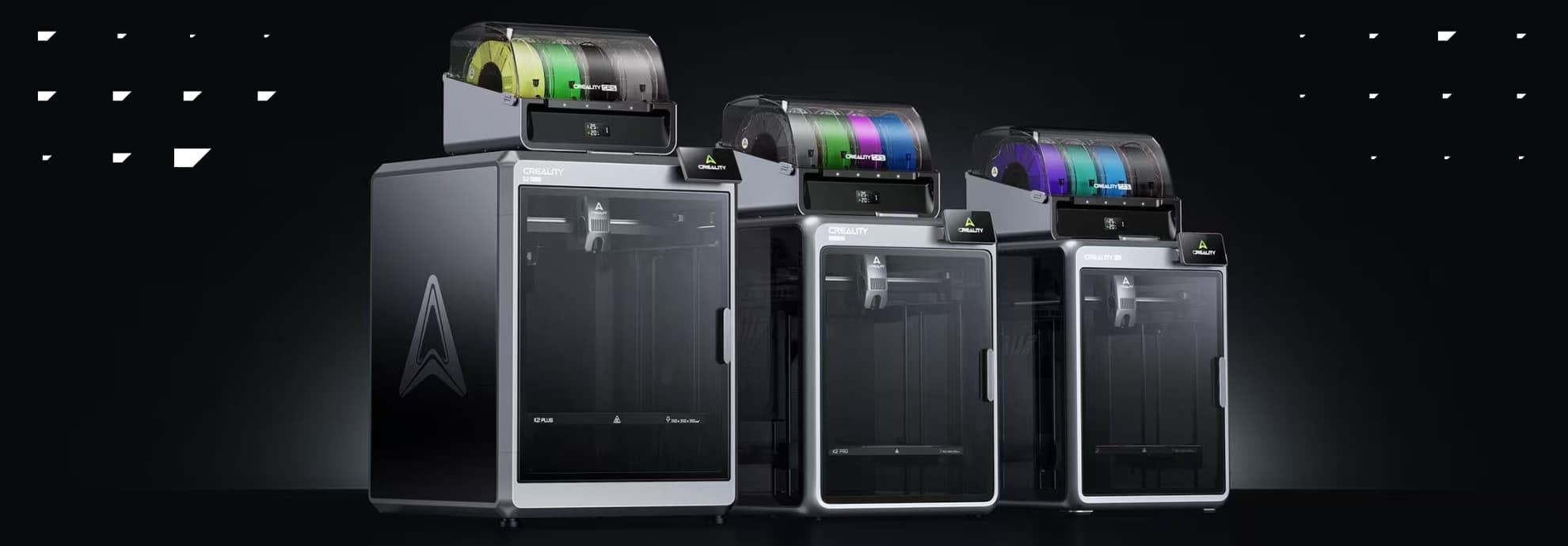
As a global leader in 3D printing, Creality had strong momentum behind them. The brand had built a global footprint, expanded across multiple product lines, and grown a highly engaged community of millions.
As the business continued to grow, the team began looking ahead.
More customers meant more touchpoints. More brands, more channels, and more signals that could be used to shape meaningful customer experiences.
The question became simple, but important: how do you turn strong channel performance into a truly coordinated, omnichannel experience, without slowing teams down or adding unnecessary complexity?
That question is where this ridealong begins.
In this post, we’ll step into the decisions the Creality team made as they aligned data, automation, and channels around a single customer view. You’ll see how they built on an already solid foundation, scaled lifecycle programs quickly, and created more relevant journeys across email, SMS, web, ads, and app, with SAP Engagement Cloud as their solution of choice. Let’s jump in.

From Siloed Channels to Connected Experiences
As Creality’s customer base continued to grow, the shape of the work began to change.
What had once been a handful of core programs now needed to support millions of customers, multiple brands, and a widening mix of channels. Email remained a strong foundation, but it was no longer the only place meaningful engagement was happening. Customers were browsing products, comparing models, interacting with content, and signaling intent across web, app, and paid media.
Recognizing opportunities to personalize the customer journey
With customer, product, and event data spread across different systems, each channel still performed well on its own. But stitching those signals together into a single, actionable view took time and coordination. That made it harder to move quickly when intent appeared, or to confidently guide customers from one touchpoint to the next.
Expectations rose alongside growth
At the same time, expectations inside the business were rising.
Growth targets demanded more lifecycle coverage, not just for acquisition and conversion, but for onboarding, education, repeat purchase, and long-term engagement. The team wanted to expand from a core set of journeys to dozens of automated programs, while keeping quality high and processes lean.
When scale became about coordination
This was the moment where scale stopped being just about reach, and started being about coordination.
To keep pace with the business, the team needed a way to:
- Bring customer data together without disrupting existing programs
- Expand automation across the lifecycle, not just the inbox
- Act on real behavior, across channels, in near real time
That realization set the direction for what came next, and ultimately led the team to rethink how data, automation, and channels could work together through SAP Engagement Cloud.
Turning Data into Action
Once the direction was clear, the team focused on the foundation.
Before expanding journeys or adding channels, Creality brought customer, product, and event data together into a single environment. This wasn’t about replacing what already worked. It was about making sure every team, every channel, and every program could operate from the same understanding of the customer.
With unified profiles in place, behaviors that once lived in isolation became visible together. Browsing activity, purchase history, product interest, and engagement signals could now inform the next best action, regardless of channel. Consent and preferences followed customers across brands, reducing friction and creating more consistent experiences.
For the team, this meant fewer manual checks, fewer conflicting messages, and far more confidence in how and when to engage.
Moving beyond the inbox
With data connected, attention turned to orchestration.
Email had been, and continued to be, a strong channel. But it no longer had to carry the entire lifecycle alone. The team began designing journeys that responded to real customer behavior across email, SMS, on-site experiences, paid media, and app touchpoints.
This meant that:
- High-intent moments on site could trigger timely follow-ups.
- Customers comparing specific printer models could be guided with educational content.
- Returning visitors could be met with messaging that reflected where they were in their journey, not just where they sat on a list.
This shift allowed Creality to move from strong individual campaigns to coordinated journeys that adapted as customers moved.
Building automation at pace, without slowing down
Speed mattered.
To meet growth targets, the team needed to scale automation quickly, without sacrificing quality or control. They adopted a clear operating rhythm, working in weekly build sprints with defined approvals and guardrails.
In just three months, Creality expanded from 19 to 53 active automated journeys. These programs spanned the full lifecycle, from welcoming new customers and recovering abandoned carts, to encouraging repeat purchases and re-engaging customers who had gone quiet.
Send times adapted to customer behavior. Overlapping messages were suppressed automatically. Every journey was tested before launch, allowing the team to move faster with confidence.
“Expanding from 19 to 53 automated journeys in just three months completely changed the way we think about lifecycle marketing. We moved beyond a reliance on email to orchestrate programs across SMS, ads, and on-site experiences, which gave us the ability to meet customers with the right message in the right channel at scale."
Making personalization practical at scale
With automation in motion, personalization became more precise and more sustainable.
Instead of static lists, segments were built around real behavior and product interest. Customers researching a specific printer line received comparison guides and setup resources. Existing owners saw firmware updates, education, and relevant accessory recommendations. Customers at risk of disengaging entered reactivation journeys designed to spark interest again.
Dynamic content made it possible to serve different brands, languages, and offers within a single campaign. The result was more relevant experiences for customers, without adding operational complexity for the team.
Seeing the Shift Take Hold
Once the expanded set of journeys went live, the signals were immediate.
Triggered programs tied to clear intent moments, such as browsing activity, cart behavior, and post-purchase engagement, began to outperform one-off campaigns.
What changed most was the role of automation. Journeys moved from supporting the channel to driving it.
Between March and June 2025:
- Triggered programs generated more than 50 percent of total email revenue
- Average open rates reached 52.7 percent, compared with 35.2 percent overall
- Click-through rates climbed to 11.2 percent, versus 4.7 percent across the channel
Engagement that translated into revenue
Improved engagement wasn’t happening in isolation. It directly supported revenue growth across the lifecycle.
Automated journeys helped:
- Recover carts at moments of active consideration
- Encourage repeat purchases after first ownership experiences
- Re-engage customers showing early signs of inactivity
All of this ran continuously, adapting to behavior and timing without adding manual workload for the team.
Scaling reach without adding strain
With automation carrying more of the operational load, scale became easier to sustain.
Creality could now:
- Engage 1.4 million active contacts across multiple brands
- Support a broader community of over 3 million users
- Deliver consistent messaging across email, SMS, ads, and on-site touchpoints
- Respect preferences and consent across brands and regions
Crucially, this scale was achieved without expanding headcount.
A clearer year-over-year picture
When comparing March to June 2025 with the same period in 2024, the impact became even clearer:
- Revenue increased by 70.8 percent
- Active customers grew by 47.8 percent
- Reactivated customers rose by 36.4 percent
- Order growth shifted from –1.6 percent to +23.5 percent
“The results of this shift have been clear. Triggered programs now drive the majority of our email revenue, and engagement rates are significantly higher than before. Year over year we’ve seen strong growth in revenue, active customers, and reactivated customers. We’ve built lifecycle automations that continue to build sustainable customer relationships.
A Foundation Built for What Comes Next
Creality’s journey shows what happens when strong channel performance is connected into a single, coordinated customer experience.
By unifying data, scaling automation, and expanding engagement beyond the inbox, the team built a repeatable way to recognise intent, respond in real time, and support customers throughout the lifecycle, across brands and regions.
What stands out isn’t any one campaign or metric. It’s the operating model that now sits underneath the work. One that allows the team to move faster, personalise more precisely, and grow without adding complexity.
With SAP Engagement Cloud as the foundation, Creality has turned momentum into a scalable engagement strategy, one designed to support long-term growth as expectations, channels, and customer needs continue to evolve.
Find out what SAP Engagement Cloud can do for your business. Book a demo today.
About the author
Mikkel Tophoj has worked in digital marketing for 11 years with a focus on strategy. As a Services Consultant at SAP Engagement Cloud and previous roles at agencies, he has helped Fortune 1000 brands across all industry verticals connect their data to create dream customer experiences and drive measurable results. Keeping up with innovation, he is focusing on how AI can amplify marketing efforts. He holds a BS in business administration with an emphasis in marketing and a minor in economics from CU Denver.