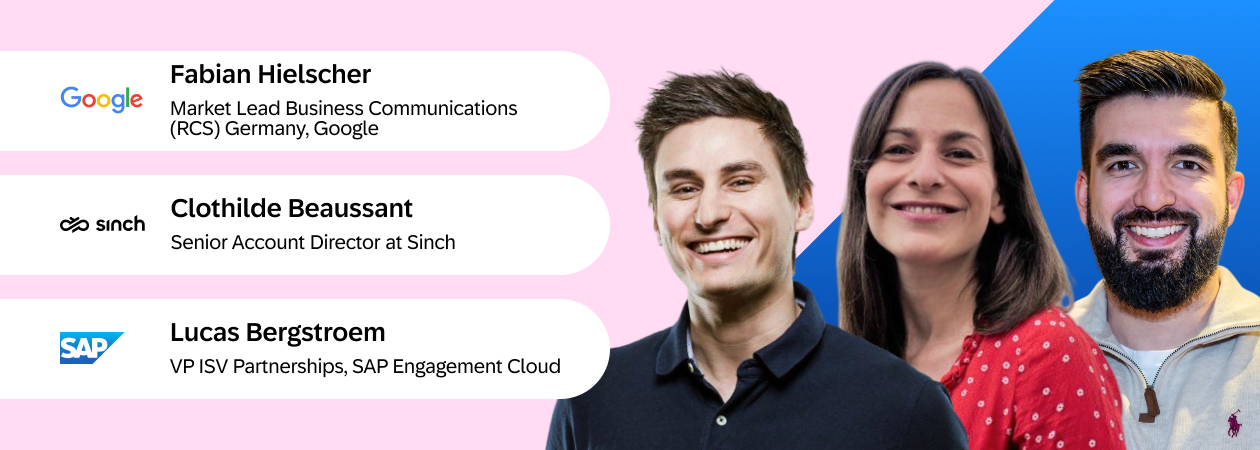
 25:11
I want to start with a number that made me slightly worried for German marketing budgets. According to SAP's Engagement Index report, 74% of companies in Germany are actively investing in omnichannel engagement technology. Real budget, real commitment, that's great. But at the same time, only 31% of those same companies have actually reached a high level of engagement maturity. So it's a bit like getting the gym membership. You buy the fancy shoes, you buy the protein powder, you get the dress-to-impress outfit, but still you are mostly just walking by the gym to get a coffee. The intent is there, the strategy is there, but something's missing. But we want to change that today. So I'm going to go to the gym with all of you, you too. Sure. But before we go to gym, we need to make a plan and sometimes even work on what we want to fix. So let's have a look first at what we need fix. 76% of German customers say they are actively put off by brands that feel disorganized, that feel unresponsive. There are different teams, different channels. They don't know who they're talking to. The list goes on and on and on, and at the same time, 73% of brands genuinely believe that they are doing a good job, that they're delivering a seamless experience. How can that be? Somewhere between those numbers sits a very expensive gap between what brands think they are doing and what customers are actually experiencing. So customers, really all of us in this room, want brands to be more available, more responsive, really conversational. And they did not wait for brands to start these conversations. All of us have moved on to conversations that are responsive, that know who we are. And I guess all of you now know what's coming. Our conversations moved on to conversations with AI. So I'd like to see your hands. Who of you has talked to some kind of AI this week? And who of you have had a two-way conversation with a brand this week. Zero, well, yeah, that's what I thought, but good news. Let's find out today if there are channels or a channel mix that can actually work on this two-way conversation. And I like to start with you, Lucas. SAP talks about moving from one-off campaigns to something closer to an ongoing, really live conversation. What's your take on how this agentic shift looks like in practice and how does RCS fit into it? Ultimately, I think what keeps us busy at SAP Engagement Cloud is we always heavily invest into AI to help brands to really combine all the real-time data touchpoints from consumers and manage tons of data for the brands, ultimately, to create these what's sometimes called hyper-personalized experiences. But if you then look about the channel trends over the years, and we've seen some the numbers in terms of brands investing into omnichannel strategy, some of the traditional channels, specifically email or some of the others even like website personalization, to your point on really offer them the chance to have that two-way conversation with the brand that many of the consumers I think expect today, right? Because you also rightly explained in terms of our own conversations with things like the LLMs and the chat GPTs and the Geminis of the world, we're kind of like... There's a consumer shift in terms of how we're exploring things, of how we're discovering information and products. And we heavily think that RCS is a really good channel to cover that, specifically if we're seeing like low adoption of SMS as well and in Germany specifically, but that had multiple different reasons. I think RCS with the different maturity classes and stages that RCS also offers delivers that channel where brands can actually have that type of interaction that consumers demand nowadays. Okay, so it seems pretty clear that SMS really had to evolve, but Fabian, we've talked about SMS and RCS so many times already, and you told me before that one of the biggest mistakes brands make is that they treat SMS or RCS like a fancier SMS. Correct that for us. Right. I think, like, to put it bluntly, right, SMS is like a one-way communication channel. Brands can send out, you know, transactional messages, promotional messages, 160 characters, black on white. That's it. That's the bare minimum SMS can do. RCS, however, you can, you know, send over rich media as the name suggests, such as videos, such as pictures, carousels. You can actually kind of design your mini app inside RCS so that a user doesn't have to download anything, which is kind of insane when you think about that. The reason why Google is investing so much into this channel right now, resources, money, time, is I think threefold. The first reason was already mentioned by yourself and yourself, Lucas, all of us. We are now conversating with LLMs on a daily basis. So we see a huge consumer shift across the globe, also in Germany, of course. Secondly, Apple has one and a half years opened up to RCS. So nowadays we have a reach with RCS in Germany of roughly 70 million smartphones. That's more than 90% of reach and coverage that we have in Germany, and that's quite enormous. And then thirdly, basically every single top brand or every single brand probably also in this room, they have top of mind the topic of AI and are currently probably also thinking about developing an AI agent themselves. But kind of no one really knows where to put these agents. So you can put them on your website, right? And you probably all do that. But the issue with the website is, user comes, has a conversation, goes back. And that's it, has to start from scratch. The website doesn't remember if a user was there. You can put them on your app as well. You probably do that as well. However, you've got that huge barrier to entry of people having to download your app. And you all know how hard it is to get people to download your app and then to retain them in your app. And we actually, at Google, we see RCS as kind of the home for AI agents. And that's where we are heading. And that's, I think, where our focus also will be for the next couple of years. Nice, thanks for the insights. I would say let's move on from theory, from creating the training plan to actually a legit warm up, and for that, I'm very happy that Clauthilde came here over from France actually, but she had a shorter trip, I think, from Paris than I had from Berlin because obviously my train was delayed. But Clotilde, let's be honest with the people in this room. Is RCS a big marketing channel yet? What do you see when you talk to our clients when you see brands out there? RCS adoption right now, it's still at its early stage here in Germany. And even though many brands and probably a lot of you are still relying on email and SMS, early adopters right now are already seeing massive results in terms of business. And the best way to speak about it is to show you some examples. So that's why we have three examples to show today. And the first one is about EasyPark. So I guess everyone knows it. It's the European leading parking app, mobile app. And instead of using unbranded plain SMS, what they did was to upgrade those that were kind of spooky and easy to spoof to RCS where there are verified messages, and as you can see on the screen, you have their official logo and there is the trust badge, so it feels more secure in terms of alerting, so that's a great use case. And together with the SMS fallback, they reached out to 97.4% delivery rates, which is quite amazing on this kind of use case. Moving up to another example, which is more of a push marketing with Center Parcs. So, Center Parcs, I don't know if everyone knows it. It's a holiday resort brand, and they do a lot of push marketing on their side, and what they wanted to do is to communicate about a specific author with a specific discount. And instead of using a plain SMS with a cold link, what they did is they used a standalone card, so a single RCS, and as you can see on the screen, it's basically a media. So here it's a visual, a strong visual. There is a strong headline, and there is the possibility to add a button or even several buttons. Here it's a button. And how you can probably see, it's very more, it's more visible, it is more engaging, and in terms of results, it worked well. We experienced a CTR, a click-through rate of 6% when we are usually on this kind of communication, it's more about 3%, and the conversion rate was twice higher on this communication than on their emails. So that's also quite amazing. And as a third example, we have Nespresso, so I guess everyone knows Nespresso, the pioneer in premium coffee, and they did a real conversational commerce experience. So they had a big challenge, which was about their subscription plan. A client which subscribed is a more loyal client. So they didn't want to use an email, a long email that doesn't fit with their brand and the experience that you have in boutiques. So they used conversational RCS, where we asked a few questions. So what's your coffee habit? What kind of coffee lover are you? And depending on the answers, each person received a specific and personalized subscription plan. And this was a great success because we registered a click-through rate of 15% when we are usually more around 5% with Nespresso. The completion rate was a lot higher. The completion rates is the people that started and finished the scenario. So it was twice higher than on rich SMS. And the conversion rate was 9% higher than on email. So it's, as you can see, like from alerting with EasyPark to push marketing with Center Parcs to conversional commerce with Nespresso, RCS is here on all your customer journey, and you see that there is strong results. Amazing. Thank you so much. I would say we are done with the workout or the warm up of the workout. So let's move over to the weights and do some heavy lifting. And for this part, I'm going to hand over to Lucas, who's going to show us how it actually works. And when you join a session with Lucas, it's great because every time you join the session with him, you learn a lot. So I'm handing it over to you for this one. We've seen all of the different use cases now and the great results. And obviously there's all these rich content elements and different multimedia options that are now at the hands of consumers and marketers to really test out and utilize in order to create these conversational flows. And what's missing on the other hand, is connecting that back to the customer data, to the first-party data information. And this is where exactly Engagement Cloud and SAP comes in. And so we've launched RCS this year by making very sure that marketers that work together with us can really make sure they now implement and utilize RCS next to all their other marketing channels. And so the experience that you actually see on the screen is quite similar to many of the, I think, 10 plus channels that you can orchestrate and create with us. You have the what you see is what you get editor that allows you to utilize the different multimedia elements that we've seen from like rich cards and carousels and call-to-action buttons to really initiate these conversational flows. But at the same time, you can easily connect them to the first-party data information, things like CRM information about the consumers, to still create the most personalized experience for that specific channel together with them. And so everywhere where you basically see those blue tokens, you as a marketer can make sure that you still tailor the message very specifically and uniquely to your consumers by leveraging their first- and zero-party information. So it's not just a batch-and-blast experience to kick off the initial RCS message. It also comes with the various different other features, but what we also wanted to show here is, the whole process actually of composing the message, equipping it with the personalization, making it unique to the consumers, and then also leveraging a test sent out. But here in this particular example, you can already see then the conversational flow that allows not only to trigger the personalized one-way communication out to the consumer, but then utilizing things like the call-to-action message or just free text responses from the consumer in partnership with Sinch at this level to then create a conversation. And I think often, and probably also within the realm here of DMEXCO, we often very much concentrate just on marketing use cases. But RCS is a perfect example where you actually can combine marketing and services use cases at the same time. Because if you really create these conversations and these conversational experience with your consumers, you really open a gate from consumers to your brand, and they don't want to limit themselves within those conversations to marketing use case cases either. So any type of product launch marketing-driven conversational message that you actually activate with RCS will lead to potential questions coming back from the consumers. Oh, great, you just launched this product, what's the material like? Do you have it in size? Is it available in a local store close to me? And there also might be a point in that conversation where many of the agents that you have working for your brand in the background might not ultimately have the right answer. At this point of time, we have built the integration there with Sinch to then also hand it over to your human agent. So you always have the human in the loop, kind of like a concept therein as well, which you can then fully embed into your services operations. And so therefore really strongly combine marketing and services and ultimately connect the different departments at your brand. So rethink of RCS, not just as a marketing-driven channel, but ultimately as this gateway into your brand operations, which really help you at the end of the day to excel and improve overall customer experience and completeness that we see it across commerce, marketing, sales, and services. Nice. So we've all seen now that setting this up is really not that terrifying 6-months, 12-months IT project that some of you might have imagined before you joined the session. And we've seen different brands, we've seen different countries, we have seen different use cases now, what Clothilde showed us earlier. Fabian, did we just share some lucky examples, or what is happening? You've seen some stuff last week, I believe you had a larger event in Paris. And then after you, I'd also like to ask Lucas, what's coming that is not live yet? So to answer your first question, direct answer, no. It's not like, these are not three outliers that we've seen there. We've seen dozens of examples across the globe, not only in Germany, but UK, France, Spain, etc. And overall, we're seeing reach increasing for us across these major European countries as well. We are talking about reach of far more than 80% nowadays. And so we're also seeing more and more of these use cases. And we're seeing that use cases are also evolving. And you showed that a little bit in your demo, Clothilde. While, you know, coming back to your first question, while in the beginning, we had this upgrade from SMS to RCS, we are now getting it, so that was like a basic chat, basic messaging. We're now getting at a stage where we have conversations on RCS as well. I think status quo or state of the art nowadays is to have like a guided flow because you want users to reach a certain end point. You want them to transact at one point. You don't want to just send them into your AI agent and then talk about the weather, right? That doesn't help anybody. You really want that guided flow. But then in the back end, you've got the AI that can react as soon as a user, for instance, types in a question, you can then let the AI customize that conversation. In the audience, you also might wonder and ask yourself, okay, how do I put RCS as a channel in my brand strategy overall? But generally, when you think about it, brands in Germany have two main ways of communication. First of all, there's email, right? Everybody uses email for their communication. The issue with email, though, is, of course, an awareness issue where you're seeing 20 to 30% opening rates on average, and on the other side, you've got the download of your own app and the communication via the own app, which of course, where you have your most loyal customers. You want people to download your app, but it's not too easy to do so, right? And so RCS kind of sits in between those kind of channels. It has, you know, a way higher awareness rate than email does. We're talking about 80% opening rates here. But at the same time, you don't have that barrier to having to download anything. So it's frictionless, and people can exit RCS right away through Google messages, through iMessage, on their native messaging inbox. And I think that's the way to think about it. Not as only an upgrade, but as kind of a new channel which has a wide array of use cases that you can penetrate. So think about like the customer journey and where it kind of fails or where you're stuck. I think RCS has a way to improve that kind of customer story. Okay, Lucas, in case you forgot the question because Fabian took so long to answer. What's coming next that's not live yet? Yeah, I think connecting on the last thing that Fabian said, that there's typically a lot of friction still when you look at your overall customer experience, consumers jumping from channel to touchpoints and so on. And so while RCS already has the technical capabilities to solve that, I think there's still a lot of work to do on the brand side. And where we want to support those brands with is obviously everyone is talking about the agentic era now and implementing all these agents. Something that SAP like invests in heavily as well. And so specifically on the consumer-facing agents, I think this is where it gets really interesting to then ultimately use those capabilities that RCS offers and have ultimately like a headless checkout for consumers on that specific channel, right? So why, if you already have those consumers within the conversation there, and we just had like, a little bit of it as kind of like a sneak peek there with the marketing and services use case, where you still have that handover and transition that happens in the background. Now with all these agents that not just us as a vendor, but also our customers and you know, like all the brands probably here sitting in a room heavily invest in, it's the perfect combination and to bring those agents into those RCS conversations and ultimately then help consumers really just act and convert within the RCS conversation. So this is something that you will definitely see by the end of the year and probably all throughout 2027 from SAP to allow more and more of these agentic use cases running in the background to help customers check out, solve tickets, just get more proper information from brands upon those fingertips and throughout the conversation there in RCS. Okay, nice, sounds good. I hope you're not too exhausted from today's workout. We are approaching the end of this session. Let's wrap this up with an actual stretch if you want. I don't wanna force you, but I will do an actual stretch because we are standing around, we have backpacks, and it's a little bit exhausting an event like this. So while the three panelists share their main takeaways. So if there's one thing you want the people to remember from the session, maybe even two things, because we have some time left. I think the main key takeaways, I think connecting it to what I said last. Don't think about RCS as just a marketing channel. Of course, every new channel comes with cost, whether it's implementation or running costs. But I hope you also heard a couple of things in terms of how RCS can help you beyond just marketing. So maybe knock on your neighbor's department door and talk about how RCS can lower the cost of operating, for example, within their services operations, and think about it a little bit more holistically than just a net new marketing channel, because then this really drives the value for your brand. Who wants to go next? Clothilde, what would you say is the thing that people should remember? Yeah, from what you saw today, just remember that the friction is gone, the reach is nearly 100%, and the results are here. So there is no way that you're not launching these kind of new innovative channels. So do not hesitate if you need more insights or if you want us to help you define what kind of strategy to adopt on this channel to visit us to our booth. Sounds good. What about you? I think there might be one open question in this room. And I think we talked a lot about use cases, what you can do with it, etc. But I think the first step is always to get the people into the RCS agent and get them to discover your RCS agents as well. And therefore, I think it's worth mentioning that we are now connecting at Google RCS with that whole Google ecosystem. So we are envisioning a future where you would search for a brand, and then, you know, not only the website pops up, but also the text message field where you'll be redirected into the RCS chat and can have a conversation with the agent. You would be, in Cologne, for instance, search for a telecom store like I did this morning, and you'd be able to text them instead of having to call them. How long are you open? Is there an open appointment for me, etc. So these are all the things that are happening that we are implementing right now. And the target here is to really get people in Germany aware of what RCS is, what it can do. We have the target that everybody in Germany has heard about and touched base with RCS in the near future by integrating it completely into the Google ecosystem. Thank you to Fabian, Lucas, and Clothilde, and thank you for joining us today.